Performance Days
Relevance comes from attitude
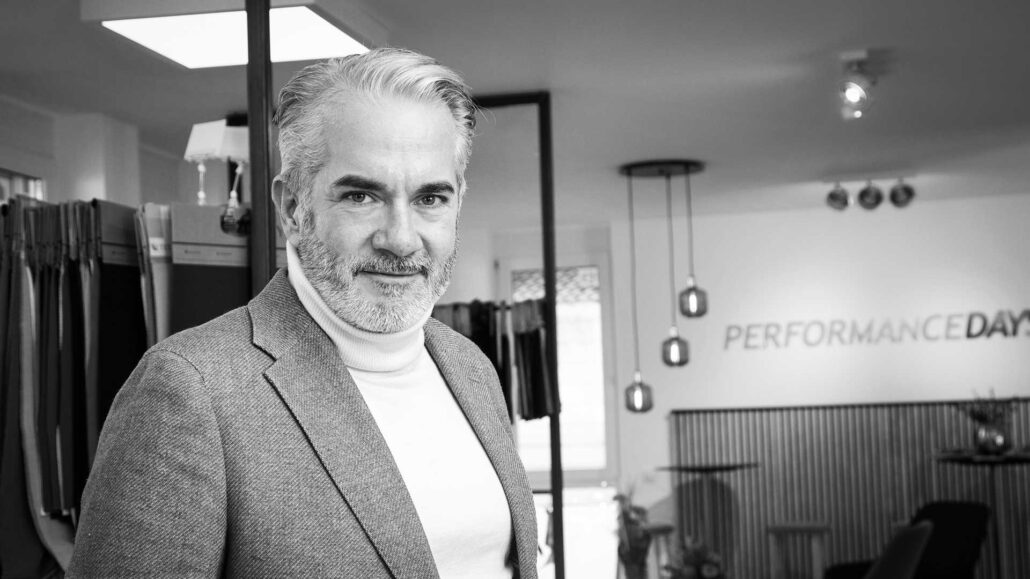
What can a trade fair still achieve today? Quite a lot, if it has the courage to think differently. General Manager Marco Weichert talks about content with substance, encounters as added value and the Performance Days as a place for genuine exchange.
Marco, many traditional trade fairs today are not only struggling with declining frequency, but above all with dwindling relevance. What are you doing differently?
Marco Weichert, General Manager Performance Days: Relevance really is the key issue today - for every brand, every platform, every event. If you don't have a clearly recognizable USP, you simply won't work. Relevance doesn't come from size or volume, but from attitude. We were never interested in simply holding another trade fair. The field was already taken. We wanted to create something that didn't exist yet, a platform that focused on the topics that really moved us: innovative materials, sustainability, innovation and, above all, a space where real, personal exchange could take place - beyond the pressure to sell and superficiality.
So you developed the format you wanted yourselves back then?
Exactly. But not as an arbitrary stage on which anything is possible. We are not an eBay where anyone who pays can set up shop. We don't work with agencies or chambers of commerce that fill halls - we make a conscious choice. That's not arrogance, it's attitude. We don't just want lots of exhibitors, we want the right ones.
Why is this so important?
Because we bear responsibility. We don't sell space, we don't sell square meters. We design formats that offer orientation, initiate discussions and generate real added value - in terms of content, people and strategy. Because the result is what counts: Visitors should be able to say that they have learned something. That they were inspired. That is our goal.
Do you also measure this effect?
Yes, our Net Promoter Score is currently 8.7 - which is exceptionally high by international standards. And we are really proud of that. Because it proves that we have been able to earn genuine trust within our community over the years. But this trust is not a given. It has to be earned anew with every issue. You have to listen, think along - or rather: think ahead.
How has your visitor base changed? The younger generation in particular has a very different view of trade fairs.
Visitors today perhaps come more consciously. Not because they just go to the trade fair, but because they expect a specific benefit. Many come because colleagues or acquaintances have said: "You have to go there." Organic word of mouth is more effective than any advertising. And this applies to all generations. For some it's guidance, for others it's inspiration and concrete know-how. It's this mixture that makes the difference.
So relevance is created through individual added value?
This is essential, especially for the younger generation. Try getting a 27-year-old designer excited about On Running - simply because he was there last time? Not a chance. He wants to know: What will I learn this time? What will it bring me today? Anyone who invests time today expects substance - and that's exactly what we deliver.
So your extensive and very demanding supporting program is important?
Even crucial! The event would not work without the panels, trend forums and conferences. The program provides the classification, the discourse, the view beyond the horizon. We have to offer both information and inspiration. We are not just a marketplace, but also a source of ideas.
Trade fairs are not least places of encounter. This aspect seems more important to me than ever.
Absolutely. In the past, personal interaction was almost taken for granted, but today it is a rarity. People work remotely, hybrid, often across national borders. Many processes are digitalized, but that is precisely why the desire for real, physical connection is growing. This is exactly what we create space for. Our boulevards are a good example: we deliberately do without up to 60 marketable stands, despite a long waiting list. But we need these spaces in between. Open zones where conversations can take place, without a fixed date, without pressure. Places that belong to no one, but are open to everyone.
A look into the future: what will remain, what will change?
Our stance remains the same. We don't want to become a format that nobody understands any more. We are not interested in growth at any price, but in depth of content and long-term relevance. We consider the following at every step: How can we remain agile without losing our DNA? How do we open up to new topics without neglecting our community? This is only possible if you are very clear - even about what you are not doing.
So attitude as a strategic foundation?
This is our answer to the question of whether trade fairs are still relevant today. My opinion: Yes - but only if they generate real relevance. And that can only be achieved through precision, clear curation and genuine exchange. If we continue to deliver this, we will still be a relevant place in ten years' time - no matter how the formats around it change.
One can sense that this curatorial approach is really important to you. But how do you manage to remain open to new ideas, especially in an industry that is changing rapidly?
By remaining curious and at the same time clear in our stance. The textile industry is in the midst of a profound transformation: new technologies, new materials, a new awareness of sustainability and responsibility. For us, this is not a threat, but a huge opportunity. We see it as our task to recognize and classify relevant developments at an early stage and make them accessible to our community. Not by chasing after every trend, but by placing the topics in a meaningful context. And that's exactly what makes our work so exciting.
Performance Days: 29 - 30.10.2025
www.performancedays.com


