Menswear
Shared Grounds
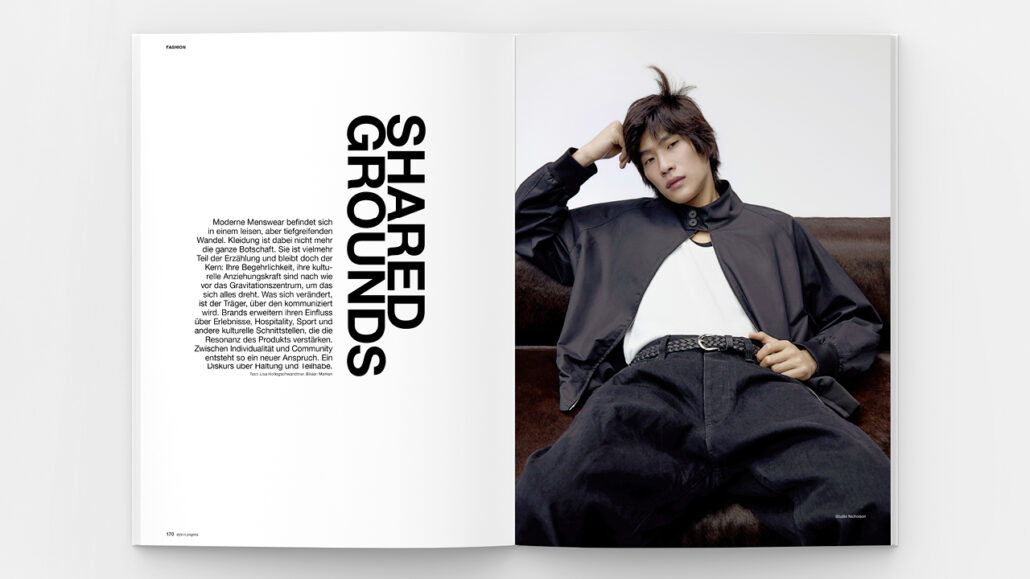
Modern menswear is undergoing a quiet but profound change. Clothing is no longer the whole message. Rather, it is part of the narrative and yet remains the core: its desirability and cultural appeal are still the center of gravity around which everything revolves. What is changing is the wearer through whom communication takes place. Brands are expanding their influence through experiences, hospitality, sports, and other cultural interfaces that amplify the resonance of the product. This creates a new demand between individuality and community. A discourse on attitude and participation.
Text: Lisa Hollogschwandtner. Images: Brands
For a long time, menswear functioned in clear categories: formal for business, casual for everything else, and sportswear for sports. Purchases were made in regular departments and modular systems. Just typing these lines feels outdated. The past few years have blurred boundaries and rigid rules have lost their validity. Key indicator: Name occasions when white sneakers were not worn. The answers are few and far between.
Past-Forward
First, let's take a look back: In the past, fashion moved in waves. Each decade had its own silhouette, each generation its own style. For almost the entire 20th century, trends reappeared every two decades – a period of time long enough for one generation to reject them and the next to rediscover them as something new. Attempting to draw such a timeline today is impossible. The internet has compressed the cycle described above into months, blurring the boundaries between then and now into a fuzzy present. Against this backdrop, the question arises: What then defines the moment, our now? What comes after anything goes?
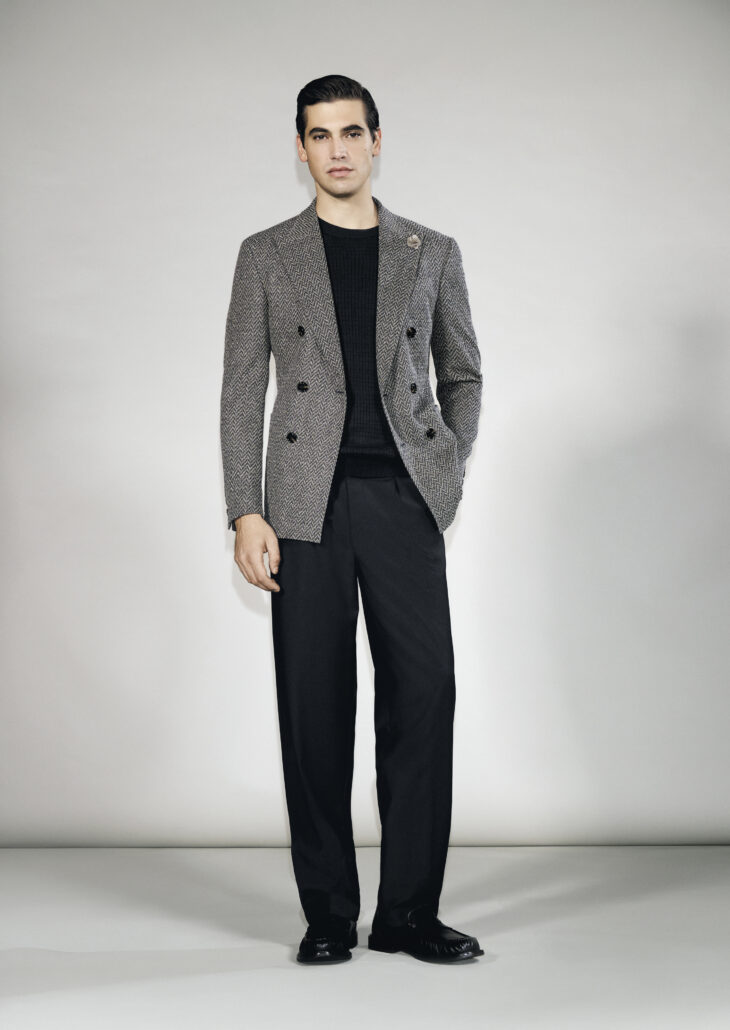
"In recent years, there really were no rules. That was fun for some people, but less so for those with an aesthetic bent," says Thorsten Stiebing, Managing Brand Director at Joop, with a smile, identifying a counter-movement: "Not least because of our history, we are strongly positioned in the formalwear sector as well as in casualwear. This is where you really notice that modern menswear customers are interested in fashion again. High quality is appreciated, and people are looking for a suit that really fits well and is willing to pay a little more for it. The feeling that these products convey is increasingly sought after, even outside of special occasions. For fall/winter 2026/27, we are deliberately focusing more on tailoring again, reflecting on our heritage – interpreted in a contemporary way. Personally, I like this commitment to classic style – even for leisure wear."
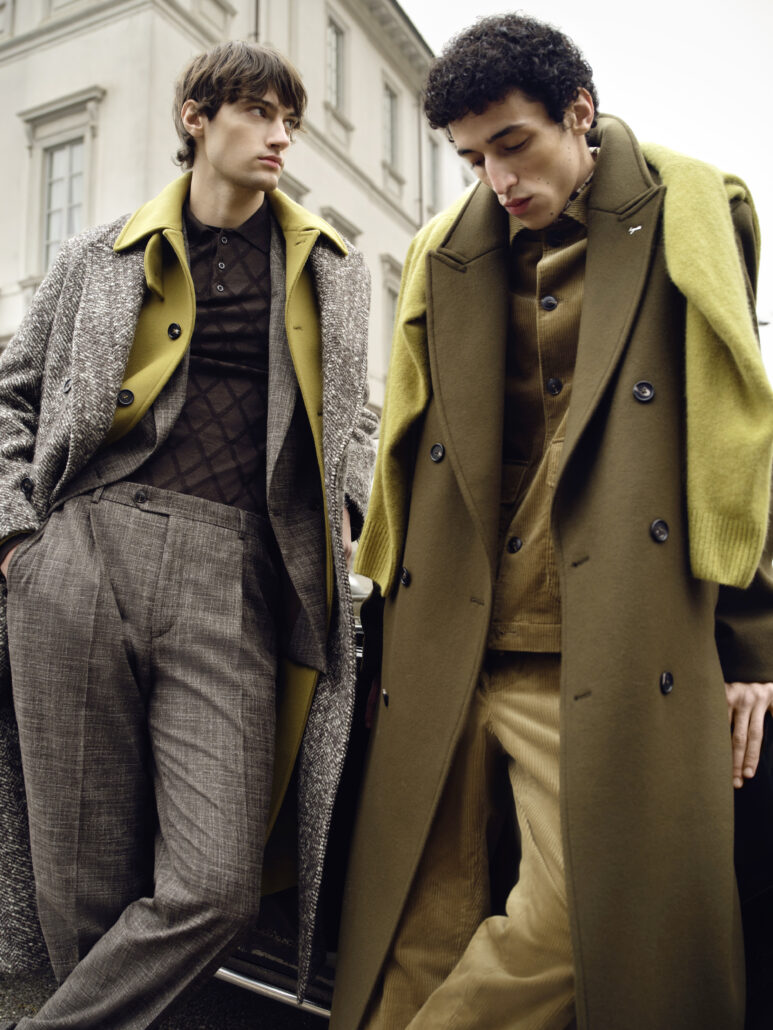
Santaniello is wholly committed to reinterpreting classic styles. Creative Director Antonio Santaniello explains: "What is needed is a balance between modernity and memory. It's not about reproducing the past, but reinterpreting it with contemporary sensibility and a deep sense of authenticity. Today, this is reflected in softer, more natural silhouettes, materials with a lively feel and interesting texture that radiate quality and authenticity. For me, New Classic means creating things that last – contemporary in style, timeless in essence."
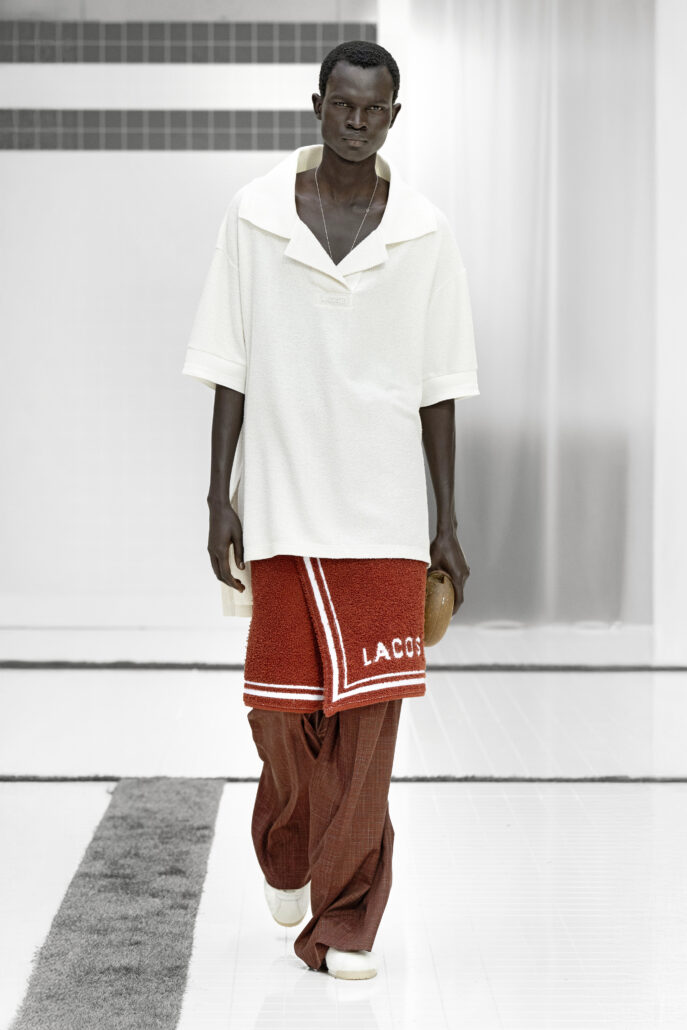
Christoph Weller, CEO of Lacoste D-A-CH & Scandinavia, also talks about zeitgeist and timelessness: "We strongly believe in translating classic silhouettes into new materials, keyword light-tech. We come from the world of sports, so this step is a natural one for us. I am convinced that today, more than ever, it is important for a brand to be authentic—in its products and in its communication."
Clarity in one's own signature style thus becomes a key factor for success. For brands, the simultaneous presence of various trends brings freedom on the one hand and complexity on the other. Where there is room for experimentation, the absence of dominant trends simultaneously makes it more difficult to communicate relevance. The effects for consumers are equally ambivalent: personal style is becoming more personal, more individual, less tied to age or rigid categories. This brings freedom once again, but also the challenge of deciding what really belongs to you from a multitude of possibilities.
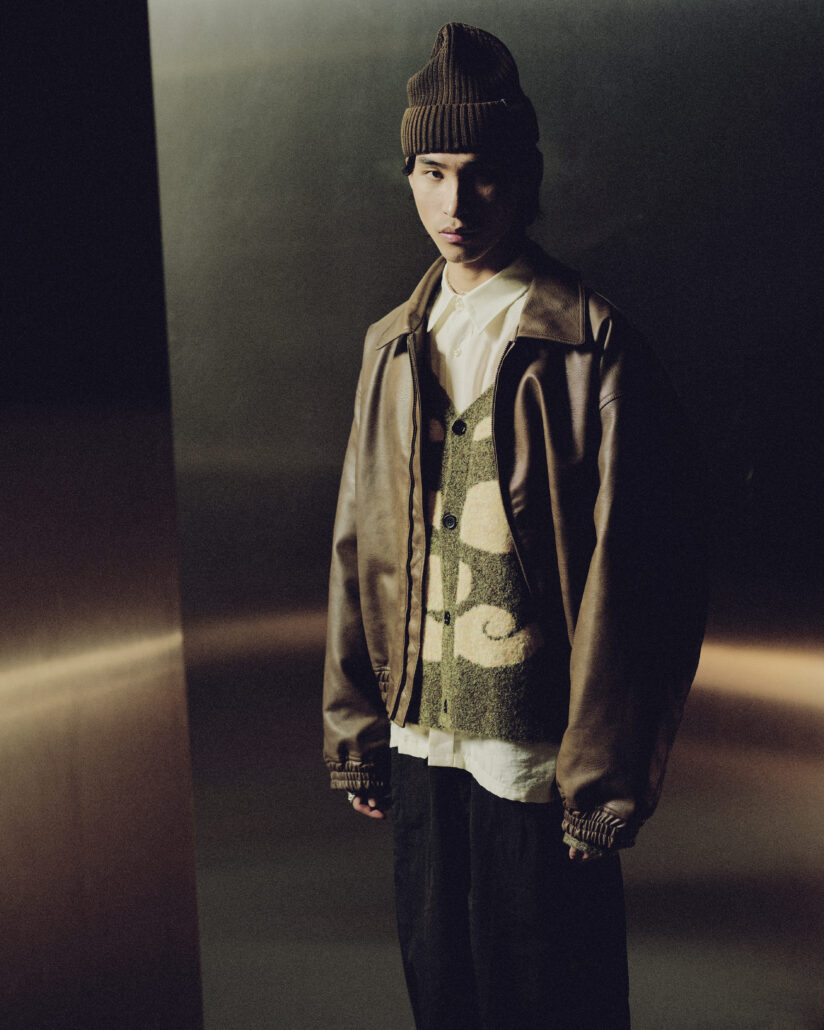
Chung Wai Cheung, founder of the Danish brand Woodbird, confirms the dissolution of conventional boundaries: "I feel that fashion is becoming a little more formal again, but I still believe strongly in streetwear. The cool kids from the block have grown older and are looking for streetwear that suits their lives. So it's about finding new interfaces." What we're looking for are new approaches, possibilities, and ways to inspire: "When it comes to fashion, men today have a different kind of confidence than in the past. Trends are becoming less important, while personality is becoming more significant."
Under these circumstances, menswear is becoming a dynamic field, reflecting cultural change, the increased influence of social media, and a balanced need for comfort on the one hand and style on the other, as well as a stage for new role models. Traditional role models have had their day; personalities such as Timothée Chalamet, Colman Domingo, and A$AP Rocky are more than just style icons—they are catalysts for a new era that combines intelligence, courage, and cultural sensitivity.
A challenging balancing act in design? "Not so much for us, because our brand DNA acts like a compass," explains Chung Wai Cheung. "We have established our own culture; we don't follow trends, but our intuition. This makes our brand a safe space and our collection a reflection of our values."
One thing is certain: the idea of men as a uniform customer group is outdated. Today's menswear consumer is diverse, heterogeneous, and individual, and enjoys fashion: "Men today enjoy experimenting with their personal style more, and that makes men's fashion more versatile and interesting than it used to be," explains Antonio Santaniello. Christoph Weller adds: "Men today are definitely more concerned with what they wear. Conversely, this also means that they make more informed decisions and shop more consciously."
Sense-making
The question of meaning has thus also arrived in fashion and is often clarified in dialogue—keyword: cooperation. For example, the label Studio Nicholson 2025, founded in 2010 by Nick Wakeman, invited an external creative partner for the first time: menswear designer and consultant Aaron Levine, who has worked for Abercrombie & Fitch, Club Monaco, Madewell, and Vince in the past and founded his own label in 2024. Together, the two creatives developed a 26-piece capsule collection within the label's seasonal modular line.
Levine comments on the collaboration by saying that they share a common philosophy. His goal is to create things that are as useful as tools. Wakeman adds: "I don't want to produce anything pointless. Clothing must have a purpose and be beautiful at the same time. My approach is to modernize classics. I have no use for superfluous elements or decoration for decoration's sake."
This approach once again highlights the importance of focusing on the essentials; expertise requires prioritization: if you want to connect with your customers honestly, you must not compromise your own credibility by trying to be everything to everyone.
"The pressure within the individual categories has increased enormously," says Florian Wortmann, Chief Brand Officer at Bugatti. "Many are trying to compensate for the resulting loss of sales by tapping into new product groups and calling it 'total look'. That's understandable, but to be successful, you need an extremely strong brand."
Florian Wortmann sees this strength clearly at Bugatti, as well as the necessary expertise: "We have a long history and expertise in many product areas, which most people in the D-A-CH region are still unaware of. For example, outerwear accounts for a third of our sales. We are strong in shirts, knitwear, trousers, and, since summer 2025, suits. My current task is to bring all these strengths together in one place and thus make the entire Bugatti world tangible." Emotions are crucial in achieving genuine brand loyalty: "Today's consumers buy situationally for their individual moment in life, from the brand with which they feel connected," explains the CBO. "The classic occasion logic—formal for brand X, casual for brand Y—is losing importance. Brands have to meet people where they are in their real lives. With our 14 product licenses, we are well positioned to do so."
His wish for menswear? "More courage." The answer comes quickly. "Especially in the D-A-CH region, we often only dare to try something new when we have our backs against the wall, and then it seems forced. I wish for the courage to break new ground, even when things are going well."
Christoph Weller also talks about courage: "To win over end consumers today, you need to surprise them. Communication is key, as is a deep understanding of your own community. We just launched a new membership program that lets us respond to our customers in a much more personalized way than before. Money-can't-buy experiences are becoming more and more important. Discount codes are no longer enough to inspire enthusiasm. What really sticks is when you succeed in making people feel that they are special." Last year, for example, the brand founded a tennis community in Zurich. Exclusive experiences are made possible through a collaboration with Zurich's Dolder Grand.
A recent study by EY confirmed that investing in experiences is worthwhile from a brand perspective: shared experiences significantly increase loyalty. According to the authors, 83 percent of respondents would be highly likely to buy if a brand offered exceptional experiences.
Serving Culture
The Danish brand Woodbird is also breaking new ground, albeit outside the realm of sports, announcing the opening of its first noodle shop in 2026. It will not be a traditional store, but rather a hybrid of a restaurant, streetwear store, and community hub. Scandinavian design meets Asian street culture—a fusion that founder Chung Wai Cheung has shaped through his roots in Hong Kong and his many years of experience in fashion. The menu will feature signature dishes, complemented by Woodbird merchandise and selected collection items. "In a world where everything is constantly available, people are looking for participation more than ever. That's why running and cycling clubs are such a big thing right now and cool coffee concepts are booming. I've been toying with the idea of opening my own restaurant for about ten years, so this step is a very natural one for us." And one that further underscores the brand's guiding principle: "People before product." The focus is on the community, on people. Chung Wai Cheung: "In menswear in particular, it's less about where you shop and more about who you shop with. I also feel this strongly among my friends who don't work in fashion: they want to know someone in a store, and that's enough to make them feel like they're part of the whole."
What are we all running for?
The prospect of being part of a larger whole is promised not least by community concepts such as the running clubs mentioned above. The goal of participants in such events is rarely to run ten kilometers. Rather, it is about becoming part of a community and finding people who share their own passions and values. Sport, but also hospitality, serve as bridges and connectors in this context.
Against this backdrop, it is hardly surprising that merchandise items are currently experiencing an enormous boom as both lifestyle markers and cultural currency. Every running and cycling club, every gym, and almost every coffee shop offers its own community T-shirts, caps, and other items as a sign of belonging. The fashion industry is also getting in on the act: for retailers such as Stoy in Copenhagen, merch serves as a low-threshold entry point—a door opener into their world.
From a critical perspective, two questions arise: Is the growing merch culture in danger of replacing authenticity with marketing logic? Does the ubiquitous presence of merch lead to community degenerating into a mere marketing platform?
Not if communities are built on one of the following pillars, Business of Fashion correspondent Lei Takanashi is convinced: activities, personality, or values. At its core, this is the central thesis that runs through the previous paragraphs. The focus is on people and their individual realities. The image of the typical man as a homogeneous consumer is a thing of the past. How men interact with fashion no longer follows a fixed formula or linear pattern. Traditional departments or modular systems fall short when the target group consists of people with very different backgrounds, lifestyles, and expectations. Modern menswear is no longer merely consumed; it is lived, enriched by references to sports, hospitality, art, and culture. The answer to the question of the new currency is probably: "Everything money can't buy." What cannot be bought is priceless today.