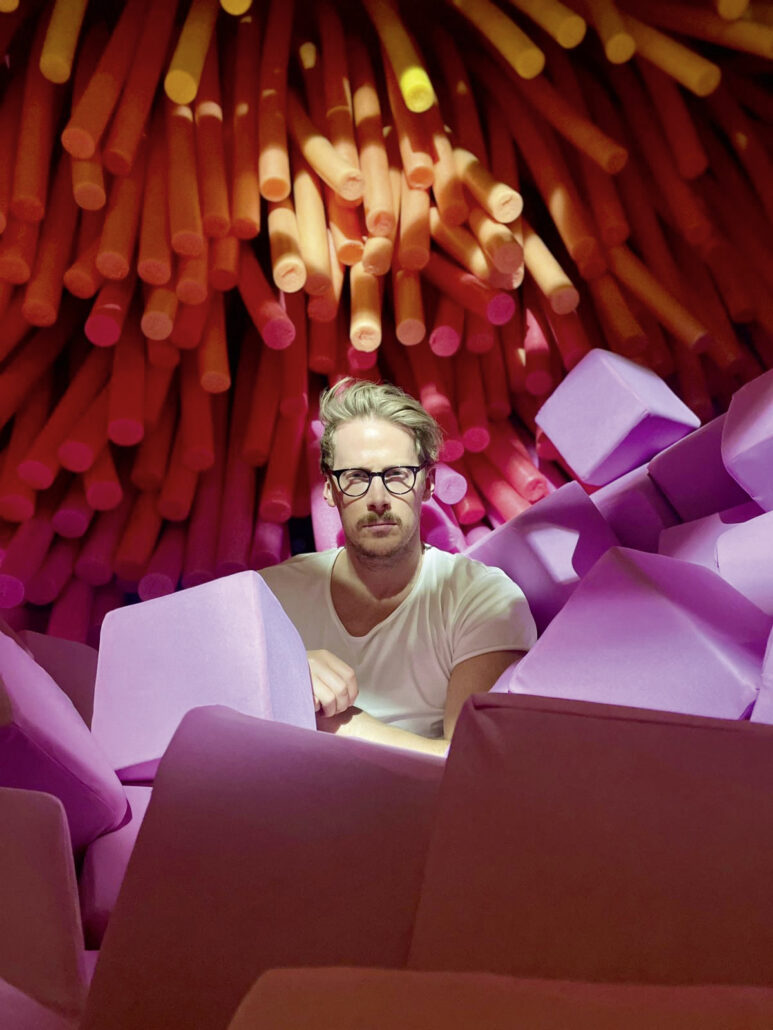
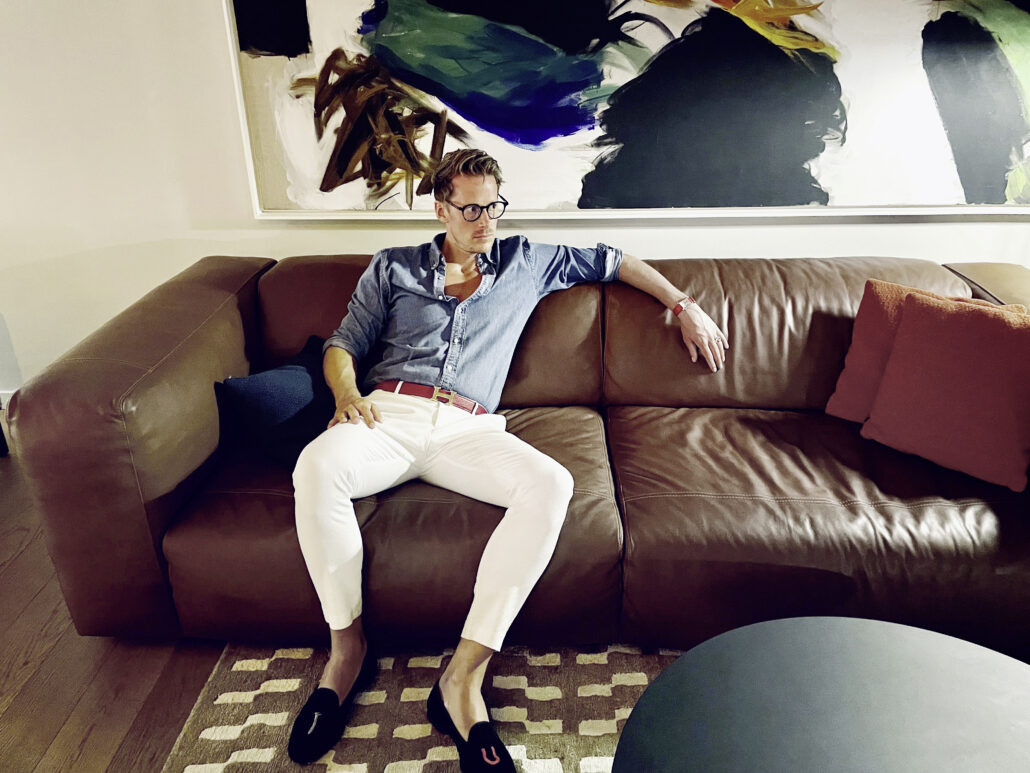
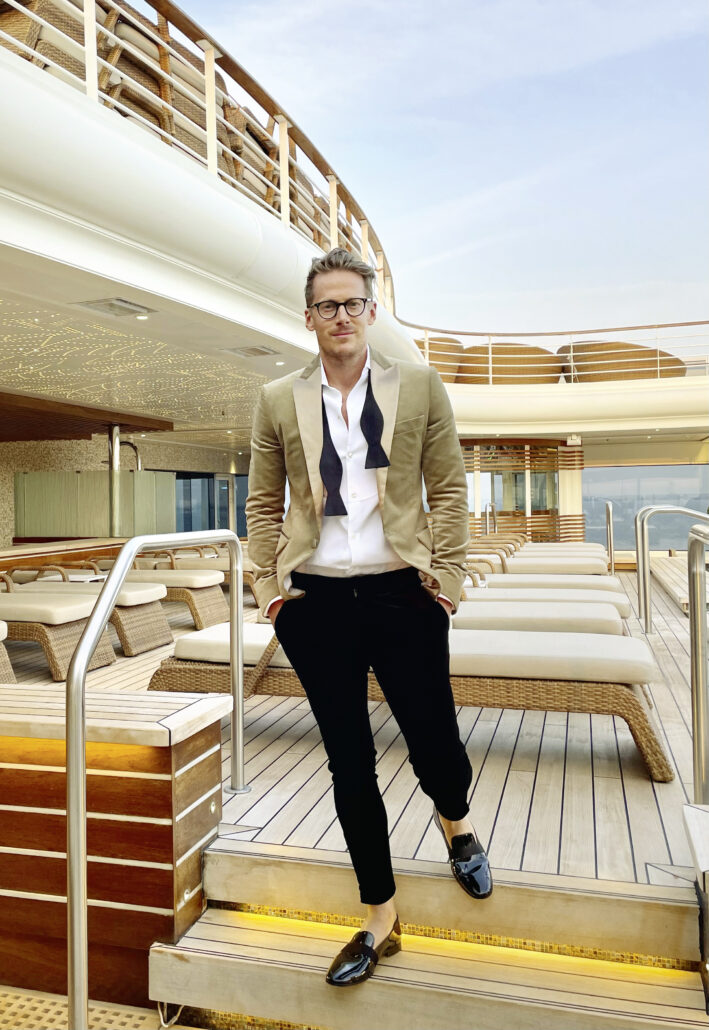
Gustav Emil Loft x Grant Harvey Dudson
How to be seen
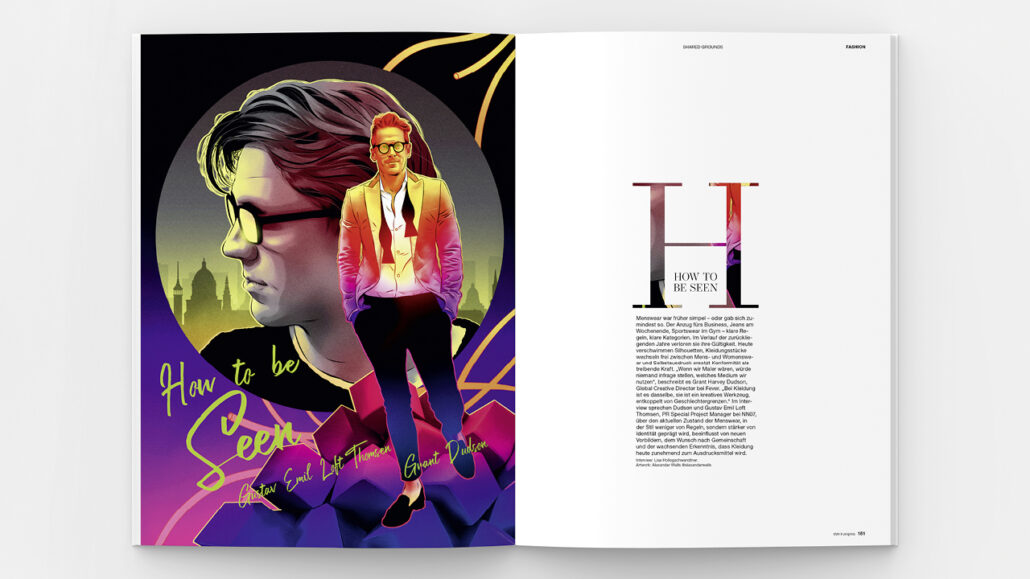
Menswear used to be simple—or at least it appeared that way. Suits for business, jeans on the weekend, sportswear at the gym—clear rules, clear categories. Over the past few years, these rules have lost their validity. Today, silhouettes are blurring, garments are freely switching between menswear and womenswear, and self-expression is replacing conformity as the driving force. "If we were painters, no one would question which medium we use," says Grant Harvey Dudson, Global Creative Director at Fever. "It's the same with clothing; it's a creative tool, decoupled from gender boundaries." In this interview, Dudson and Gustav Emil Loft, PR Special Project Manager at NN.07, discuss the current state of menswear, where style is less defined by rules and more by identity, influenced by new role models, the desire for community, and the growing realization that clothing today is increasingly becoming a means of expression.
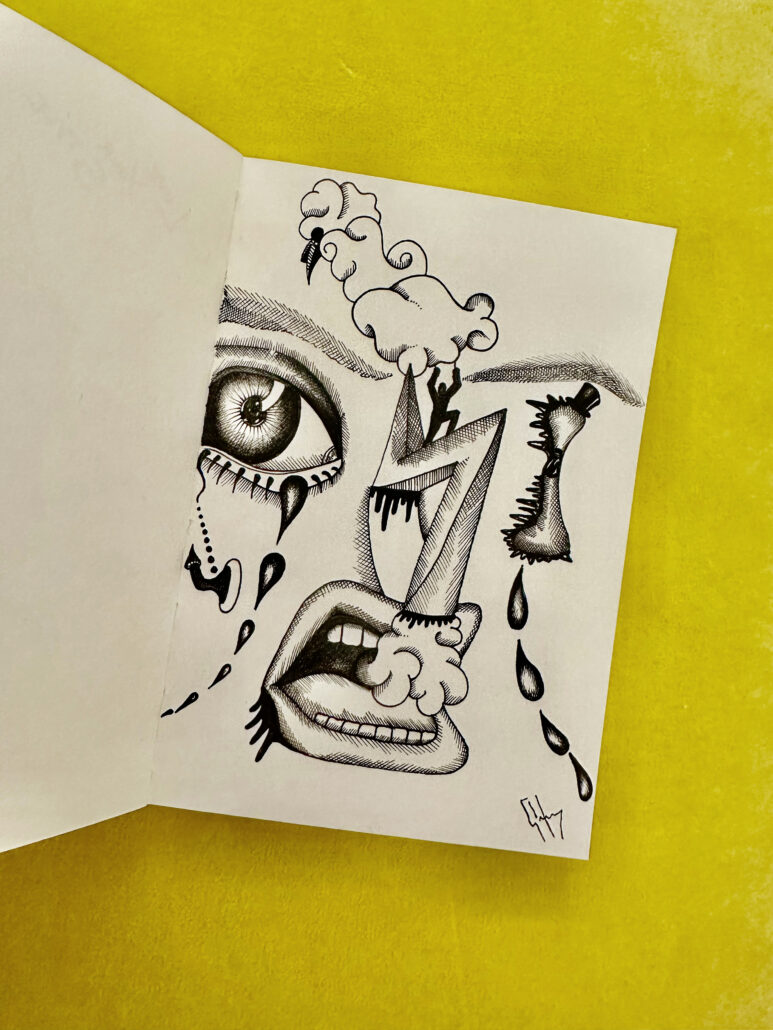
Interview: Lisa Hollogschwandtner. Artwork: Alexander Wells @alexanderwells
In the past, menswear was divided into strict categories: formal, casual, sports. These boundaries have become increasingly blurred over the past few years. What major changes have you both observed in the menswear market, and do you think men may have been underestimated by being pigeonholed for so long?
Grant Harvey Dudson: I've seen many fashion cycles come and go—after all, I'm older than Gustav. And it's almost ironic that much of what Gen Z finds exciting today already existed 20 years ago. Oversized silhouettes, for example. Back then, I was in a hip-hop band and wore jeans with a 40-inch waist, held up by a belt. Looking back today, I wonder: What was I thinking? But that's fashion. It evolves, it comes back, it reinvents itself.
For me, fashion is based on two questions: How do you want to be seen and how do you want to express yourself? Some people only wear black. I myself have always been very colorful because I see the body as a canvas. Clothes speak before you do.
What's exciting is that we are now experiencing a total fusion. Seasons, genders, categories—everything is merging. Why shouldn't I go to the womenswear department, fall in love with a cardigan, and wear it? The old boundaries simply don't work anymore, and that's a good thing! Self-expression has never been freer than it is now.
Gustav Emil Loft: I agree . I always look at menswear from two perspectives: on the one hand, from my professional context, where I am confronted with new fabrics, silhouettes, and ideas every day, and on the other hand, from the perspective of someone who tends to dress in a uniform style in his private life. I like to wear black, I love clean lines, and I am very interested in construction.
I have also experienced the gender shift that Grant mentioned. A few years ago, I started buying pieces from womenswear collections simply because the silhouettes were more to my taste. The pants had the volume I was looking for—something that wasn't available in menswear at the time. Today, this line is becoming increasingly blurred. At NN.07, we now talk a lot about how we can integrate women into our menswear campaigns, because clothing is becoming increasingly genderless. Ultimately, it's about how a garment looks and feels, not which side of the store it comes from. This is a healthy and long-overdue shift.
Grant Harvey Dudson: Exactly . If we were painters, no one would question what medium we use. Clothing functions in the same way as an artistic tool, not as a gender attribution.
With the disappearance of old boundaries, the role models we look up to are also changing. In a world where anything is possible, who embodies modern menswear for you?
Gustav Emil Loft: That's interesting, because older generations would probably often answer this question with icons like Steve McQueen—black-and-white photos on a boat, that timeless masculine ideal. My generation grew up with different influences. When I started to really get into fashion at 14 or 15, A$AP Rocky was the role model. He was one of the first men I saw wearing a skirt, and he wore it as if it were the most natural thing in the world. If I could swap wardrobes with anyone, it would be him. He gives people the space to just be themselves. Harry Styles and Jacob Elordi have also contributed a lot to gender fluidity in recent years. It's less about trends and more about freedom.
Grant Harvey Dudson: I find it fascinating how adventurous we are in our teens and twenties. When I was young, many of the things we dreamed of were simply not accessible. There was no eBay, no secondhand platforms, no resale culture. That has changed dramatically: today, you can buy a jacket from your favorite brand secondhand and wear something truly special.
When I think of role models or people who have their own unique style, David Beckham comes to mind. He has definitely opened up menswear to be more daring. A personal inspiration for me is and always will be Steve Edge. He was the art director for Star Wars at 18, didn't start school until he was 14 because of dyslexia, and has led a truly extraordinary life. His motto is: "Dress for the party and the party will come to you." His flamboyance is authentic. He taught me how powerful clothing is in attracting the right people for you. When you dress the way you are, a room quickly sorts itself out—and that's a good thing. You don't waste time with the wrong people.
As style becomes increasingly personal, the following question arises for me: Do men today choose brands not only based on aesthetics, but also on values?
Gustav Emil Loft: That's not an easy question for me to answer. There are brands that I love, but I know very little about what goes on behind the scenes. Values are usually reflected in a commitment to craftsmanship or to one's own community, rarely in political statements. I would put it this way: I don't buy brands because of their values, but I avoid them if their values are problematic. For example, if a brand acts in a discriminatory manner, I don't support it. But in general, I think people connect with brands through products, not manifestos.
Grant Harvey Dudson: I agree . Brands often don't communicate their values clearly enough to serve as a real basis for decision-making. In the end, it remains instinctive: if something feels good, you wear it. Nevertheless, we should be aware of how strongly clothing communicates. A piece with a large American flag from Ralph Lauren can be interpreted differently depending on the context. Clothing carries meaning, whether we want it to or not.
Gustav Emil Loft: Absolutely . At NN.07, our values are closely linked to our products, storytelling, and community. I think that applies to most menswear brands.
Speaking of community, there's a trend I'd like to talk to you about: running and cycling clubs are everywhere. What do you think is driving the hype?
Grant Harvey Dudson: Formats like this give brands the opportunity to show what they stand for without advertising in the traditional sense. The Nike Stéphane Ashpool basketball court in Paris is a great example. No logos, just a space for people with a shared passion. It wasn't about selling products, it was about connection. When a brand succeeds in creating such connections, you see it in a different light. It becomes a world you want to belong to.
Gustav Emil Loft: I live in a city with countless running and cycling clubs, and I see how people feel connected to brands through these experiences. They find friends, meet like-minded people, and feel a sense of belonging. The networking aspect should not be overlooked either—you could say that these clubs are the new golf courses. Brands create the entry point, people create the culture.
But why is the desire to belong so much stronger today than it used to be?
Gustav Emil Loft: We are oversaturated with content. Endless scrolling, endless brands fighting for attention—it can be alienating. This makes physical touchpoints essential. For consumers, it's a return to the real world. For brands, it's an opportunity to create real experiences.
Grant Harvey Dudson: And there is something neutral about these groups. Politics, ideology, background—none of that matters. You're just there to run or cycle. It's about human connection in its purest form. The brand acts as a bridge, bringing people together in a place where digitalization often creates a feeling of isolation.
Grant, you work on large-scale experiences at Fever. Will experiences become more important than products in the future, or will a combination of both be needed?
Grant Harvey Dudson: That's an interesting question. I'm convinced that products will remain central. Ultimately, they are the core of every business. But the way they are positioned is changing. People increasingly want to invest in a world, not in a single product. That's why retail, which many have declared dead, is currently undergoing a transformation. For me, immersive brand experiences that make identity tangible are the future.
One project I worked on before Fever was an immersive experience for Johnnie Walker Blue Label. Young consumers often think they don't like whiskey simply because their first experience with it was negative. So we introduced them to the brand in a multisensory way, even with its own scent that told the "One in 10,000" story before anyone took a sip. When people feel emotionally connected to a brand, it changes everything. Experiences are crucial, but it's only in combination with the product that loyalty is created.
Speaking of retail, what do you think the menswear store of the future should look like?
Grant Harvey Dudson: A few years ago, I implemented a project for a brand called Ufos – a recovery trainer brand. They were present at the Boston Marathon and wanted more store traffic. I'm a big fan of art-led design: art attracts people, arouses curiosity, inspires. So we built a huge installation out of mini sneakers with lights – right in the middle of the store. The curiosity was incredible. People thought it was an Apple Store. Experiences like this allow brands to invite people into their world. If you succeed in inspiring people through these touchpoints, customers become multipliers who retell the brand's story from their perspective. For me, the dynamics in fashion have fundamentally changed: brands no longer dictate identity, they motivate people to interpret style in a truly personal way.
Gustav Emil Loft: I completely agree with Grant: retail should always be more experience-oriented. A store without a genuine welcome, densely packed clothes racks, endless options—nobody needs that anymore. In a world where everything is available online at any time, brick-and-mortar retailers need to find new ways to inspire. That's why, from a brand perspective, it's more important than ever to keep an eye on the customer's "full journey": from the moment they enter the store, to the paths they take within the store, to what remains after they leave. The quality of the customer journey will determine how we shop in the future. That's why we at NN.07 are investing heavily in retail. Our stores are performing excellently, with new ones opening in New York, London, and Copenhagen. We work with a great team of architects who create spaces that truly reflect our universe. When people enter our stores, they should not only see clothes—they should feel what NN.07 stands for. One thing I would like to add is this: we should move away from focusing so much on conversion rates. Even people who don't buy anything can become customers later—online or offline.
Grant Harvey Dudson: Absolutely . The UFO installation, for example, generated enormous curiosity and sales increased by over 1,200 percent. People came for the experience; the product followed. For me, retail works best when it gets people to engage with a brand, experience it, and connect with it.
Do you need a big budget for experiences like this?
Grant Harvey Dudson: Only if your name is Dior or Louis Vuitton. For everything else, you need good ideas, not big budgets. The UFOs installation, for example, wasn't expensive at all. We used the brand's product—the shoes—as building blocks for the installation. The result was visually striking without breaking the budget. So no, you don't need huge resources, just smart ideas.
You both travel a lot. Are there any trends or tendencies that you have observed in other parts of the world that have not yet arrived in Europe but could shape the future of fashion, especially menswear?
Gustav Emil Loft: When we talk about fashion, Europe remains the epicenter where things are created, apart from Japan. I feel this time and again when I travel to the USA. The Scandinavian style in particular, which stands for minimalism, precision, and clarity, also has enormous global appeal. Even during my two-week trip to Japan last fall, people were genuinely enthusiastic when they talked about Scandinavian fashion. Maybe I'm biased, but for me, Europe definitely remains the trendsetter.
Grant Harvey Dudson: I agree. Stockholm really left me speechless on my last visit. In one store—basically the Harrods of Stockholm—I discovered some of the most striking, creative garments I have ever seen. The colors, the creative flair, the perfection in cut and lines—that kind of aesthetic stays with you. But to address your original question more closely, Lisa: When we look at Shanghai, Seoul, and similar cities, they are far ahead in the context of experiential retail. The budget sizes, the courage in implementation—Europe can't keep up. Nevertheless, on the product side, I definitely agree with Gustav.
Gustav Emil Loft: I would even go so far as to say that South Korea and Japan are light years ahead in terms of experimentation when it comes to products. But when we talk about timeless fashion, reliable aesthetics, and quality, Europe continues to be immensely important.
One last question to finish—I think it's fun: Imagine you were both hosting a dinner party. Invitations would be based solely on style. Who would get an invitation and why?
Gustav Emil Loft: Is it really just the style that counts , or also who you would like to sit next to?
Just the style—and it's best to focus on menswear.
Grant Harvey Dudson: I wanted to invite Lady Gaga in her meat dress, but I guess that doesn't count as menswear. Unless Gustav wears it. (laughs) But to get back to the actual question: definitely Steve Edge, David Beckham, and Brad Pitt. Brad is having a real style moment right now—the colors, the silhouettes, the courage to experiment. I've never seen him dressed so well.
Gustav Emil Loft: I agree with you. Brad Pitt and Andrew Garfield are doing a lot of good things right now. I would invite A$AP Rocky, and he can bring Riri as his plus one! Those two take any party to the next level.
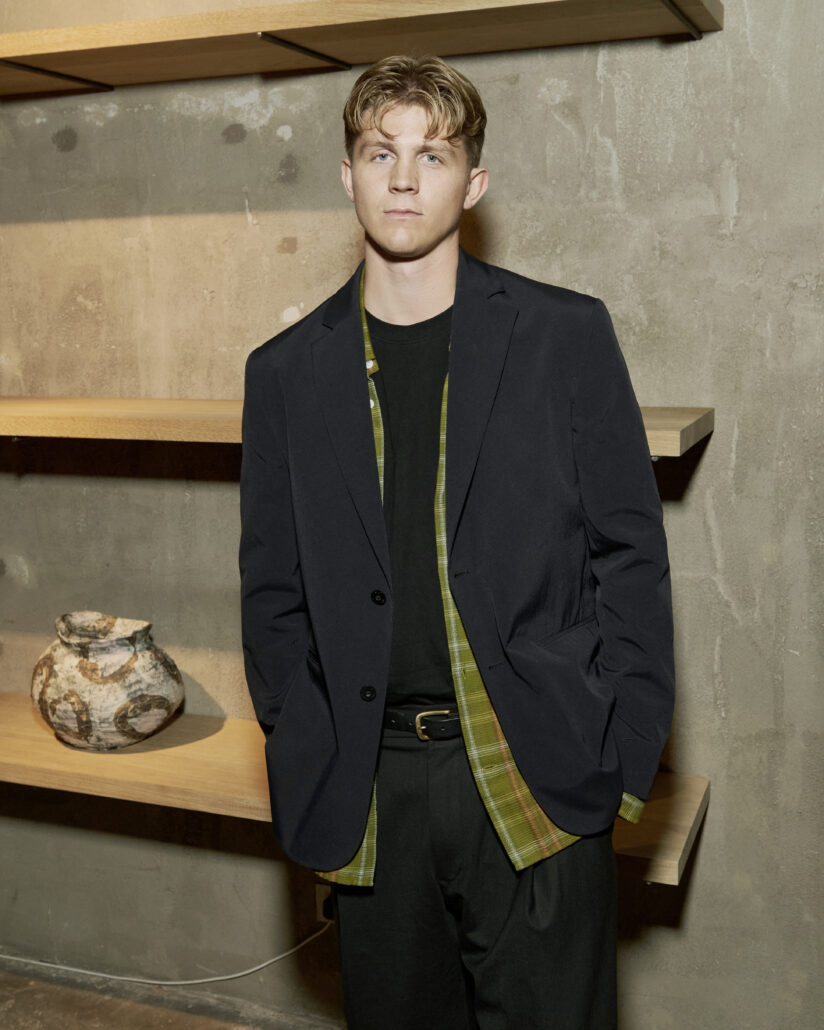
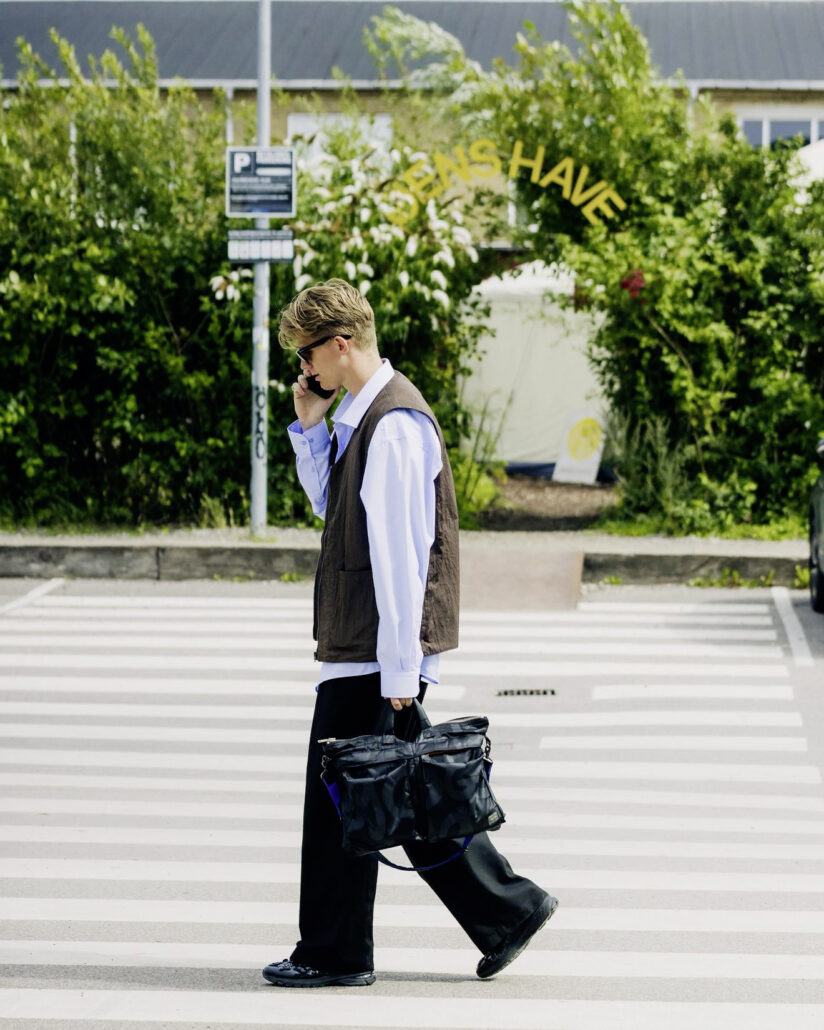
Gustav Emil Loft
Gustav Emil Loft, 26, is PR Special Project Manager at NN.07 and already has ten years of experience in the fashion industry. From the very beginning, he was fascinated by how brands tell stories and convey identity—an interest that continues to shape his work today.
Born in Copenhagen, Gustav draws inspiration from the urban diversity of his city. He explores the local restaurant scene, spends time with friends, and continuously broadens his cultural horizons. His interests extend far beyond fashion: art, film, and a variety of cultural trends flow into his work and influence his perspective on brand communication and style.
For Gustav, fashion is more than just product presentation. It is an expression of personality and part of a larger dialogue between identity, creativity, and community. In his role, he combines strategic communication with a keen sense of narrative and aesthetics, creating perspectives that appeal to people and invite them to see themselves in the brand. @gustavemilloft

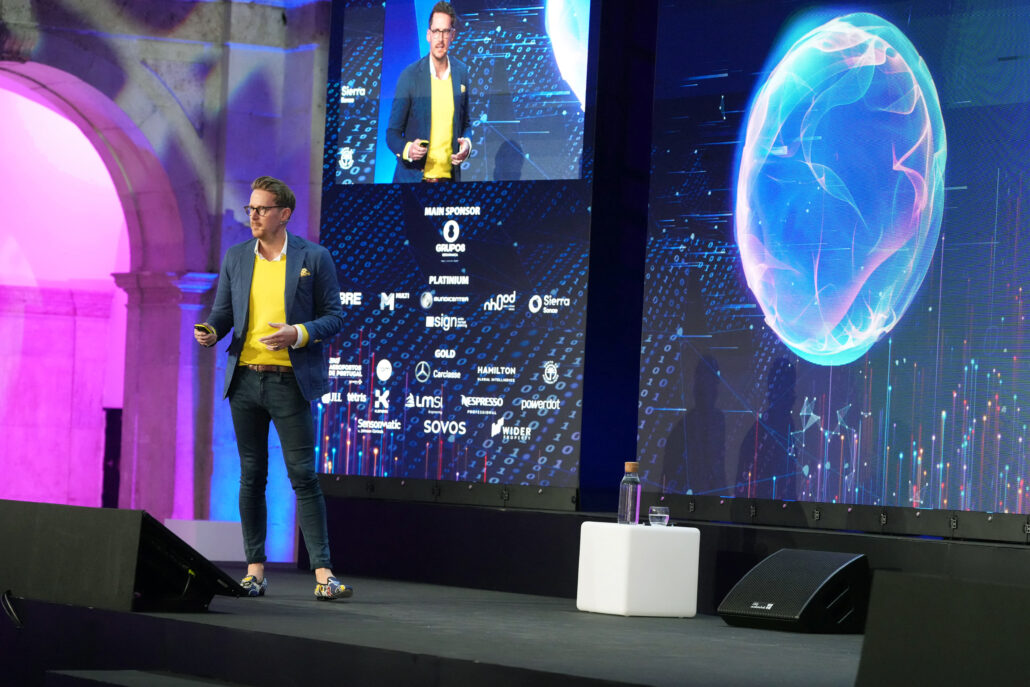
Grant Harvey Dudson
Grant Harvey Dudson is Global Creative Director at Fever, where he leads the creative work of Fever Originals, the company's experience division. His professional background includes experience-driven campaigns and immersive art installations. He began his career with large-scale projection mapping shows for brands such as Ralph Lauren and Ferrari, and went on to develop concepts such as "The Deezer Bandwagon" and a bespoke interactive dance floor for HP's "Bending The Rules" campaign, followed by immersive art installations for companies such as Ford, Tudor, and Macallan. Technology and innovation are at the heart of his work, always with the goal of creating something the world has never seen before.
For five years, he led the global creative execution of experience campaigns for Johnnie Walker Blue Label and Black Label at the creative agency Chorus. Today, his projects include Dopamine Land—a multisensory world—as well as festivals and drone shows, all live and designed to deliver the best possible experience. Outside of work, Dudson actively seeks out challenges and unique opportunities. Two years ago, he even participated in a cage fight, won Yahoo's short story competition, and played a small role as Hugo in the third season of "The Crown."
His motto: "Life is defined by the stories you have to tell at the end." Making mistakes quickly, accepting imperfection, and consistently leaving your comfort zone are the principles by which this creative person lives.
@grantedaccess