Performance Days
On the road to success
For a long time, Performance Days in Munich was primarily associated with technical fabrics, sportswear innovation, and product development—a highly focused sourcing platform centered on function, protection, and performance. This foundation remains intact. At the same time, the trade show is beginning to evolve.
Text: Stephan Huber. Photos: Performance Days
Today, brands such as Louis Vuitton, Loro Piana, Diesel, and Drykorn are making their way through the halls of Performance Days—not only in search of technical innovation, but also for new fabrics and new approaches to product design. After all, performance materials are no longer limited to sports or the outdoors. They have become part of a contemporary fashion language.
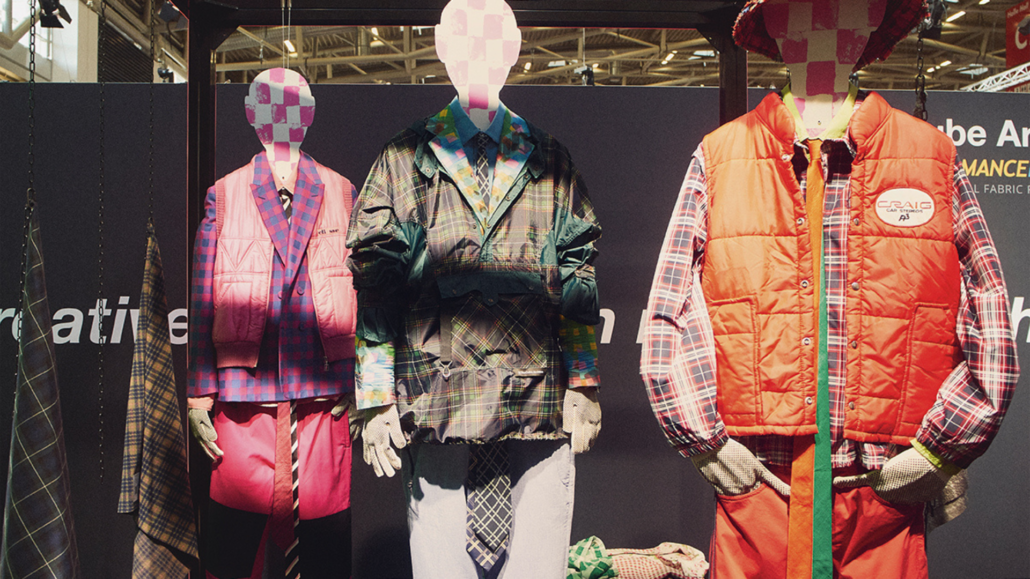
“Performance is function. Fashion gives it meaning.” The clearest expression of this trend was the newly created Creative Area, developed in collaboration with TheCube Archive and Diesel materials researcher Luca Zanatta. At the heart of the installation: vintage performance garments, archival workwear, technical fabrics, and contemporary silhouettes—combined to create a visual dialogue between the past and the future. The installation came across as neither nostalgic nor a classic sustainability statement. Rather, it reflected a cultural movement that extends far beyond fashion: the rediscovery of existing resources. In architecture, designers are increasingly working with existing materials. Furniture design is rediscovering repair and visible aging. Vintage has evolved from a niche obsession into a serious business. After years of overproduction and a throwaway mentality, fashion, too, is beginning to rediscover the value of longevity, repair, and second product cycles.
“It’s not about producing something new just to make a fashion statement,” explains Viktoria Strehle, Head of Visitor Management. “We deliberately work with existing garments and materials.” This philosophy is more deeply embedded in the Performance Days than one might initially assume. Trade show booths are reused across seasons. Repair services have become a regular feature of the trade show. Material forums are increasingly focusing on durability, recycled fibers, and natural materials for long-term use rather than short-term consumption.
The tone surrounding these topics has also changed. Less moralistic. Less ideological. No one here is preaching sacrifice. The focus is on product intelligence, emotional longevity, and material quality—products that people want to keep, repair, or reinterpret. This is precisely where the Performance Days become interesting for fashion beyond sourcing. That’s because the trade show is increasingly functioning less like a traditional textile fair and more like a curated knowledge platform. “You don’t need 50 contacts,” says Strehle. “You need the right five.” Perhaps that’s exactly why the event continues to grow while many traditional trade shows are struggling. The strength of Performance Days lies not in size, but in trust: carefully selected exhibitors, focused networking, strong educational formats, and a clear direction. This could also explain the growing fashion presence surrounding the trade show. The industry is beginning to recognize that material knowledge, new cycles, and functionality have long since become part of a new concept of luxury.
However, some retailers still seem reluctant to embrace this trend. Despite endless discussions about sustainability, circularity, and transparency, many retailers continue to underestimate how important expertise and product knowledge could become in the future. “There’s an incredible amount of knowledge out there,” says Clarissa Stadelmann, Brand Manager at Performance Days. “And it doesn’t cost a thing. But many still don’t take advantage of it.”
Perhaps the Performance Days lack some of the classic glamour found at many fashion events. But that’s precisely what’s becoming increasingly irrelevant. Because what’s emerging here is a different, new understanding of product culture, embedded in a community based on trust and personal interaction.


