Longview
REALNESS – The Economics of Trust
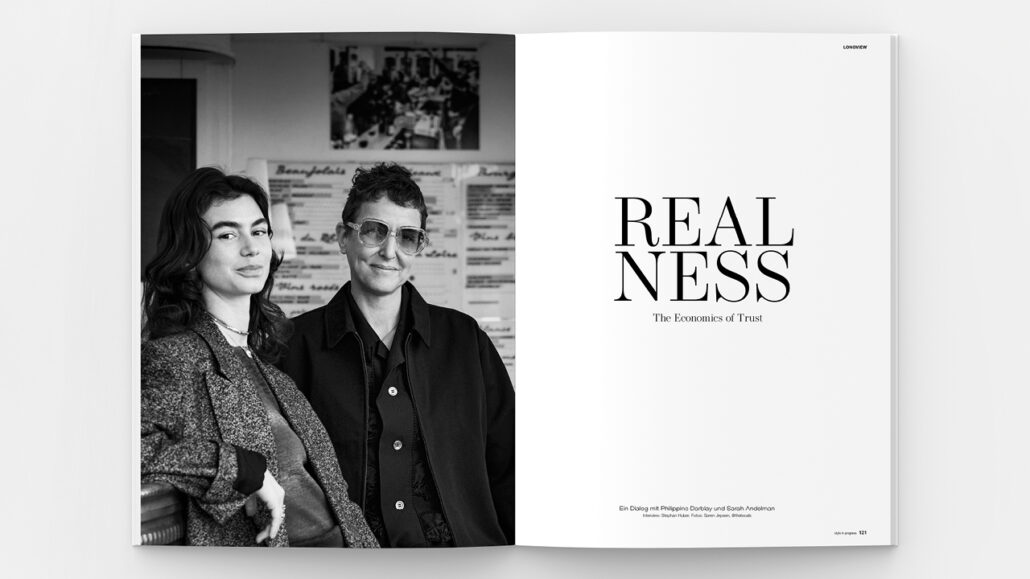
A conversation with Philippine Darblay and Sarah Andelman.
Interview: Stephan Huber. Photos: Søren Jepsen, @thelocals
What a wonderful place to talk about REALNESS – The Economics of Trust. And it’s even more wonderful to do so with the two of you, Philippine and Sarah. In your own ways, you’re both what I’d call personal brands. Sarah, of course you’ll always be associated with Colette—whether you like it or not, it remains an extraordinary legacy. Just an Idea sounds almost deliberately understated, considering the cultural impact you’ve had. Was that also a way for you to redefine your role after Colette? And does this name allow you to move more freely than a traditional structure would?
Sarah Andelman: For me, it’s a continuation of Colette. I’m still working with tangible spaces. Earlier this year, I curated a pop-up shop called Plan C Framework for Milan Design Week, bringing together various figures from the worlds of design and art. And honestly, that has a lot to do with what I was already doing at Colette, and with everything I’ve done since then. Whether it’s a pop-up for a street art exhibition or for the Snoopy exhibition in New York—it’s always about finding a balance, bringing creativity together, and introducing people to things they might not yet know. In many ways, what I’m doing now is still Colette, just in a different form.
But still deeply rooted in the physical world.
Sarah Andelman: Yes, always. For example, I’m currently working with Memo Paris on a collaboration with the illustrator Olimpia Zagnoli. I was looking for a space for her in Milan and discovered this place with this incredible red staircase. I fell in love with it immediately and suggested we do a “Just an Idea” project there. And that actually says a lot about how I work today. Everything is interconnected. Sometimes I curate directly, sometimes I consult with brands and help them find the right collaborations or settings. But ultimately, it always comes down to the same thing: creating an experience centered around a space. It’s very similar to what I used to do at Colette, except that now it’s no longer tied to a fixed location. The work has become more temporary, flexible, and open. But the intention behind it hasn’t changed.
It feels incredibly real: turning ideas into physical experiences. Philippine—what you share isn’t just information about a restaurant, a pastry shop, or a hidden gem for street food. You convey a feeling. You make people want to be somewhere, to feel at home somewhere. How would you describe what you do?
Philippine Darblay: What interests me most is the feel of a place. To be honest, I often return to a place more for the people than for the food itself. I can keep going back to a café where the coffee isn’t exceptionally good if the atmosphere is right and the people there make me feel good. The opposite is harder. You can enjoy an incredible meal, but if the atmosphere feels cold or you just don’t connect, you might never come back. So for me, it’s really about warmth. It’s about how a place welcomes you. I think hospitality is still greatly underestimated. I love places where you immediately feel at home, where there’s a person behind the place, a personality, something human that goes beyond what’s on the plate. I think people are longing for that again. In the restaurant industry, for example, there was this long phase of highly contrived dining experiences, spectacular plates, very conceptual cuisine. And that produced some amazing things. But after all the changes of recent years, including Covid, many people are looking for something else again. Something more human. Something more immediate. Something more authentic. Perhaps that also stems from my own background. Before I went freelance and now work on projects for Madame Figaro or Lonely Planet, I never quite felt at home in traditional media environments. I worked in Copenhagen, London, and Berlin, and when I returned to France, I suddenly felt a bit out of place. Conversations about food often revolved heavily around the restaurant industry itself, while I was increasingly interested in the atmosphere, the emotions, and above all, the people.
So, to sum it up, I’d say that people are longing for a personalized experience that appeals to all the senses—not just another perfectly standardized experience, not just another Chanel boutique or Starbucks, which look and feel the same all over the world. Is that something you both see as well?
Sarah Andelman: We still underestimate how much a place is shaped by the people who welcome you there. And you’re right: whether you go to Starbucks or Chanel, in the end it’s still the people who make the difference. It sounds obvious, but it’s amazing how many places still don’t really get it. You have to train your team to greet customers, be efficient, know what they’re selling, and understand what the products represent. When you’re selling something by a designer from Hong Kong or a glassblower from Copenhagen, the experience changes completely if someone can explain who made it and how it came to be. And that’s something online retail can’t really replace. Online, you read the story in its raw form. But in a physical space, there’s already music, scents, an atmosphere—a multisensory experience. And yet, sometimes no one tells you anything about what you’re looking at.
What you both do, in very different ways, is inspire people to want to leave the house and experience something in person—like a store, a restaurant, a room, a street, or a moment. Why do you think this longing for real places is so strong again right now?
Sarah Andelman: I think people are exhausted by screens. There’s a real desire again to be part of something shared—an experience, a group, something you can talk about afterward. It’s like going to the movies. Sure, you can watch a movie at home, but it’s different to be with other people and share an experience together. That’s also the specific role of curation: creating places people want to visit because they discover something there they’ve never seen before. Bringing together designers or ideas that wouldn’t normally exist side by side. Offering people a different perspective, rather than just another version of the same thing. What gives a place its own voice? Its own touch? At Colette, for example, how clean the place was was always particularly important to me. It sounds almost ridiculous to say that, but so many places just don’t seem to care. Dirty windows, dusty products, tables that aren’t clean. It drives me crazy.
Philippine, you use a digital platform to create something deeply tangible; you turn attention into action. People see something you post, and suddenly they feel compelled to experience it for themselves.
Philippine Darblay: Because seeing a place online and actually being there are two completely different emotional experiences. You can look at a beautifully curated place in Milan online and think, “Wow, that’s fantastic.” But when you physically go there, when you experience the atmosphere, the sounds, the people, and the energy of the place, something else arises within you—something real. And yes, of course we almost immediately pull out our phones again to take a picture. But the feeling itself is completely different from simply looking at a picture online. I also believe that cell phones constantly pull us out of the present moment. They drive us to the next thing, the next scenario, the next worry. We take in the lives of thousands of people at the same time. I often feel lost because of my cell phone, even though it’s also part of my work. So I have a real love-hate relationship with it. Even now, one of the reasons this conversation feels so pleasant is because I don’t have my phone in my hand. And I think that’s exactly why physical places are so important. They allow you to be truly present, at least for a moment. That’s becoming increasingly difficult, especially for younger generations. The feeling of truly being somewhere is fading away. And places can still create that feeling.
Sarah, your approach to retail never felt purely transactional. The sale always seemed to be the result of something else: discovery, emotion, experience.
Sarah Andelman: For me, this is also an economic concept—one that’s very different from platforms like Temu or Shein, where everything revolves around mindless consumption. Don’t get me wrong: consumption is the engine of civilization. But perhaps people are tired of being pushed to consume.
Philippine Darblay: I have to jump in here for a second. Because that’s exactly why we loved Colette so much. There was always something new to discover. You could come back every week and find something new. Back then, I could hardly afford anything. So I bought pens. But they were the coolest pens in the world. And even if you didn’t buy anything, you just wanted to look at everything. And Sarah has this incredible way of conveying enthusiasm. I remember the exhibition she curated at Le Bon Marché centered on literature and books. She knew every single artist, every object, every story. She’d say, “Look at this cup—I love these people because…” or “This artist is incredible because…” And suddenly, you weren’t just absorbing information; you could feel her enthusiasm. You got really excited yourself. You almost felt like a kid again. So much was happening all around you. And now I remember every single detail of an object that was there when we filmed something for that exhibition. I also have something from the exhibition at home, and every time I look at it, I somehow feel that enthusiasm all over again. It’s fantastic.
It's interesting that you mention Le Bon Marché. They really seem to know how to create an authentic atmosphere, and I don't actually like department stores at all.
Sarah Andelman: People who don't like department stores usually like Le Bon Marché.
Because it still feels strangely local there. Even though it’s a big department store, it seems to have a real connection to the local community. And everyone there seems to really know what they’re talking about.
Philippine Darblay: And there’s no pressure. No pushy sales tactics. You can just stroll through the store, almost like you’re walking through an exhibition. That’s how Colette felt, too. You didn’t feel pressured to buy anything. In today’s world, that’s such a luxury: just looking around, discovering things, spending time there. And maybe, in the end, that actually leads to more sales.
Which brings us back to this whole idea of the economy of trust: People trusted the judgment behind the selection.
Sarah Andelman: But the trust was there from the very beginning. I founded Colette with my mother, and she trusted me completely. We just wanted to showcase things we loved—from ballpoint pens to luxury items—without constantly wondering, “Will this sell?” I was incredibly lucky. No one was looking over my shoulder, telling me, “Watch the budget.” I had freedom. And somehow it worked because the selection as a whole made sense. You’d place a box of candies next to something unexpected, then next to something else. And suddenly people wanted everything. The best projects that followed—whether at Just an Idea or Le Bon Marché—always stemmed from that same trust. What I loved about Le Bon Marché was their flexibility. Most big stores are trapped in their systems. But there, they were open to it if I suddenly wanted to add something new to the project a week later. That freedom is important.
Perhaps that’s the real change now: not asking what people want to buy, but what might truly surprise them?
Sarah Andelman: From Colette to the present day, it’s never been just about “Buy this!” It’s been about “Take a look at this!” Maybe you’ve never seen it before. Maybe you didn’t even know you wanted it.
"Influencer" has become such a strange word. Misused, overused. And yet, in a way, you two are constantly influencing people.
Sarah Andelman: What interests me is the “how.” Because the digital world keeps selling us the same promise over and over again: convenience. Everything is available instantly. One click, no effort. But convenience also makes us passive and lazy, less curious, less engaged. Perhaps that’s why people are once again looking for guidance, for people with taste, knowledge, and perspective—for someone who can open a door.
Philippine Darblay: I love translating things. I love talking to people who are deeply immersed in their own world—food, art, crafts, whatever—and then finding a way to make their passion accessible to someone outside that world. Maybe that’s exactly what I do. I’m extremely curious myself, so I ask questions. And then I try to share that curiosity in a way that feels inviting rather than intimidating.
I remember your story about the truffle-cheese sandwich, Philippine. The way you described it made me want to try it right away. It was pure temptation—in the best possible way.
Sarah Andelman: I think what we’re really doing is opening people’s eyes to things they might not have discovered on their own. Most people stick to what they already know—the same places, the same habits. But out there, there’s always something else: a different restaurant, a different designer, a different perspective. You have to stay curious. Get out there! Explore! But that also comes with a responsibility. So many things look incredible online, and then you get there and feel nothing at all. People can tell when something comes from a genuine conviction and when it’s just marketing.
Philippine Darblay: Yes. And to be honest, that’s exactly why I turn down a lot of things. I’ve never done any paid collaborations with restaurants. When I talk about a place, it’s because I genuinely want to talk about it. I could never recommend something I don’t believe in. People can tell the difference anyway. If something is done with sincerity, it lasts. If it’s insincere, it fails.
Sarah Andelman: It’s the same in retail. You can copy products, the styling, even the atmosphere. But you’re only copying the surface—not the vision behind it, not the knowledge, not the intention.
Perhaps that’s exactly where a shift has occurred in the luxury segment as well. Brands have always built cultural worlds around themselves. But somehow, that has shifted toward fueling aggressive sales machines. More limited-edition collections, more hype, more sales, higher prices—almost like a luxury shopping frenzy. Is this the moment when trust begins to fade? When the entire experience feels designed primarily to drive consumption?
Sarah Andelman: Luxury brands understand that a store alone is no longer enough. That’s why they’re trying to create entire worlds around themselves. Louis Vuitton recently opened this massive, ship-like space in Shanghai, featuring exhibitions, a café, and even a bookstore. Hermès has been doing something similar for years, such as its gallery spaces in Japan. Dior collaborates with chefs and culinary projects across Asia. They no longer just sell products. They try to create environments where people want to spend time—places with culture, atmosphere, and conversation.
But can that still feel real?
Sarah Andelman: I think that’s exactly why it’s so important to create authentic worlds. For me, that’s always been the best part: bringing together design, art, books, fashion, food, objects, and people. When it’s done well, it becomes more than just retail. It becomes a whole culture centered around something.
Philippine Darblay: That’s my definition of luxury today. People can tell right away when something is designed solely to be sold to them. What sticks in your memory is something else entirely when there’s a real story, a real person, and genuine passion behind it. I believe people are seeking that more and more. They want to feel that someone has actually discovered something, understood it, and is sharing it with genuine enthusiasm. It’s not just about selling a product, but about conveying an experience.
Philippine, in your own way, you’ve become part of the fashion world. Fashion Week, intimate presentations, conversations with designers—you move through this world with such ease. What draws you to fashion?
Philippine Darblay: What I love most is the craftsmanship behind it. Fabrics, materials, the way things are made. Actually, I wanted to attend fashion school when I was a teenager, but my parents wouldn’t let me. I love the history of clothing, the savoir-faire behind it. Fashion can be an incredible tool for finding one’s identity and self-expression if you approach it playfully. I don’t care whether someone is deeply immersed in the subject or not at all. But the moment people start experimenting with it, playing with it, that’s when it gets exciting.
Sarah Andelman: And fortunately, there’s still room for that: for craftsmanship, for savoir-faire, for people who spend years learning something from scratch, whether it’s fashion, wine, leather, lace, or whatever. Of course, this kind of work often comes at a high price because it requires time, knowledge, and technical skill. But for me, there should be room for everything: from the silly Japanese gadget churned out by a factory to the tiny independent brand struggling to survive among the big luxury conglomerates. What matters is that people are still looking for things with personality, for things that feel personal and unique. And these things still spread best the old-fashioned way: through word of mouth and personal experience.
Perhaps the desire itself has changed. People don’t buy a coat just because they need one. They don’t go to a restaurant just because they’re hungry. So the question is: How do you inspire desire these days?
Sarah Andelman: Storytelling. Always!
That's true, but storytelling has become a marketing cliché. So how does it still work?
Philippine Darblay: People can just tell if there’s something genuine behind it. Take wine in restaurants: Sometimes you hear these endless stories about tiny wineries, and it all sounds the same. But sometimes someone just talks about a wine, and you can immediately tell that they really love it. That changes everything. And I believe that’s exactly where the taste comes from. Not from being told what’s good, but from someone honestly conveying their enthusiasm. There are thousands of objects, thousands of places. The real art lies in knowing what feels right at a given moment, what deserves attention right now.
Just like your truffle and cheese sandwich.
Philippine Darblay:(laughs)Exactly. You share the emotion first, not the product.
So, is good curation really about understanding people?
Philippine Darblay: And honesty. A friend of mine worked in retail for years and always told me: If something doesn’t suit a customer, tell her—don’t lie.
TheEconomicsof Trust?
Sarah Andelman: Yes, but trust means nothing without the quality that underlies it. The quality of your judgment, your research, your knowledge. People can sense whether real work and genuine care have gone into something.
Philippine Darblay: Let me say it again—people aren’t stupid. They might fall for something once, but if the experience disappoints them, they won’t come back. Trust is hard to build and
incredibly easy to lose. It sounds simple, but
it’s true.
Looking ahead: Where do you think all this is headed? What happens when the experience becomes more important than mere consumption?
Sarah Andelman: Timing has become incredibly important. Interest changes so quickly these days. Something suddenly becomes a hit, everyone wants it, and two weeks later people are already making fun of it again. Take a look at Labubu. Behind it is a real artist, Kasing Lung, and an entire universe that’s been around for years. Then it suddenly exploded and became massively sought-after almost overnight. Or how A24 handled the Marty Supreme merch. They made it so that it was almost impossible to get your hands on the stuff. Very limited editions that appeared briefly and then disappeared again. Everything moves so fast now: desire, obsession, rejection. It’s no longer just about products. It’s about timing, rarity, emotions, the feeling that something exists only for a brief moment. If you miss it, you’ve missed it. That’s also why I want to slow things down a bit myself. I love switching between very different projects, but now I want to spend more time with them. Maybe fewer projects, but with more depth, more continuity.
Philippine Darblay: That’s funny, because I feel exactly the same way. I’ve been making short videos for years, and sometimes it feels less like a creative process and more like trying to figure out how attention works. You spend the first three seconds thinking about which image comes first, how to get people to keep watching. I do that because that’s the language of the platform. But lately, I’ve been longing for something else—more time, longer formats, more genuine interaction.
Just a quick thought. Putting a smile on someone's face is a very powerful thing.
Philippine Darblay: That’s actually the nicest thing anyone could say about my work. Because yes, I want people to feel something beautiful. And I think kindness is sometimes underestimated. Especially in France, where being too nice can still be seen as naive or uncool. But I think the younger generations are changing that right now. They show their enthusiasm much more directly. And maybe that’s why I’m now longing for longer formats. I miss real encounters. Real conversations. Not just one image after another in that endless vertical rhythm of one topic, one sentence, one emotion after another. Even today, while we were filming downstairs, we had to stop talking for a moment, and suddenly this very French argument broke out behind us.(laughs)I loved it. Those little moments of life—I want to capture more of them. And sometimes a minute just isn’t enough for that.
So is that ultimately what you do? Spread joy?
Sarah Andelman: Yes, definitely for me. That’s a real source of motivation: helping people discover things and making them happy in the process. That’s also why I always try to incorporate something unexpected into my projects—something playful, and sometimes even something absurd. An object that makes you pause for a moment and smile because you thought it was one thing, and suddenly it’s something else. I like that lightness. Even if there’s serious craftsmanship behind it, I don’t want everything to feel too serious. I think that balance is important.
Philippine Darblay: In everything I do, it’s really about getting people to go somewhere and feel something. The best thing for me is when someone says, “I was there and I could feel what you felt.” Or even, “I felt something completely different, but I really felt something.”
SARAH ANDELMAN
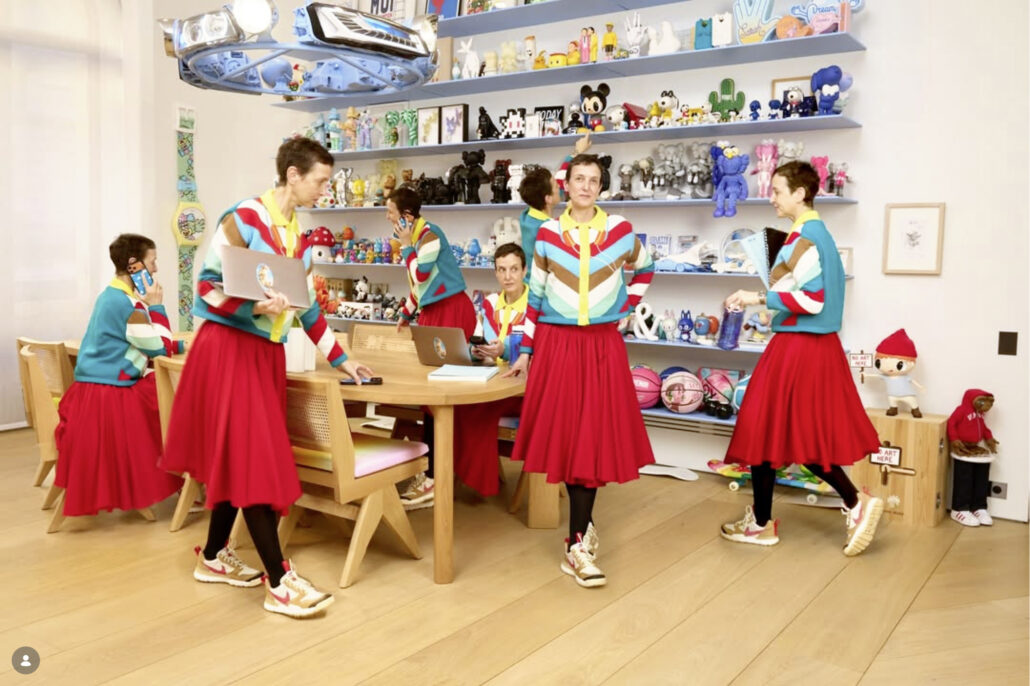
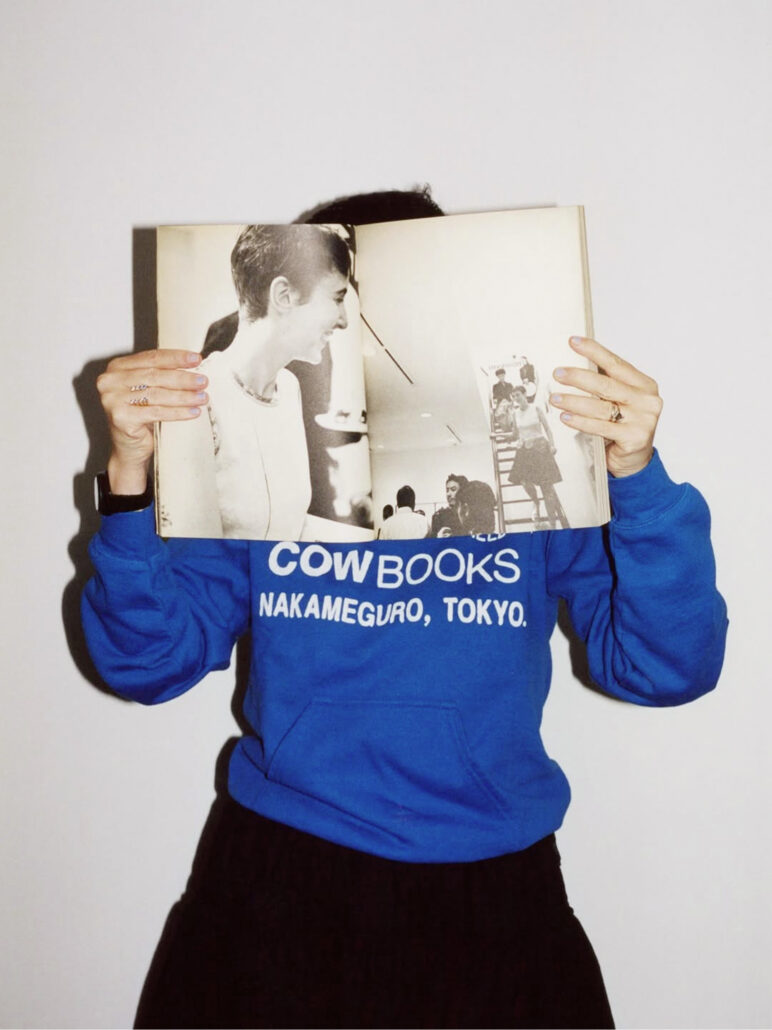
Sarah Andelman has shaped the cultural landscape of fashion, design, retail, and art like few others of her generation. As the co-founder and creative driving force behind the legendary Parisian concept store Colette, she transformed retail into a space for discovery, exchange, and cultural encounter long before the concept of curation became the industry standard.
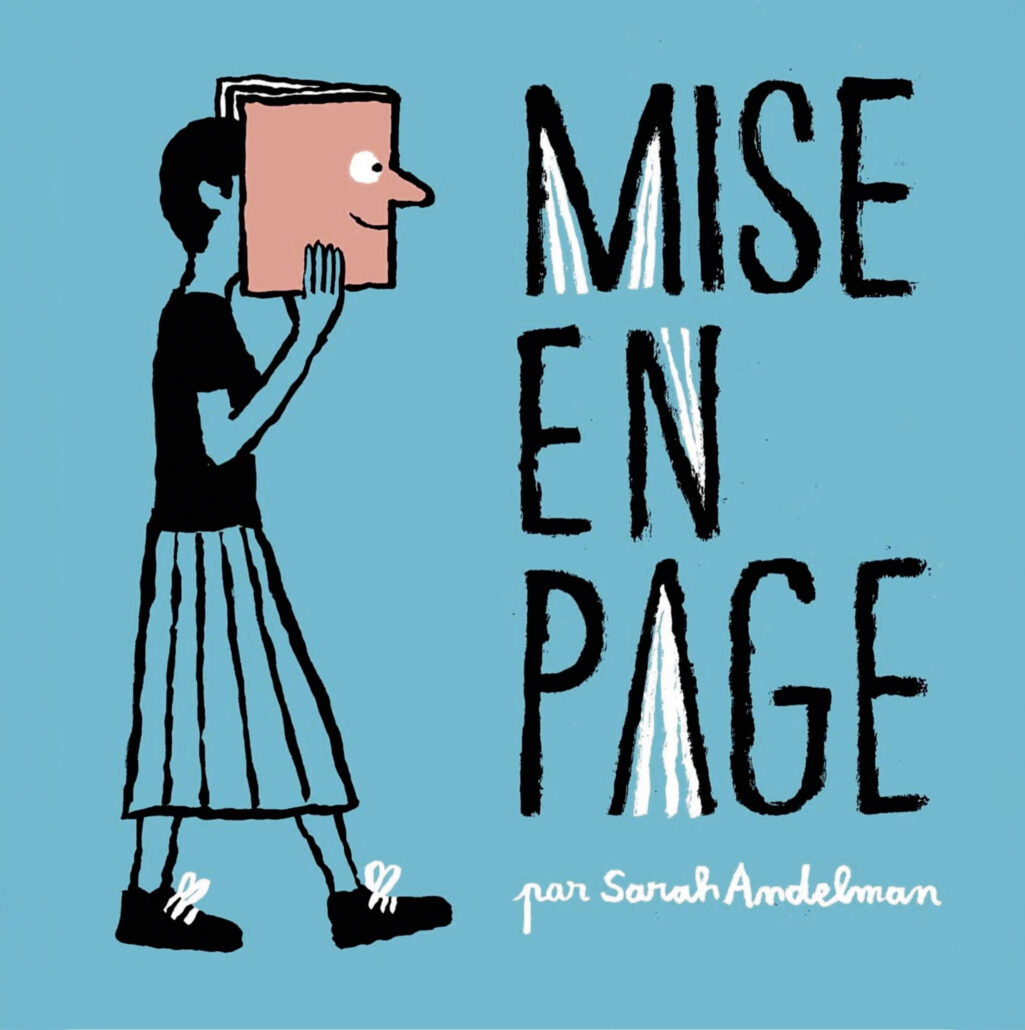
What made Sarah Andelman’s influence so unique was never just her choice of products, but rather her instinct for energy, relevance, and unexpected connections. For her, fashion existed alongside photography, music, publishing, street culture, and contemporary art—all viewed with the same curiosity and openness. Through her ongoing platform Just An Idea, collaborations with Vans and Valentino, and projects like the immersive exhibition “Mise en Page” at Le Bon Marché, she continues to build bridges between disciplines and generations.
Thoughtful, independent, and endlessly curious, Sarah Andelman embodies a rare kind of cultural influence: one based not on spectacle or hype, but on trust, a sense of style, and a genuine passion for creativity in all its forms.
@sarahandelman
PHILIPPINE DARBLAY
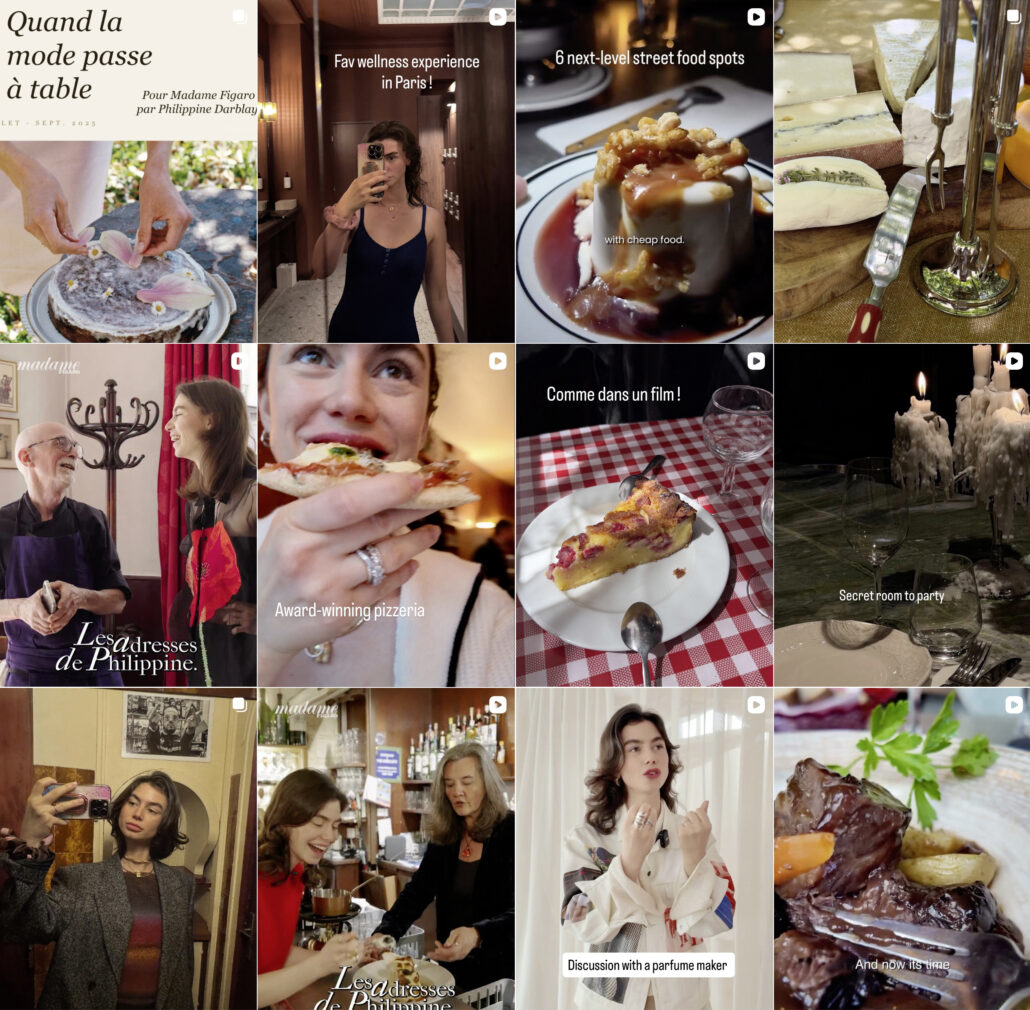
Philippine Darblay moves effortlessly between fashion, gastronomy, the hospitality industry, and Parisian cultural circles—always guided by a keen sense of beauty, emotion, and atmosphere. As a journalist for Madame Figaro, an author for Lonely Planet, and the founder of “Les Adresses de Philippine,” she has established herself as a voice that champions a more emotional and human perspective on modern lifestyle. Or as she describes herself on Instagram: “If Ratatouille were a journalist.”
What makes Philippine special is her ability to discover places, people, and ideas before they become mainstream, and to create an atmosphere that others immediately want to be a part of. Elegant yet approachable, curious yet down-to-earth, she embodies a new generation of cultural trendsetters who are driven less by fleeting trends and more by intuition, sensitivity, and genuine connection.
Based in Paris, Philippine Darblay continues to bridge the worlds of fashion, cuisine, travel, and the art of living well—always with a very personal perspective and a strong commitment to authenticity, craftsmanship, and meaningful experiences.
@philoudarblay