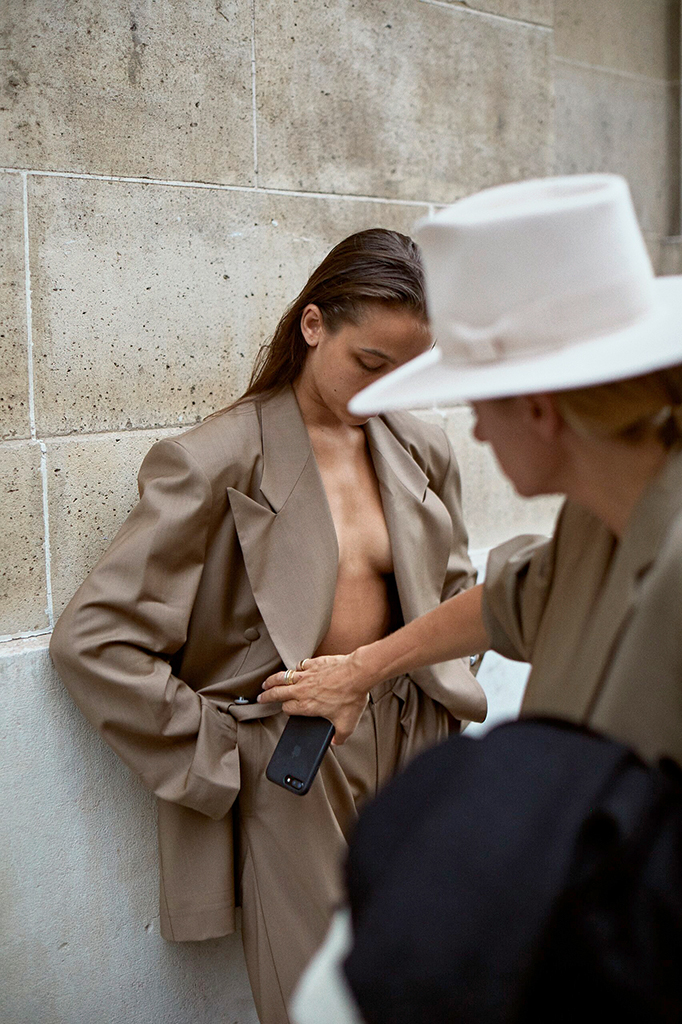
Jette Cathrin Hopp x Celine Aagaard
Spaces We Inhabit
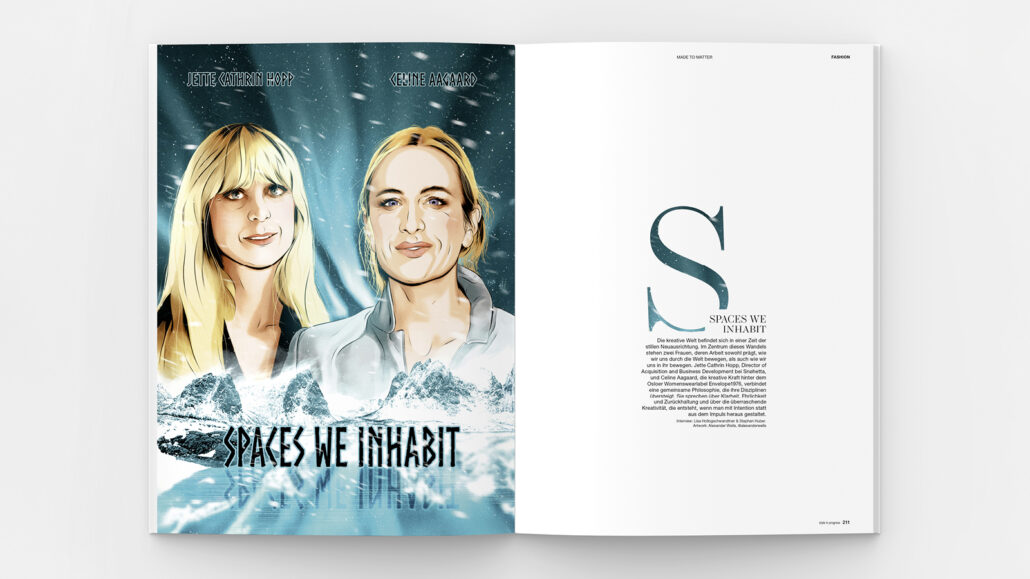
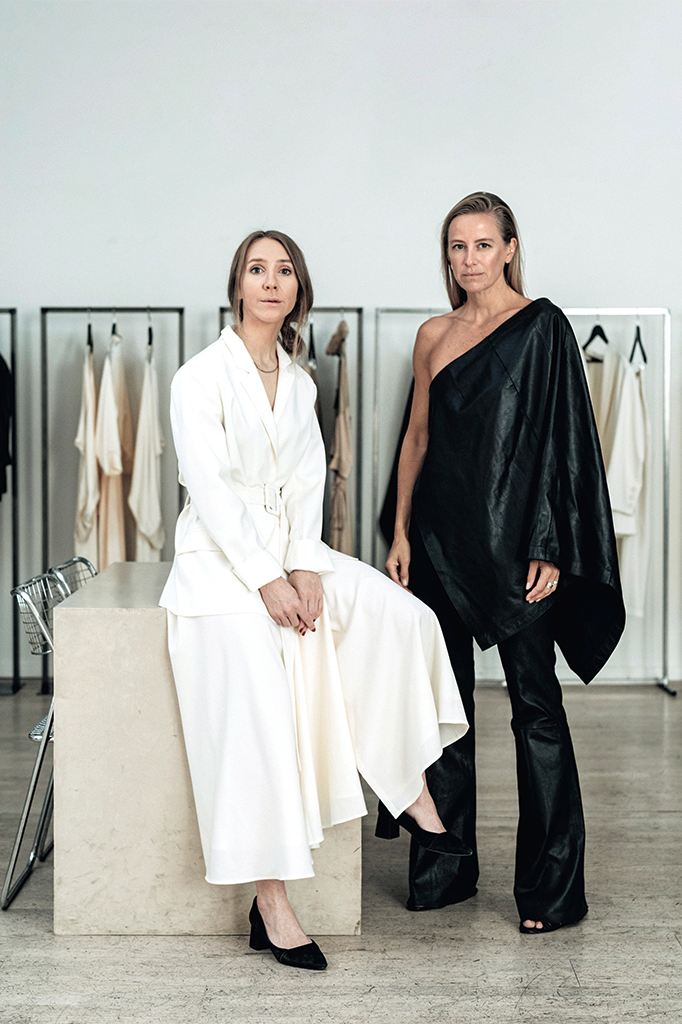
The creative world is undergoing a period of quiet realignment. At the heart of this change are two women whose work shapes both how we move through the world and how we move within it. Jette Cathrin Hopp, Director of Acquisition and Business Development at Snøhetta, and Celine Aagaard, the creative force behind the Oslo-based womenswear label Envelope1976, share a common philosophy that transcends their disciplines. They talk about clarity, honesty, and restraint, and about the surprising creativity that arises when you design with intention rather than impulse.
Interview: Lisa Hollogschwandtner & Stephan Huber. Artwork: Alexander Wells, @alexanderwells
There is a trend that we are currently observing in the fashion industry—and undoubtedly in architecture as well—a movement that we described in the last issue as the desire for "substance over status." It marks a clear shift in values: the "what" and "how" of a product, its substance, is becoming more important than the striking logo. Jette, Celine, you both work in disciplines that shape our immediate reality—the spaces we live in and the clothes that touch our skin. Are you also observing this change in your industries?
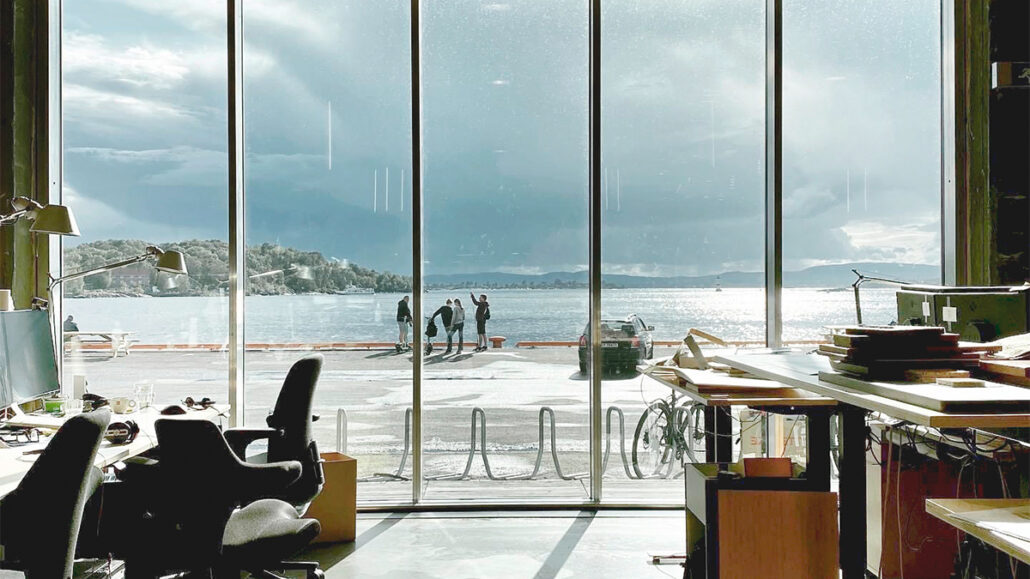
Jette Cathrin Hopp: Absolutely —and I believe that this is a fundamental change, not a temporary trend. To understand our perspective, I may need to take a step back and explain our approach at Snøhetta: for us, architecture is first and foremost a social tool. We don't do architecture for architecture's sake. It's always about people. This makes architecture an instrument for improving societies and enhancing quality of life. It creates the conditions for life, rather than existing as an isolated object of value.
When we talk about authenticity, we see this particularly in the hospitality sector. The genuine experience, the immediate encounter, is once again taking center stage. We design physical spaces to enable precisely this quality of coming together. It is almost a counter-movement to an increasingly digital, perhaps superficial world. People long for places that reconnect them with themselves and others—and that requires a material and design honesty that cannot be faked. Atmosphere cannot be simulated; it must be built with substance.
Celine Aagaard: I completely agree with Jette. For me, this honesty is the only way to function as a creative director and founder. I'm a terrible liar and could never design or sell clothes that I don't stand behind 100% or wouldn't wear myself.
When I founded Envelope1976 in 2018, the market looked completely different. It was flooded with floral dresses, fast micro-trends, too much of everything. Even brands that started talking about sustainability often produced things that you got tired of after one season.
My approach was a direct response to that. I come from journalism; I've been reporting on fashion for decades, seeing the cycles, the waste, the "noise." My goal was to consciously create an alternative: minimalist, clear, but with sophistication—clothing that can be worn in different ways. I was born in the 1970s and my parents had a rather unconventional, almost bohemian lifestyle. We shared clothes and wore them until they were practically falling apart. This had a strong influence on my appreciation for things and my desire to extend their life cycle as long as possible. To come back to the question: I am convinced that status is irrelevant
if the product itself lacks soul and function.
The idea of functionality builds an exciting bridge between your worlds. Jette, in architecture, "form follows function" is considered a classic dogma. Celine, you once said that you start each collection with the aim of bringing form and function together. But how do you achieve longevity in a world that is programmed for constant novelty?
Celine Aagaard: By refusing to play by the old rules, even if that sometimes causes friction or is painful. At Envelope1976, we don't think in terms of traditional seasons. That was a tough battle at the beginning. Buyers would ask me, "Celine, what's coming for the new season? Where are the new colors for spring? Why does it look similar to last fall?" Moments like these are unsettling. You ask yourself: Am I doing something wrong? Am I falling behind?
But we have remained true to our core values. We have been working with the same producers since 2018 and often use exactly the same fabrics. If you bought a pair of pants from us five years ago, you can buy the matching blazer in 2025. I like to compare it to Lego: you build your wardrobe piece by piece, like a modular system. The pieces don't replace each other, they complement each other. A new collection should not render the existing one obsolete, but rather enrich it. This requires a new way of thinking—away from fast consumption and toward long-term consumption. It is based on the belief that good design does not expire just because the calendar has turned.
Jette Cathrin Hopp: That's fascinating because it corresponds exactly to my own behavior as a consumer. I don't buy anything without a plan anymore. I used to be more impulsive, but now every purchase is a conscious decision. I have coats in my closet that I've been wearing for 15 years—such as a beautiful piece by Isabel Marant. I still get compliments on it today. Why? Because the quality is right and the design has a relevance that outlasts the trend of the moment. Today, I often ask myself when making a purchase: Can I pass this on to my daughter one day?
In architecture, this longevity is, of course, existential. Building is a slow process. A design we develop today may not be completed for ten years—and then it has to last 50, 100, or 200 years. Internally, we rarely talk about timelessness because it quickly sounds generic. We prefer the term evergreen. A building must remain relevant even as the society around it changes.
How can you achieve this evergreen status in the design process?
Jette Cathrin Hopp: By not starting to draw right away. That sounds paradoxical for a design studio, but it's essential. At Snøhetta, we have developed a methodology over many years that we call "Idea Work." Before we draw a single line, we sit down together—the team, the clients, sometimes critics or experts from completely different fields. We discuss the content, not the form. We try to get to the heart of the task, to what we call the "Conceptual Springboard."
If you pick up your pen too soon, you run the risk of repeating yourself or recalling images that you already have in your head. Take the opera house in Oslo: if we had started drawing "an opera" right away, it might have turned out to be a beautiful building. But we questioned the typology: What defines a cultural monument today? For us, it has to be a social monument; it has to belong to the people. That's how the idea of making the roof accessible came about; the public space should continue beyond the building. Form followed content. I am convinced that you have to question ready-made solutions in order to create something that will last.
Celine, you mentioned resources earlier. There's this wonderful anecdote about your first store in Oslo, which happens to be right next door to a flagship store designed by Snøhetta.
Celine Aagaard: Oh yes, that opening was a decisive moment for us. We were determined to open in Bjørvika, right next to a flagship store that Jette and her team had designed—beautiful, perfect, high-end architecture. And then there we were, with no budget for an elaborate renovation. So we stood in the empty room with its raw concrete floor and bare walls and asked ourselves: What is the right move for our brand? What do we want to say about ourselves?
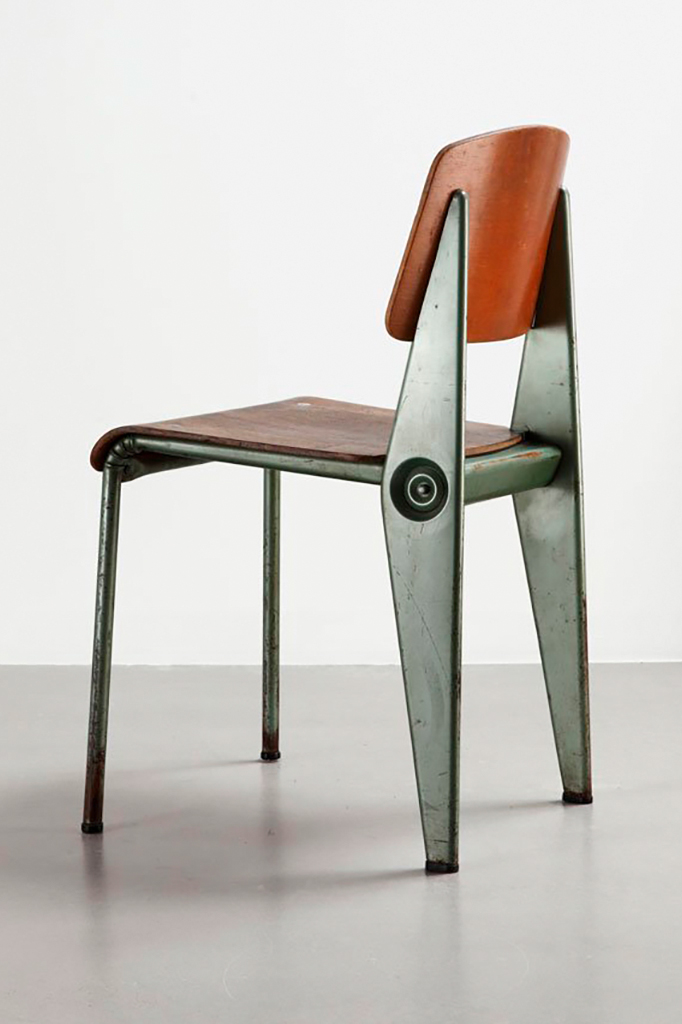
We quickly realized that we wanted to keep the store design as real and authentic as possible. That's why we didn't go to expensive interior showrooms; instead, I went to industrial companies that manufacture stone countertops. We took fragments and leftover material and used it to build our tables and clothes rails. We added vintage furniture. The end result was a minimalist, clean space, deeply connected to nature – simply because we used what was already there. I am convinced that limited resources sharpen creativity. When you can buy everything, you sometimes become complacent. When you have nothing, you have to be innovative.
Jette Cathrin Hopp: That's what strongly connects our disciplines. In architecture, too, sustainability—or rather, the need to reduce ourcarbon footprint—is forcing us to rethink aesthetics. Suddenly, a building has to look different because the materials come from recycled sources or because energy efficiency influences its form—'form follows environment'.
We have to say goodbye to the idea that architecture always has to be new and immaculate in the sense of untouched. Instead, we are currently seeing a trend toward "vintage" in the world of construction, which we have long been familiar with in fashion. It's about transformation, about building within the existing, about continuing to build on what has already been built. This is much more challenging than new construction on a greenfield site. We need to understand buildings as raw material stores whose materials can be reused later. This requires new systems and new logistics. But it also leads to a new beauty—an aesthetic of the existing that goes far deeper than the smooth surface of a pure real estate object. It challenges our social conception of beauty.
That sounds like a departure from the concept of luxury that we have seen in recent decades—often characterized by excess. Do you think consumers are ready for this redefinition?
Jette Cathrin Hopp: I think so, but it's a nuanced development. In the hospitality and retail design sectors, where we do a lot of work—for Aesop and Polène, for example—we see that customers no longer want to be impressed solely by visuals. To put it provocatively, they are almost bored by decadence. They have seen it all before. There was a time when every experience had to surpass the previous one—more exclusive, louder, more expensive. That led to fatigue. The answer to that is—as I said earlier—authenticity, realness, a return to the human. We were so decadent in many ways that real luxury in the future may be the opposite: mindfulness in the moment, not gold leaf on the wall.
Celine Aagaard: Absolutely . I see it every day with our customers. I often stand in the store myself and talk to the women who buy our clothes. They don't want to be dressed up anymore. They want clothes that support them in their everyday lives, that give them strength but remain uncomplicated. A garment has to work—whether for a meeting, picking up the kids, or an evening event.
There is a longing for things that are real. That's why I tell so many stories about the origin of our materials or our approach. Our bestsellers are often the pieces with the "envelope twist" – minimalist, but with a detail that shows that someone has really thought about it.
Let's take a look ahead. If we consistently pursue the idea of longevity and reuse, what does the future of design look like? Will we even produce new things at all?
Celine Aagaard: We live in a divided world. On the one hand, the younger generation continues to consume at a rapid pace, driven by platforms such as Shein and the logic of ultra-fast fashion. That is the reality. On the other hand, awareness of vintage and secondhand goods is growing rapidly. For Envelope1976, the future may mean producing less and working in an even more curated way. "Rethinking"—reconsidering what already exists—will move to the core of our practice.
Jette Cathrin Hopp: Circularity is becoming the defining principle in architecture. We are facing enormous challenges due to climate change and resource scarcity. The only responsible response is to appreciate what already exists. "Don't tear down" is the new mantra. Every building contains bound energy. Demolition wastes this value. The future lies in intelligent transformation: How do we convert office buildings into living spaces? How do we design materials so that they can be sorted by type in decades to come? This requires immense creativity. Working with existing structures is more difficult than constructing a new building—but that is precisely how innovation arises.
With all this rationality, responsibility, and seriousness, is there still room for fun in design?
Celine Aagaard: Absolutely . If we lose the fun, we lose everything. The moment we start preaching, when everything becomes difficult and joyless, people turn away. Fashion is emotion and energy. That's why we love collaborations: they bring new energy to our work. If my team and I don't really enjoy the process, if we're uninspired, customers sense it immediately. I am convinced that a designer's energy lives on in the product.
Jette Cathrin Hopp: I completely agree with Celine. Joy is the beginning of everything. Without it, creativity fades. Innovation often arises from a playful moment, from laughter in a workshop, or from an idea that sounds crazy at first.
Of course, we work hard and take our responsibilities seriously. But the process itself—the exchange with artists, scientists, or craftspeople—must be a source of joy. Without this spark, we end up with lifeless shells. A building designed without joy will never radiate joy. Fun is the fuel that enables us to tackle difficult topics without breaking down.
Finally, I would like to return to the concept of realness. If you had to name a single object—a building, an item of clothing, or something else entirely—that embodies timelessness and authenticity for you, what would it be?
Celine Aagaard: A cliff immediately comes to mind. I live in Norway and spend a lot of time outdoors. A rock on the coast can withstand anything: weather, tides, time itself. It is raw, has edges, you can climb on it or lean against it. It changes slowly, almost invisibly, and yet its essence remains the same. This natural rawness, this unfiltered state, is for me the purest form of design—something we humans can only emulate.
Jette Cathrin Hopp: Funnily enough, I was about to say the same thing: the landscape.
Architecture is essentially a response to nature. At Snøhetta, nature is always our starting point. We don't try to conquer it; we seek dialogue with it. A landscape is never finished. It is constantly changing, yet remains eternal. It is our only real point of reference.
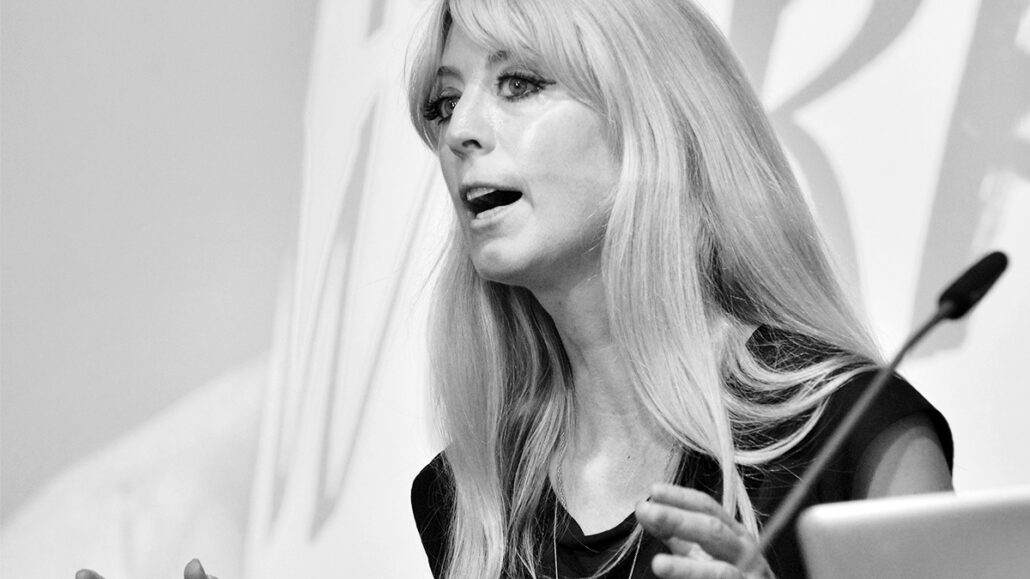
Jette Cathrin Hopp
Growing up in an environment characterized by linguistic and cultural diversity, Jette Cathrin Hopp is fluent in Norwegian, English, German, and Danish. This multilingualism shaped her view of the world from an early age and taught her to look at things from different perspectives. Today, she brings this openness to her role as director on the board of Snøhetta—to an understanding of architecture that is conscious, inclusive, and deeply human.
For Hopp, buildings are never mere objects; they are tools that shape lives and communities. "We see architecture primarily as a social tool," she says. "It's not about architecture for its own sake; it's about improving quality of life. Especially with public projects, we believe in giving something back and creating real added value for society."
In addition to her work, Hopp is a sought-after speaker at architecture symposia, international conferences, and universities. She is a jury member for numerous architecture competitions and awards and was appointed president of the jury for an Italian architecture award in 2021. She also sits on the board of the Schelling Architecture Foundation and teaches at the Wismar University of Applied Sciences. In Norway, she contributes her expertise to the Oslo City Architecture Advisory Board, and in May 2023, she was appointed chair of the City Design Advisory Board of the state capital Kiel.
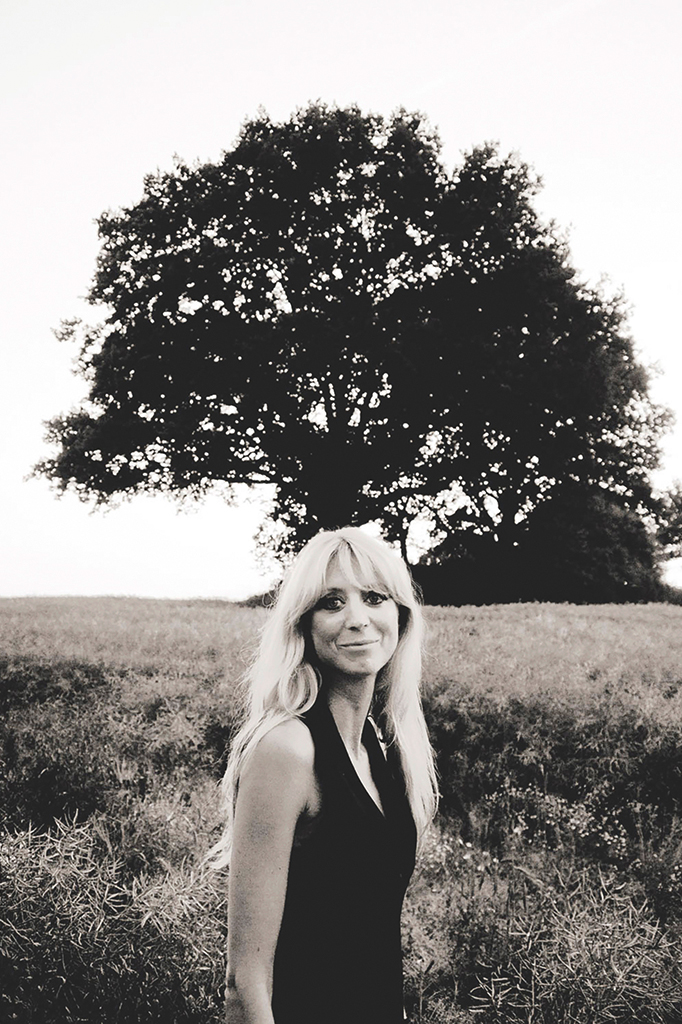
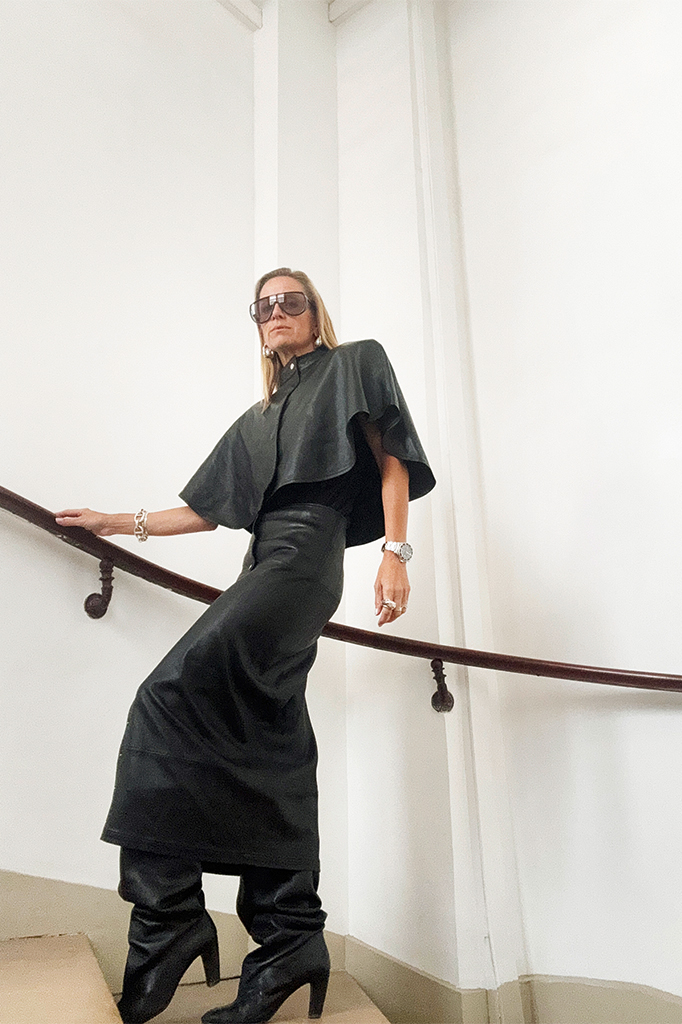
Celine Irgens Aagaard
Anyone who talks to Celine Irgens Aagaard quickly realizes that this woman is an absolute multi-talent. She began her career in journalism, but today she is a designer whose clear, minimalist aesthetic is the result of decades of observing and documenting fashion. Born in the late 1970s and raised in a household where clothes were shared, cared for, and worn for many years, she developed an early awareness of longevity and mindful use of resources—values that later became cornerstones of her design philosophy.
After more than 30 years in journalism, she launched Envelope1976 in 2018. The brand is deliberately small, clear, and focused, and stands for minimalist design with character.
Today, Celine is not only Creative Director, but also one of the defining voices in the Norwegian fashion industry – a trend expert, author of three books, and a creative whose work has appeared in numerous international media outlets. Her career has included stints in photography, editing, and design—but the common thread remains unmistakable: a commitment to authenticity, versatility, and a quiet, conscious definition of luxury.