Triumph
“Thinking About Circularity Holistically”
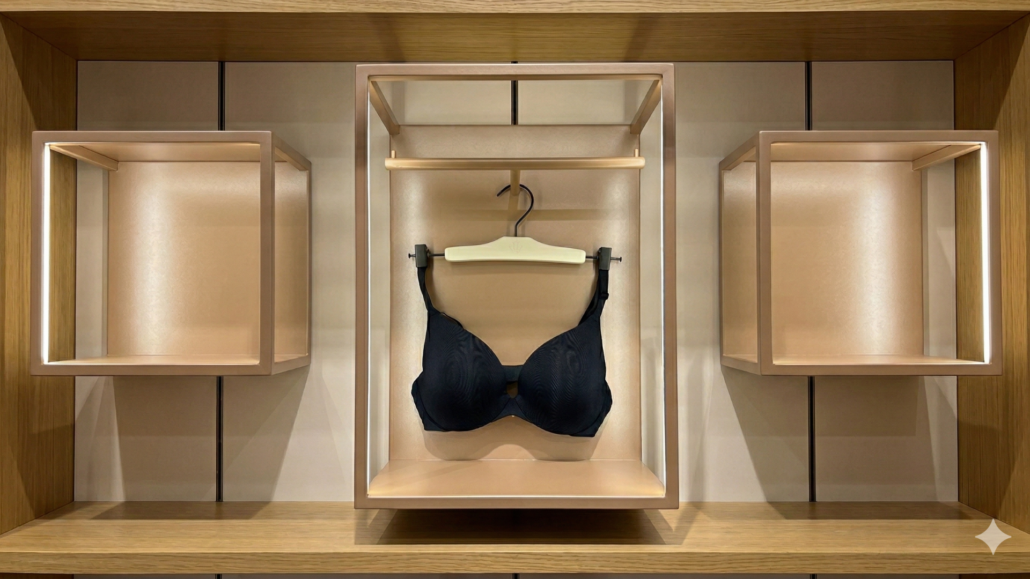
Vera Galarza is Global Head of Sustainability at Triumph. In an interview with style in progress, she shares insights into the lingerie specialist’s latest circular economy project, which was implemented in collaboration with the RadiciGroup and The Lycra Company.
Triumph, in collaboration with RadiciGroup and The Lycra Company, has developed a prototype of recycled lingerie that reimagines sustainability and recycling. What was the starting point for this project?
Our industry relies heavily on polyamide and elastane—materials for which recycling solutions have been limited until now. Since circularity is a central pillar of our sustainability strategy, we wanted to focus our efforts here. Through our collaboration with The Lycra Company and the RadiciGroup, we were able to combine technological expertise with our brand’s commitment to innovation, thereby breaking new ground in material development.
What does this breakthrough mean, specifically, for Triumph—and for the fashion industry?
This project serves as an important proof of concept for us. It demonstrates that innovative material solutions are possible in the lingerie sector and motivates us to continue down this path. At the same time, it is clear that there is still development work to be done before we can achieve broad-scale industrial production.
Blended fibers are considered one of the biggest obstacles in textile recycling. How does Radici InNova’s technology make a difference here?
It enables the targeted separation of blended fibers using a selective dissolution process. This allows both nylon and Lycra to be recovered from blended textiles and reused—regardless of the blend ratio. The process uses environmentally friendly, non-toxic solvents that can also be recycled, making it both sustainable and cost-effective.
What specific role did Triumph play in the project?
As a brand with direct access to consumers, we focused primarily on the user experience. We provided existing surplus materials and worked together to identify which materials are suitable for a future collection. The next step is to evaluate consumer feedback and gain a better understanding of the impact and appeal of such products.
The fibers retain their functionality even after recycling. Can you tell us more about that?
So far, it appears that the fibers retain their quality and functionality even after recycling. This is a crucial factor, as quality, comfort, and durability are always our top priorities.
What challenges remain before such solutions can be scaled up to an industrial level?
Scaling up requires close collaboration across the entire value chain. One key challenge, for example, is the clear identification of recyclable materials. This calls for industry-wide standards and cooperation.
How important are cross-company partnerships in driving innovation in textile recycling?
They are essential. Real progress toward a circular economy can only be achieved through collaboration between brands, material manufacturers, and recycling companies. Each partner brings a crucial perspective to the table: material manufacturers drive technological innovation, brands translate these innovations into marketable products, and recyclers enable materials to be returned to the cycle.
How circular is the fashion industry already?
In my view, it represents the future of the industry. However, it is crucial to take a holistic approach to circularity—from material innovation and product design to durability and effective recycling systems.


