Santa Gaïa Pilens & Sybille Roger-Vasselin
A Matter of the (He)art
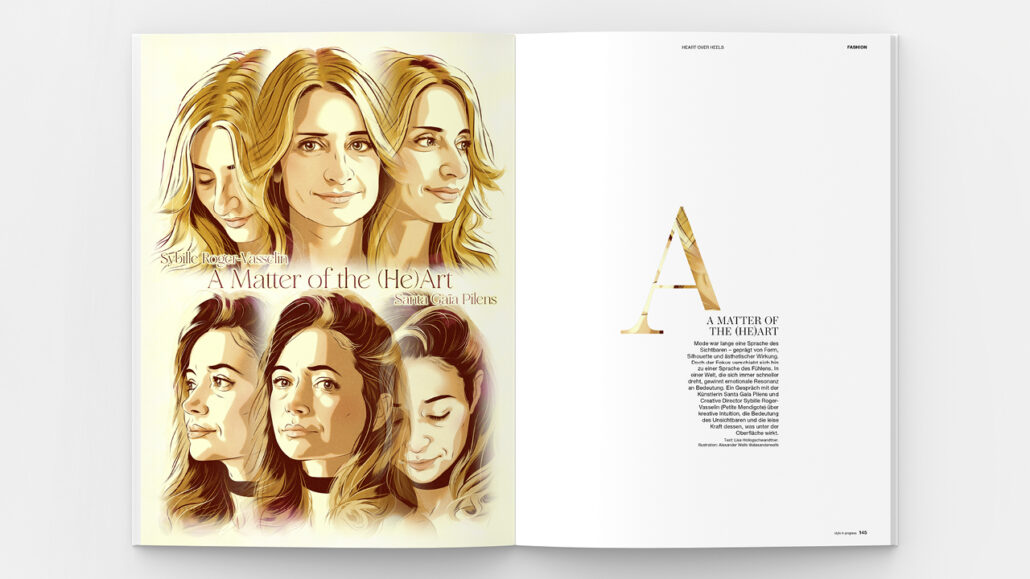
For a long time, fashion was a language of the visible—defined by form, silhouette, and aesthetic impact. But the focus is shifting toward a language of feeling. In a world that’s spinning ever faster, emotional resonance is gaining importance. A conversation with artist Santa Gaïa Pilens and Creative Director Sybille Roger-Vasselin (Petite Mendigote) about creative intuition, the significance of the invisible, and the quiet power of what lies beneath the surface.
Text: Lisa Hollogschwandtner. Illustration: Alexander Wells @alexanderwells
Although you work in different creative disciplines, you both share a common thread: the ability to evoke emotions. What role do your own feelings play in your creative process?
Sybille Roger-Vasselin: Emotion is essential. My way of working changes completely depending on whether I’m feeling energetic and clear-headed or rather exhausted. I’m also convinced that the emotion we infuse into the creation of a collection lives on within it. Recently, we filmed a makeover video in one of our stores featuring a mother and her daughter. The mother actually had little interest in fashion. But after trying on different looks, she looked at herself in the mirror and started crying because she didn’t recognize herself. In that moment, I realized in a very powerful way: Clothing goes far beyond fabric and design. It can unlock something deeply emotional, change our self-perception, and sometimes reveal sides of ourselves that we had long forgotten existed.
Santa Gaïa Pilens: I couldn’t agree more. During times when I’m not feeling well, I consciously choose not to work because I firmly believe that a work of art absorbs and transforms that energy. I need to be in a good state of mind to even be able to begin. I see myself as a Symbolist artist, and although life always contains a duality, I consciously choose to explore themes through their brighter side. I believe the world needs more love, more light, more positive energy—and that’s exactly what I try to infuse into my work.
If we turn our attention to fashion: Is the central question in womenswear currently shifting from “how it looks” to “how it feels”?
Sybille Roger-Vasselin: Definitely. For a long time, the visual impact was the main focus. Today, fashion is much more sensually oriented. It’s about how clothes feel against the skin and, above all, how they make us feel when we wear them.
Santa Gaïa Pilens: Absolutely. And I’d add that fashion has long since outgrown the concept of the individual garment. It has become a kind of reflection of one’s own lifestyle. Today, brands naturally also operate in the fields of interior design, art, and film. People connect with a brand through its vision, its emotional language, and also through the people who shape it—first and foremost, the creative director.
This clarity and consistency in a brand’s overall communication also helps female customers identify more strongly with the brand and express themselves through it. After years of understatement and “quiet luxury,” is there a growing desire once again to reveal more about oneself through clothing?
Santa Gaïa Pilens: Yes, fashion is definitely becoming an even more powerful means of expression. At the same time, I’m convinced that what we want to communicate through our clothing can change from day to day. Personally, I’ve never really been able to identify with the concept of “quiet luxury,” because we, as human beings, go through different phases. Sometimes you have the energy to stand out, wear color, and play with accessories, and on other days, you just don’t. Expression is fluid; it always reflects only the moment. For me, one sentence sums it up beautifully:“I am all the women in me.”
Sybille Roger-Vasselin: Absolutely. Clothing should accompany us in our everyday lives and through different situations; it shouldn’t make our lives more complicated, but rather make them easier. With my brand, I try to encourage women to be bolder—to opt for the unexpected once in a while, instead of always choosing the safe path. Often, that’s exactly where they discover a whole new, very beautiful aspect of their femininity.
That brings me to my next question: The definition of femininity and what it means to dress femininely seems to be changing a lot right now. What do these categories mean to you?
Santa Gaïa Pilens: For me, femininity is, in a sense, synonymous with sensuality. So for me, dressing femininely doesn’t mean following trends or conforming to a set image. I can feel incredibly powerful in a dress—I don’t need pants to feel confident. In the past, the suit often served as a symbol of equality. Today, that no longer necessarily feels true to me. Self-expression has become more personal, more fluid—and so has the definition of femininity.
Sybille Roger-Vasselin: In the past, femininity was closely tied to a very clear role model. Women stayed at home, wore lipstick, and dressed in dresses. Today, the boundaries have shifted, and the definition allows for much more flexibility. You can be androgynous, romantic, minimalist, or bold—anything is possible. As women, we define for ourselves what it means to be feminine.
Santa Gaïa Pilens: For me, fashion today is almost like a stage. I once tried to build a very clear, minimalist wardrobe for myself, but that just doesn’t work for me at all. One day I want to feel like Marie Antoinette; the next, more like the woman at Saint Laurent: clear, minimalist, precise. For me, fashion has to remain flexible, open, and playful.
You’ve both mentioned the roles that used to be assigned to women—and in some cases still are. Are we moving away from the ideal of being perfect and toward the ideal of being interesting?
Santa Gaïa Pilens: I’d replace “interesting” with “authentic.” That’s also what I want to teach my daughters—especially since they’re growing up in a world full of TikTok trends and constant comparisons. In my opinion, far too many people try to conform, to be something that already exists. But authenticity is the only thing that’s truly original. What works for me might not work for someone else, and vice versa. For me, the key lies in finding your own strengths and following your own path.
Sybille Roger-Vasselin: It’s a paradox of our time. Women today have more freedom, visibility, and influence than ever before. And yet, at the same time, there’s still this expectation that we have to be everything at once: successful, present, caring, perfect. We want to work, be a mother, a partner, a friend—and do justice to it all. That takes an incredible amount of energy and can be very exhausting. For me personally, freedom is the most important value: the freedom to live my life and make my own decisions without constantly worrying about other people’s expectations. To get back to the original question: Yes, I firmly believe that today it’s less about perfection and more about the freedom to be yourself and to be interesting in your own unique way.
When we talk about authenticity, personal interests, and the deliberate imperfection: Why does art have such a powerful emotional impact, and what can fashion learn from it?
Santa Gaïa Pilens: There are no trends in art. It is an expression of an individual vision—and whether or not it moves you, it is something very personal. That is exactly what makes it so powerful. It can resonate with people at different stages of life in very different ways; its meaning changes over time.
Sybille Roger-Vasselin: And the creative process in art isn’t bound by time. In fashion, you’re constantly working against deadlines. Art, on the other hand, creates space—for reflection, for pausing, for reevaluation. It doesn’t have to be “useful,” and that’s precisely where its great freedom lies. Fashion, on the other hand, is always in dialogue with reality. But it’s increasingly moving in this direction: People no longer buy just clothing, but stories, attitudes, craftsmanship, and emotion.
Santa Gaïa Pilens: At the same time, art can also learn a lot from fashion. When art becomes purely a business, it loses its essence—it needs time, distance, and reflection. But as an artist today, it’s no longer enough to rely solely on your own work. You also have to learn how to communicate it: storytelling, staging, visual identity. Fashion is incredibly strong in these areas. It knows how to create worlds, to make ideas visible and desirable. Some artists remain too entrenched in their own cosmos. Opening that door without losing one’s integrity is something art can learn from fashion.
Santa, when you're working on a new series, where does your creative process begin?
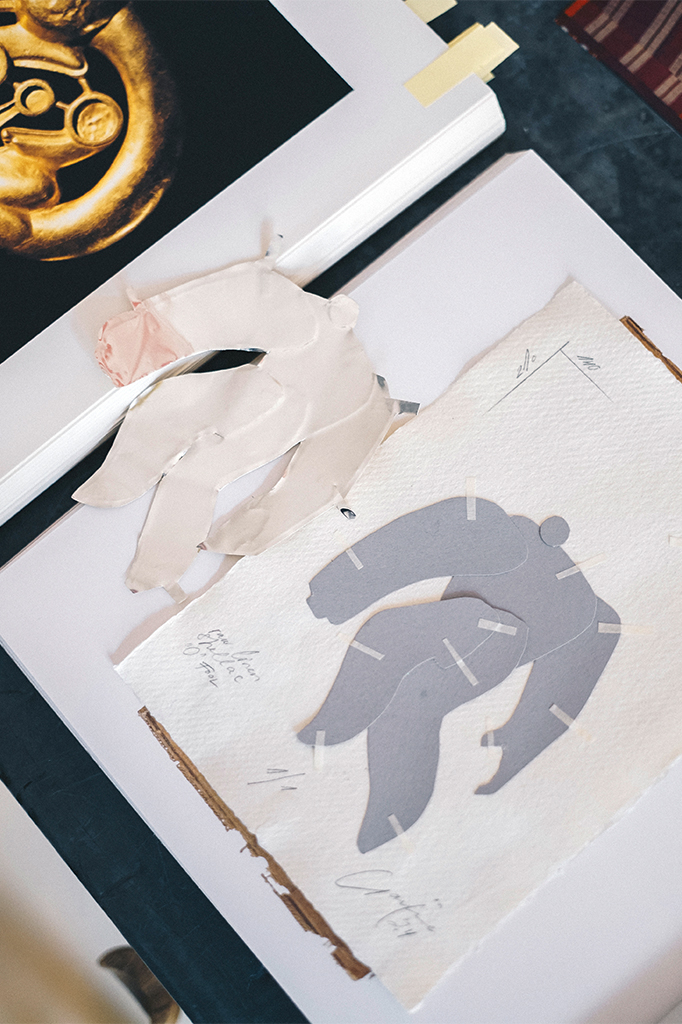
Santa Gaïa Pilens: During my time in fashion, the most exciting moment in the process of creating a collection was always the beginning—developing the story, building the narrative behind it. And that’s exactly how I still work today in my artistic process. My view of the world is strongly shaped by my past in fashion, which is why I follow similar principles. It all starts with ideas, images, references, mood boards, fragments, and intuitions. In my studio, I even have a spot I call my “Inspiration Desk.” There, I collect everything that inspires me at a given moment: images, fabrics, notes, objects—everything reflects a specific emotional state. That’s the starting point, but often what you imagine at the beginning is something completely different from what ultimately emerges.(laughs)
Sybille Roger-Vasselin: Absolutely! A collection is almost like a pregnancy—it takes time; it evolves. For me, it all starts out very chaotically, in my head. And little by little, everything falls into place like a puzzle; the shape takes form, and the story becomes clearer. At Petite Mendigote, it’s important to us to encourage women to be more daring, while at the same time meeting them where they are. And to come back to where we started: emotions play a central role in the design process. Joy can be expressed through color; self-confidence through fabric or cut—in the way a garment flatters or shapes the body. Our goal is to inspire women, gently nudge them out of their comfort zones, and empower them to express themselves through clothing.
Santa Gaïa Pilens: Something comes to mind that I’d like to share: In 2023, I had a very emotional experience as part of a project I called the “Artist Suit.” Together with the fashion brand Pixie, I designed a black, masculine-inspired suit—influenced by female artists like Frida Kahlo and Georgia O’Keeffe, who used clothing as a statement for equality. For the photo shoot, I wore the suit directly on my bare skin to highlight the contrast between masculine form and feminine sensuality. For me, this project beautifully demonstrated just how multifaceted self-expression through fashion can be. The suit became a means of making inner feminine strength visible through a masculine structure, without losing my femininity in the process. It’s an experiment I still reflect on to this day.
That brings me to a somewhat philosophical question: Does beauty also lie in what isn't immediately visible?
Sybille Roger-Vasselin: Absolutely. I would even say that’s exactly where its essence lies: in the hidden details—a delicate seam, an inner lining, the construction of a pattern. Or in time: in the patina of leather, in the softness of aged cashmere, in the way materials change. These invisible aspects are what make a piece truly unique.
Santa Gaïa Pilens: For me, it goes one step further: it’s less about what’s visible and more about what can be felt. The energy of the person wearing a garment becomes, for me, part of it—like an invisible layer that changes everything.
In closing: If your work could evoke an emotion in the women who experience it—what would that emotion be?
Santa Gaïa Pilens: I can’t limit myself to just one, so I’ll name two: selective presence and stillness. Selective presence means consciously deciding where to direct your energy—being fully present at the right moment and letting go of everything else. In a world that’s becoming faster, louder, and more overstimulated, stillness has almost become something radical. I want to create things that don’t compete for attention. Something quiet. My work doesn’t impose itself, but it has a certain enduring quality. To come back to the last question: its impact goes beyond what’s visible.
Sybille Roger-Vasselin: For me, it’s self-confidence and freedom. I feel that we women are often still too self-critical. We second-guess ourselves, doubt whether we’re good enough, or whether we’re allowed to take up space. I hope that our customers feel beautiful in our designs, that they start their day with ease, strength, and a sense of freedom, without overthinking anything. Because, in the end, clothing shouldn’t make us question ourselves, but rather remind us of who we’ve always been.
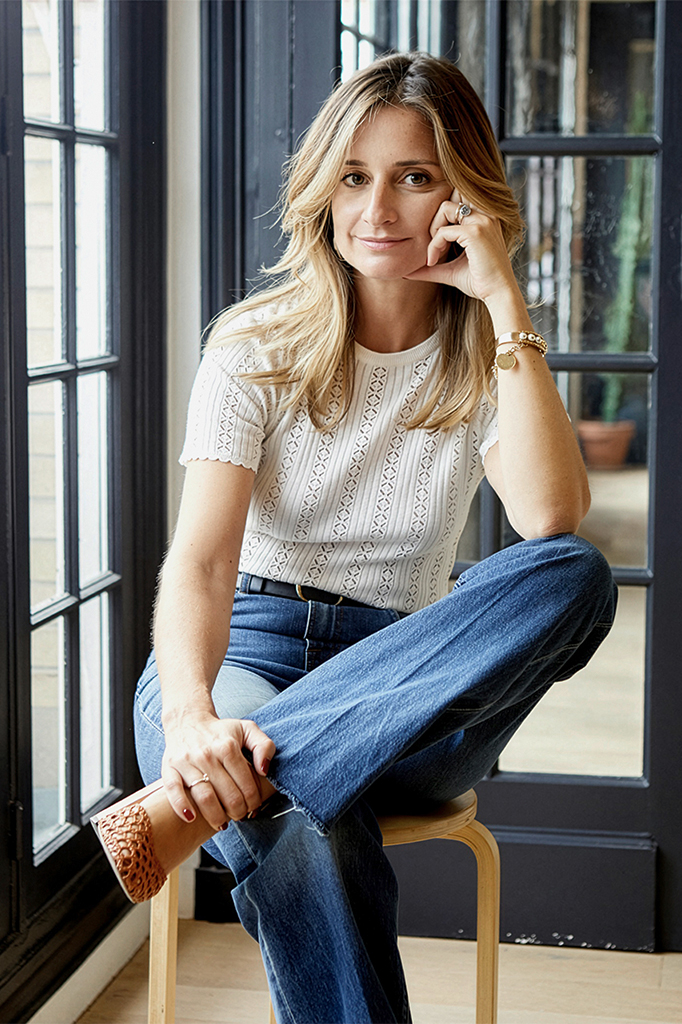
SYBILLE ROGER-VASSELIN:
Sybille Roger-Vasselin’s career path has not been a straightforward one: As the daughter of a lawyer and a fashion journalist, she initially studied law and political science before eventually finding her way into the fashion industry. Today, she sees herself not only as a designer but, above all, as an entrepreneur. Her goal, she says, is “to build something meaningful together with creative and talented people and to design collections that truly accompany women in their everyday lives.”
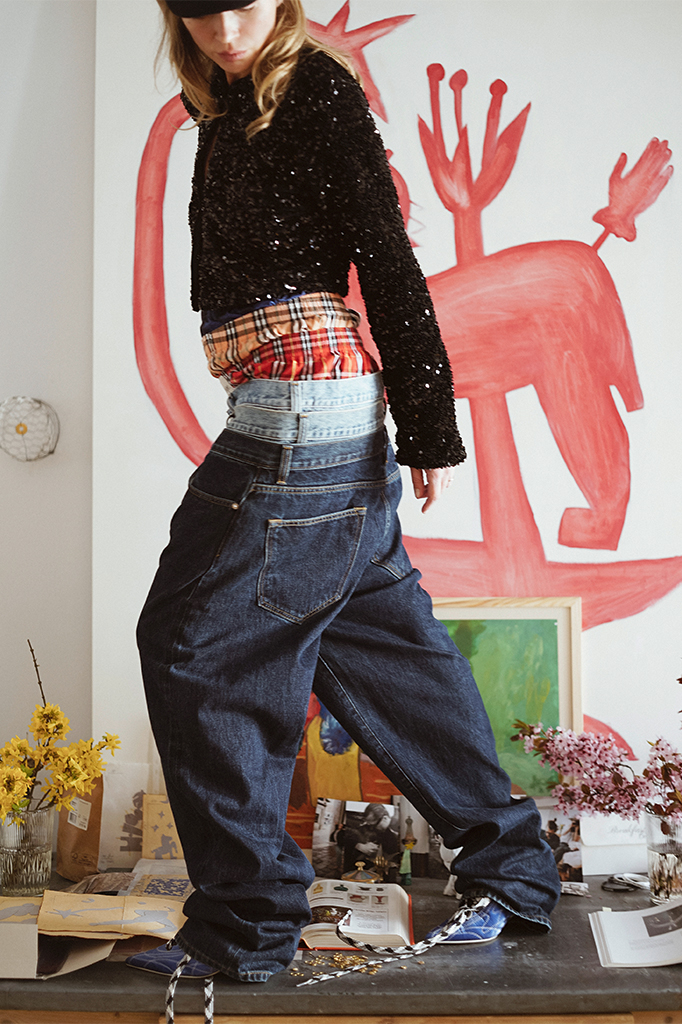
At the age of 26, she founded Petite Mendigote with the goal of designing accessories that add a special touch to any look and give women more self-confidence in their everyday lives. From the very beginning, her approach was characterized by a blend of Parisian elegance and a touch of playful lightness. Over time, this idea evolved into a complete collection under the Petite Mendigote brand. Even today, the designs remain true to that original vision: a blend of elegance and lightheartedness, created for modern women who like to combine sophistication with a dash of courage and humor.
SANTA GAÏA PILENS:
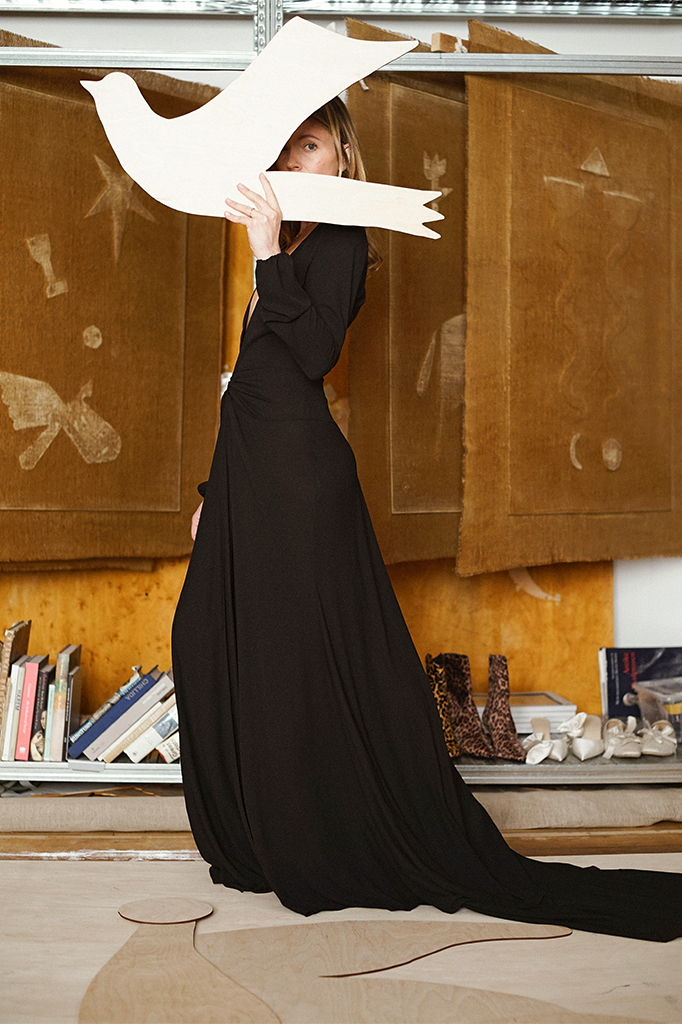
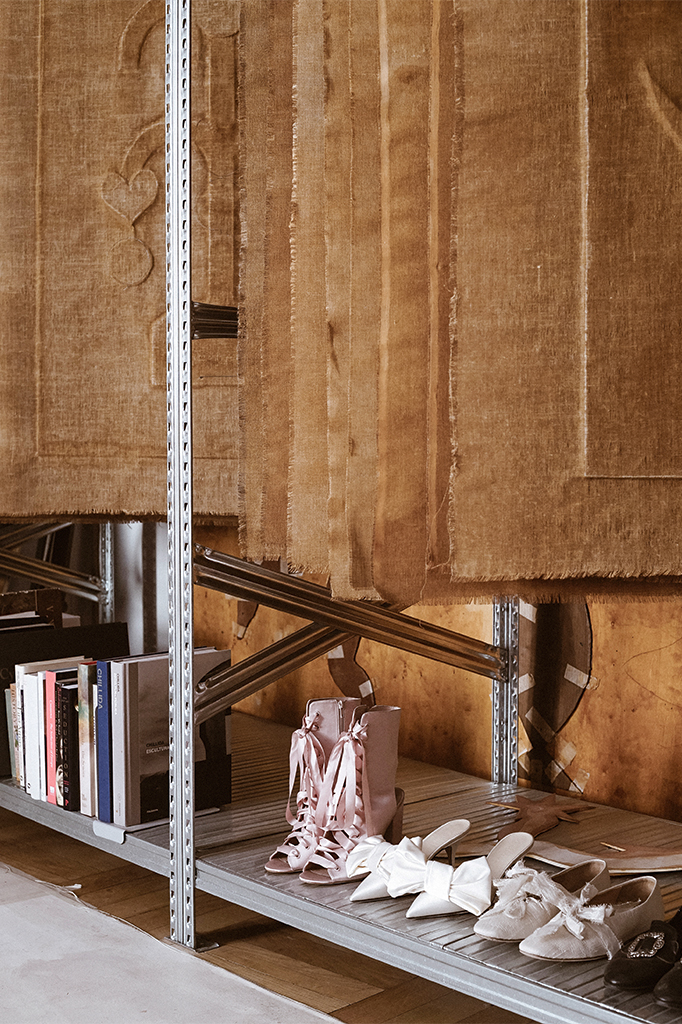
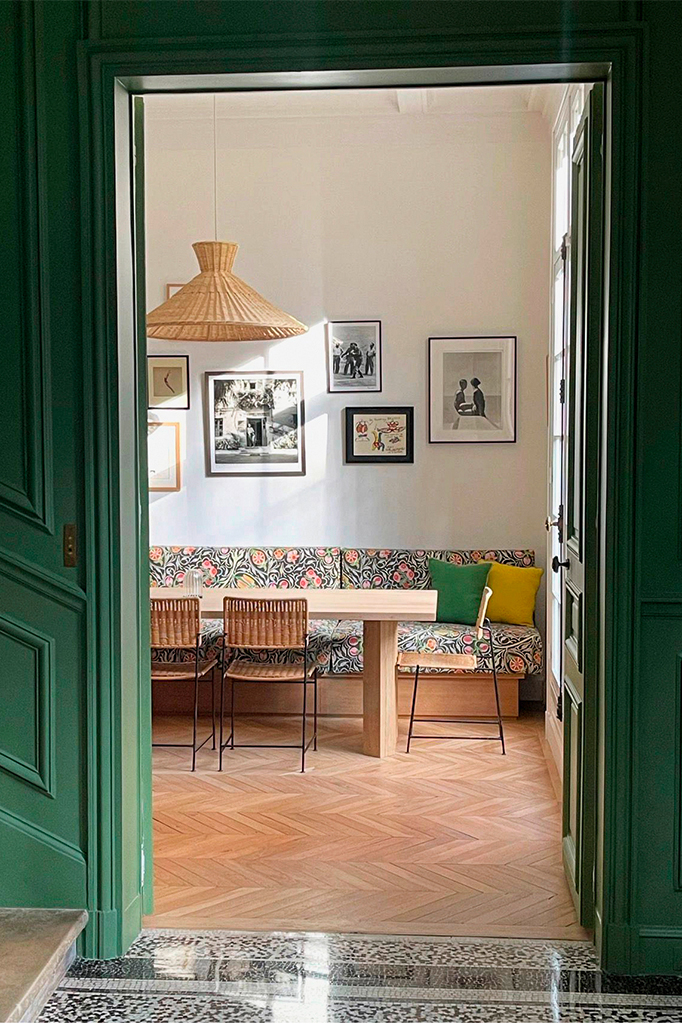
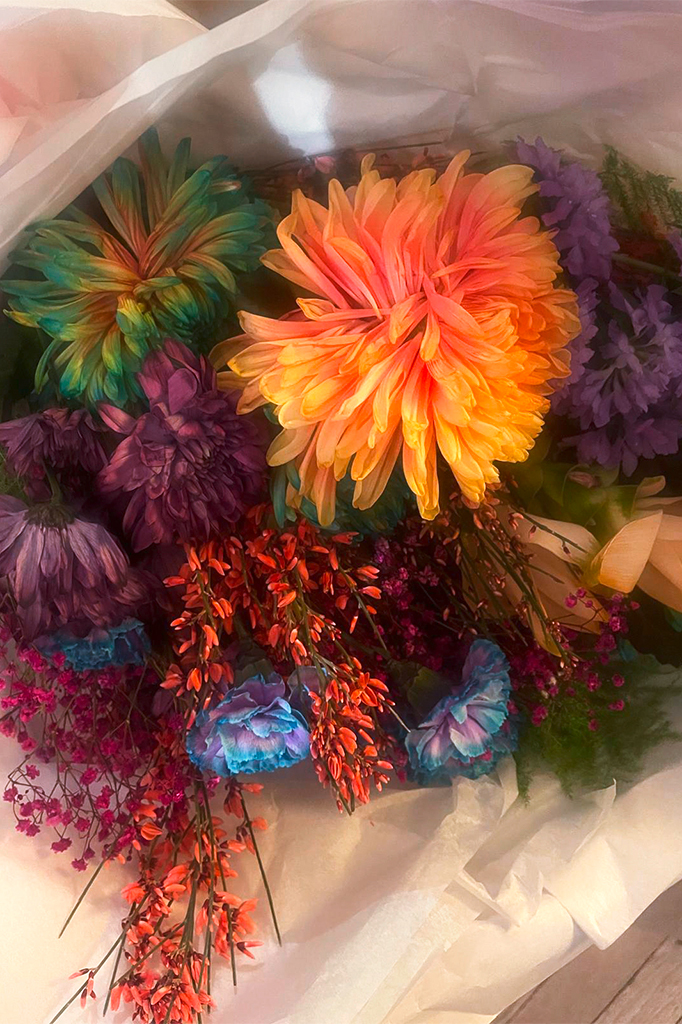
Situated at the intersection of textiles, craftsmanship, and storytelling, Santa Gaïa Pilens has developed a distinctive artistic practice that is strongly shaped by materials and process. With a background in fashion—as a stylist, set designer, and artistic director—she brings a keen sensitivity to fabrics, layering, and visual composition to her work. At the heart of her practice are large-scale textile wall pieces, which she creates using her signature “contemporary mummies” technique. By combining raw linen and shellac, she produces multi-layered surfaces brimming with narratives that oscillate between the visible and the hidden. Influenced by scenography and documentary photography, her approach remains tactile and rooted in craftsmanship, far removed from classical painting. Inspired by prehistoric and folk traditions, her work explores collective memory and cultural heritage—always staying true to the medium of textiles.