Leadartikel
Beyond the Season

For a long time, fashion followed a clear logic: acceleration as a principle, renewal as a constant. But this system is coming under increasing pressure. The certainties on which it was based are beginning to crumble—quietly, but unmistakably. This text is not an attempt to paint a complete picture, but rather an exploration: a look at shifts, breaks, and possible new directions.
Text: Janaina Engelmann-Brothánek. Photos: Marken
Collection follows collection, and seasons set the pace—and with them, the value. These are the principles that have long shaped the fashion system and are now shifting. Products are no longer conceived exclusively in seasonal terms, but rather as part of an extended life cycle. The end customeris no longer the true end of the supply chain, but often just one of several stops in a garment’s journey. This development affects the entire industry: from brands to retailers to consumers. It is less of a break with the past and more of a process—an expansion of existing structures, driven primarily by a younger generation that uses fashion differently, makes more conscious choices, and switches more naturally between new and pre-owned items.
Consequently, the term “Second Cycle” is intended to represent a broader understanding of product cycles in which fashion circulates, changes its context, and takes on new value over time. The full scope of this development only becomes truly apparent through current market data.
As the ThredUp Resale Report 2026 shows, the global resale market is growing eight to nine times faster than traditional fashion retail and is projected to reach a volume of approximately 393 billion U.S. dollars by 2030. Secondhand fashion has thus long since entered the mainstream. About half of the consumers surveyed have already purchased used clothing, and 57 percent of U.S. consumers actively sell clothing to generate additional income.
A prime example is Vinted: The C2C platform recorded 38 percent revenue growth in 2025 and reached a trading volume of over 10 billion euros. Resale is thus increasingly becoming an infrastructure that reorganizes supply and demand. “To make secondhand the first choice, we need to create the most efficient and simplest system,” says CEO Thomas Plantenga. “If we succeed, the selection will improve with every new member.”
The RealReal illustrates how this dynamic also affects brands, pricing, and long-term value performance. The American platform views resale not merely as an additional channel, but as a standalone market with its own logic, its own price signals, and growing strategic importance for brands: “For more than a decade, we’ve been building the infrastructure that makes resale a true market—not just an additional sales channel,” says CEO Rati Sahi Levesque. She is alluding to a crucial point: In the secondary market, value is not merely passed on but redefined. By aggregating supply and demand on a large scale, a new form of pricing emerges. “We see in real time how brands, categories, and individual products are performing. This results in dynamic pricing based on real transaction data rather than assumptions,” explains Levesque. This reveals which products remain relevant beyond their initial sale. Central to this context is the issue of authentication. “Trust is the foundation of everything we do,” says Levesque. It is only through this assurance that reliable market prices emerge. For brands, this means, above all, transparency. The secondary market reveals which products stand the test of time and why. “Resale is increasingly becoming an indicator of a brand’s health,” Levesque continues. Relevance, desirability, and value stability become apparent here. This also changes the perspective on the initial purchase. A growing number of customers are already considering resale value at the time of their initial purchase. The resale option thus becomes an additional factor to consider.
What’s emerging online is also having an impact on brick-and-mortar retail. The store is no longer just a place for initial sales; it is increasingly evolving into a space where different life stages of products can coexist—new goods alongside second-, third-, or fourth-cycle items. Some retailers are beginning to integrate precisely this logic into their business models. It’s not yet widespread, and they’re often feeling their way forward, but they recognize clearly that value creation can be conceived more broadly in the future.


New Facets of Retail
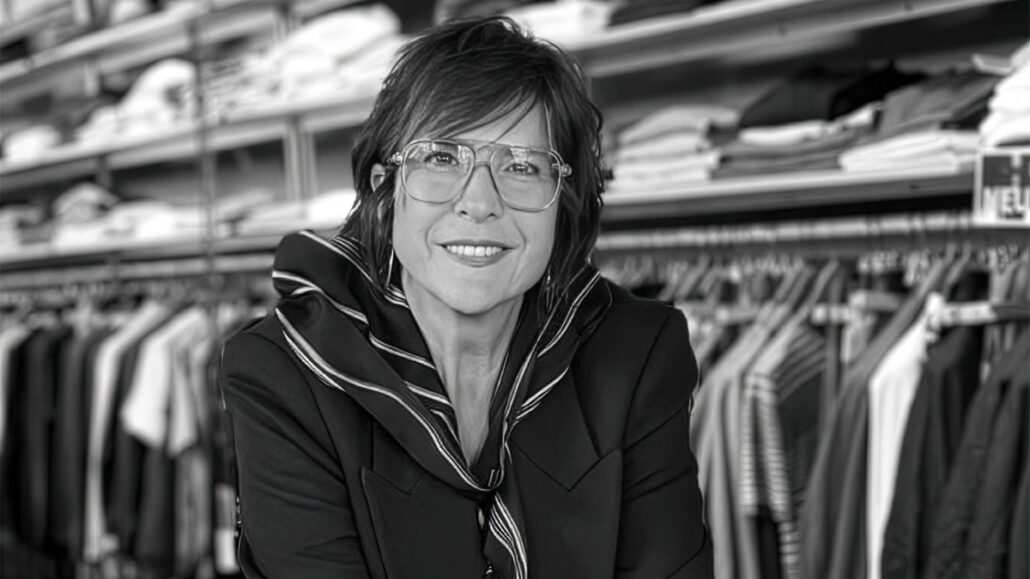
During a conversation at Fifty Eight.S in Frankfurt, it quickly becomes clear that many of the current discussions surrounding Second Cycle are nothing new, but rather stem from an approach that has always been at the heart of good retail. Jutta Heidt-Hansel has been running her store for over 40 years. Her perspective is accordingly shaped less by trends than by experience and a clear commitment to quality.
“My customers often tell me, ‘What I bought from you has been hanging in my closet for 20 years.’ This statement captures the essence of what lies at the heart of any ‘second-cycle’ logic: the decision to choose products that last.”
This mindset is also evident at Fifty Eight.S in how the store handles pricing and timing. Not every item follows the traditional cycle from full price to clearance: “Why should I mark down a brand like Rick Owens—with recurring styles and timeless pieces—after just three months? That doesn’t make sense to me. We deliberately keep these pieces in our lineup, continue to carry them, and rework them into new combinations. Our customers understand this and appreciate it, too.” The store is thus evolving from a place of constant renewal into a space where products are allowed to develop over time. New merchandise remains important, but it no longer stands alone; rather, it relates to what’s already there. “Before I place a new order, I first analyze very carefully what I still have,” explains Heidt-Hansel. “What can I keep carrying? How much new stock do I really need?”
She isn’t surprised that Second Market is growing today. “Vintage is doing extremely well—especially among young people.” At the same time, she doesn’t see it as competition for her business, but rather as a complement. Because ultimately, in her view, we need both: new products that capture a moment, and those that stand the test of time.
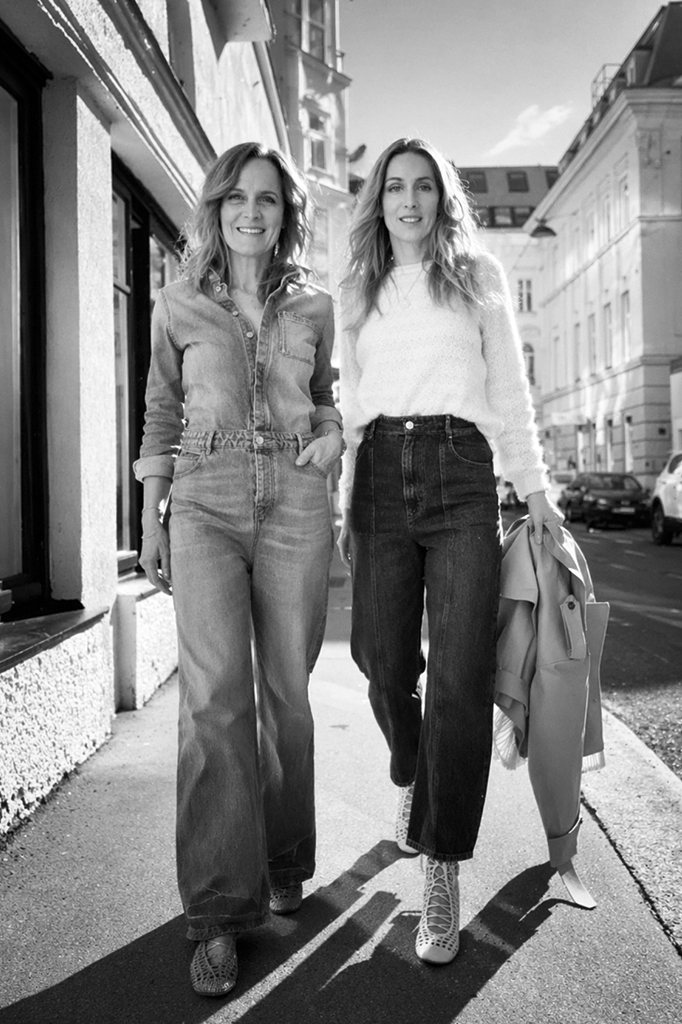
This is exactly where concepts like Super Vienna come in. They share Heidt-Hansel’s commitment to quality, but go a step further by actively integrating second-cycle products into their business model. They took a deliberately pragmatic approach to getting started: Super-Preloved is currently offered in the online store, separate from the physical store. “The biggest issue for us is actually space,” explain owners Karin Schwarzmaier and Carolina Rukschcio, adding: “In a 25-square-meter space, it’s not easy to accommodate an additional area, so the digital space was the most obvious first step.” Processes, preparation, presentation—all of this requires new solutions, especially in smaller operations. “It does involve some extra effort, which we’re currently evaluating—including how we can make it feel right for us.” In terms of content, however, the approach remains consistent. Super Vienna has always worked with a clear, minimalist selection. “We’d rather have fewer items in stock, but ones that last a long time,” says Schwarzmaier.
It’s important to both of them to emphasize that Second Cycle isn’t meant to be seen as an extended sale, but rather as a standalone concept: the products have already been worn; Super-Preloved doesn’t sell discounted new merchandise. In terms of both pricing and product selection, the offering thus follows its own logic. The response? “We’re getting very positive feedback. A lot of it is still in the works, but the direction is clear to us.”
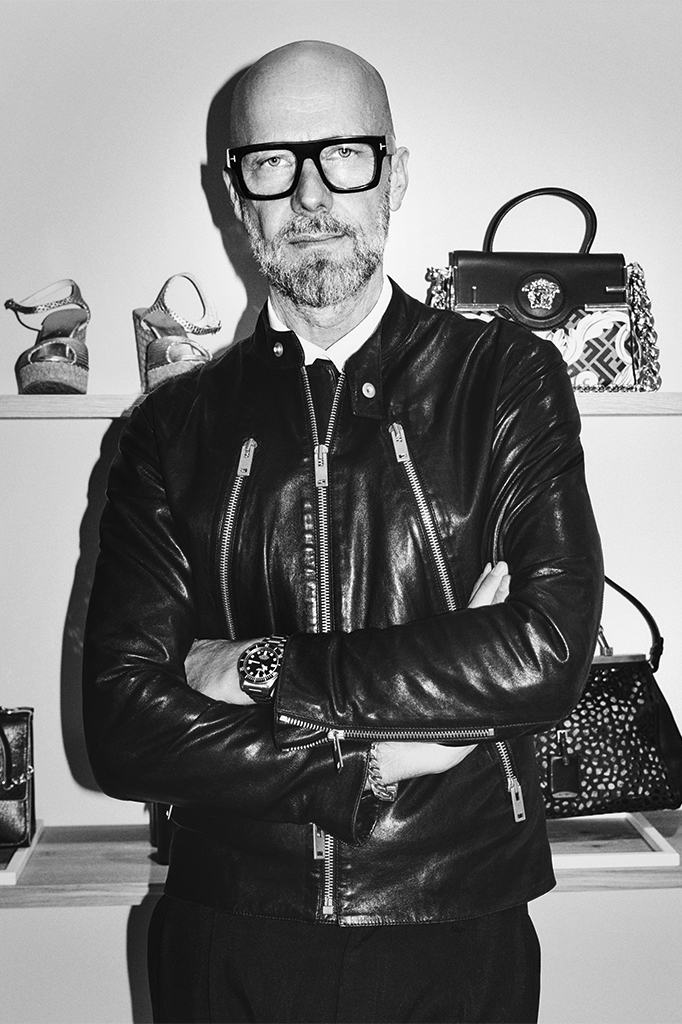
Dirk Kaprad brings this physical fusion of new goods and Second Cycle products to life with his Kaprad Collective Studio, which opened in Munich in March 2026. He spent a year preparing—searching for the right location, refining the visual concept, researching inventory management and point-of-sale systems, and, above all, figuring out how to present second-cycle products in a retail setting in a way that tells a story of fashion, not sacrifice. For Kaprad, the answer lies primarily in viewing secondhand not as a way to offload leftover stock, but as a carefully curated boutique: “At first, customers didn’t even realize they were surrounded by second-cycle products here.” For him, the key lies in the presentation and the physical experience: “People want to touch the items, try them on, and see how they fit.” What can only be described online becomes an immediate experience here. Consultation, atmosphere, and presentation thus become an essential part of the value proposition.
It quickly became clear that this approach was resonating: “The concept is being incredibly well received, especially by young people,” said Kaprad, who works 95 percent on a commission basis. “I regularly hear 16-year-olds tell me, ‘We only buy secondhand now.’”
The Archive as a Source of Inspiration
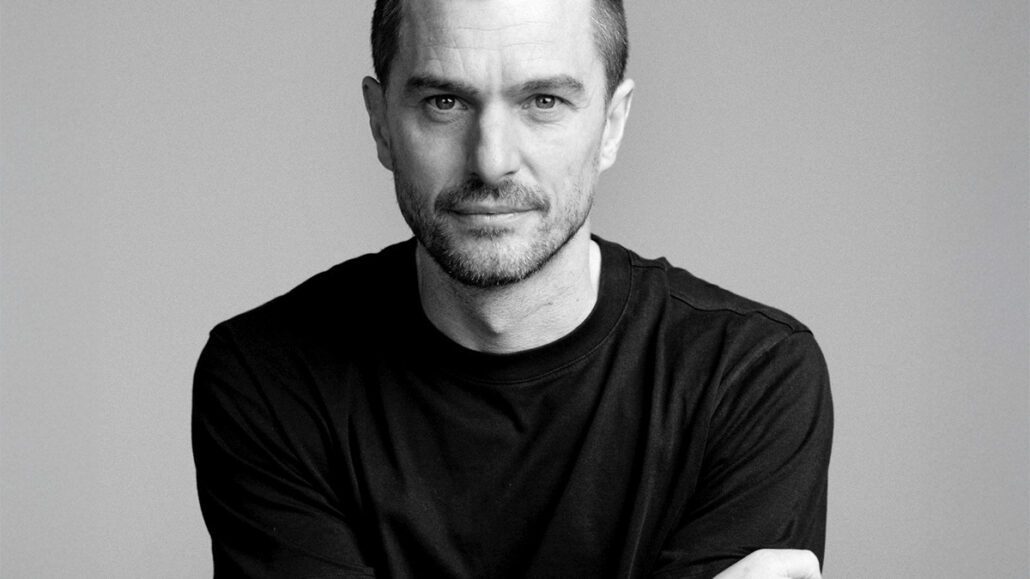
What happens when the “second cycle” isn’t just a concept that begins at the point of sale, but is already factored into the design process? TheCube Archive embodies precisely this shift in perspective. Drawing from the archive of Stefano Chiassai—a pioneering figure in Italian menswear design—the project is based on a collection of over 20,000 pieces of vintage clothing, deadstock, and materials that has grown over the years. Corinna Chiassai and Marius Hordijk are evolving the project into a creative hub that now collaborates internationally with design teams, stylists, DJs, and figures from the worlds of music and film. At the heart of this effort is an engagement with the existing collection: existing pieces are not only analyzed but reimagined—as a starting point for new forms, new combinations, and new directions.
The recent Performance Days in Munich demonstrated how this approach can be applied across the broader market. In collaboration with TheCube Archive, the trade show presented looks curated from archive pieces and deadstock. “If we managed to provide a bit of inspiration with what we showed there, then we’ve done our job right,” comments Marius Hordijk.
In addition to projects with individual companies, TheCube places great emphasis on knowledge transfer. In collaboration with international universities and design schools, the archive is actively integrated into educational programs. Students work with existing materials, analyze products, and develop new approaches based on them. The goal is to foster a nuanced understanding of design processes—one that builds on existing resources and consciously applies them in new contexts.
Circularity as a Design Principle
Jessica Solomon’s work follows this exact approach. The Paris-based designer founded her label, Second Main, in 2021—based on a clear principle: “What others consider finished is just the beginning for me.”
Her designs don’t originate on paper, but emerge from the material itself. This isn’t about individual upcycled pieces, but rather a system. Solomon deliberately works with recurring material groups such as denim and cotton, analyzes available color palettes, and, building on that, develops designs that can be reproduced despite varying starting points. This makes deadstock both predictable and scalable. Production takes place in Madagascar, where design and execution are closely intertwined. Material availability, artisanal expertise, and local structures are directly incorporated into the design process. In an environment where resources are not unlimited, a different approach to materials emerges—one that is more precise, more direct, and often more experimental. And a new understanding of product cycles: Instead of constantly developing new collections, existing models are continued and refined. Design emerges through iterations, not through replacement.
While Second Main takes its starting point in materials and processes, Oriens begins elsewhere: with cultural heritage. Founded in Apulia, the project works with historic textiles—handmade tablecloths, napkins, bed linens, and crocheted pieces—that were once part of traditional dowries and have now largely disappeared from everyday life: “These pieces embody so much work, time, and meaning, and yet they lie unused in closets,” explains founder Valentina Taglioli, who runs the project together with her partner Francesco Paulillo. “It was clear to us: this can’t be the end of the story.” Accordingly, Oriens uses these very fabrics to create small, deliberately limited-edition collections: one-of-a-kind pieces ranging from pants and dresses to bustiers. “We don’t work against the material, but with it,” explains Taglioli. “The form emerges from what’s already there.”
With Atelier Oriens, set to open in Apulia in 2026, the company is continuing to develop its own approach. The space is not just a workshop, but a platform for events, music, and social interaction: “We’re not just interested in the product,” says Paulillo, “but also in how people reconnect with these objects.”
In this way, Oriens expands the concept of the “Second Cycle” to include a cultural dimension. It is not just about recycling, but about repositioning—about how materials, memory, and community can be placed in a new context.
What emerges from all these approaches is not a uniform model, but a shared direction. The second market is undergoing a revaluation. New formats are emerging in retail. Archives are becoming workspaces, design processes no longer start from scratch, and even within existing brand structures, the way we handle materials and time is shifting. Second Cycle describes precisely this movement.
Not as a closed loop, but as an open system in which products circulate, change their context, and take on new meaning over time. Value is no longer created exclusively at the moment of sale, but along a journey that continues through wearing, passing on, rediscovering, and reimagining.
Perhaps that is the real change: that fashion is no longer thought of in terms of seasons, but in terms of context, and that a product’s true value is not determined by where it is sold, but by the way it is used.