Womenswear F/S 2027
Heart Over Heels
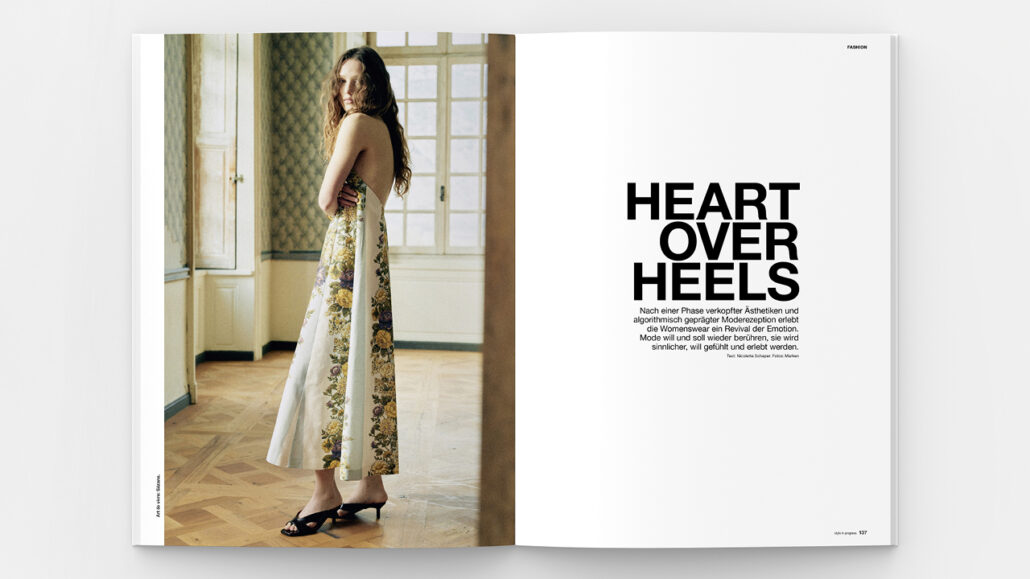
After a period marked by intellectualized aesthetics and algorithmically driven fashion trends, womenswear is experiencing a revival of emotion. Fashion wants to—and should—touch people’s hearts again; it is becoming more sensual and seeks to be felt and experienced.
Text: Nicoletta Schaper. Photos: Brands
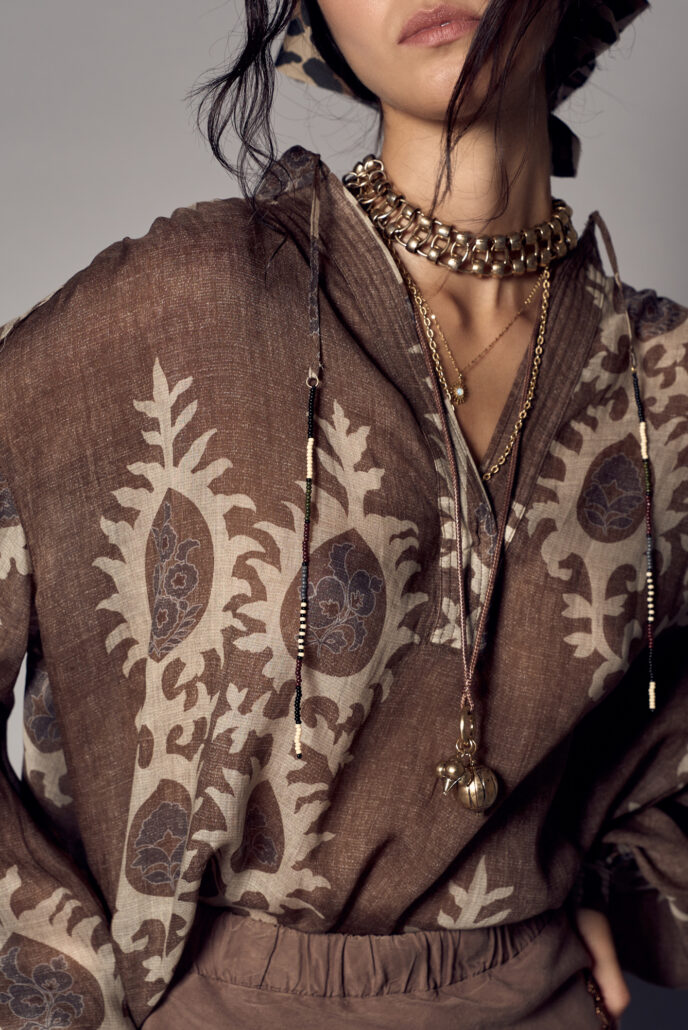
The womenswear shows in Paris this past March struck right at the heart. Instead of intellectual restraint, the collections spoke of a wealth of detail and creative freedom: dreamy looks with bows and ruffles at Dior, new silhouettes and richly embroidered fabrics at Chanel, large sequins at Lanvin, and vibrant colors at Loewe. One might think they’re out of touch and detached from reality, but that impression is misleading: The looks definitely demonstrate a sense of reality, as they ignite the longed-for and necessary spark that extends far into the contemporary realm.
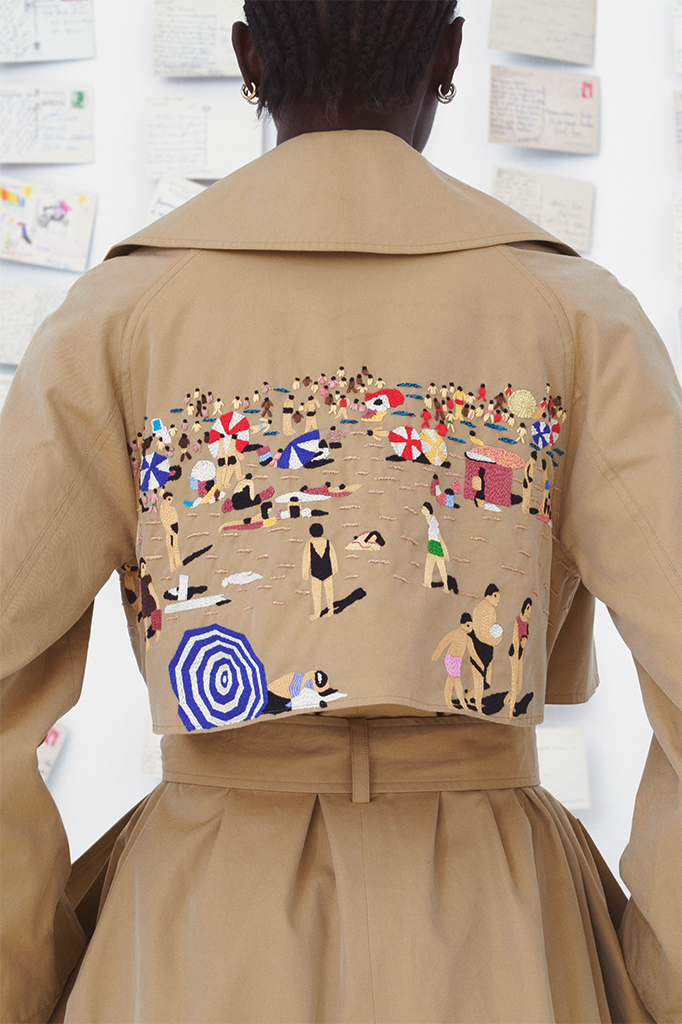
“After years marked by minimalism and a very rational aesthetic, people are feeling the need for more expressive fashion,” says Greta Violanti, brand manager at Bazar Deluxe, with conviction. There were already plenty of examples of this during the last buying season while touring the showrooms: Multicolored nylon jackets with sequins from Mother evoke a sense of freedom, while embroidered scattered flowers at The Great bring back childhood memories. Fringes, feathers, and bows at Plan C look modern without being kitschy. Craftsmanship is on display, not hidden. Lightness replaces heaviness, with swaying skirts and flowing coats. Even classics are being reinterpreted, often with a touch of humor—for example, a trench coat with an embroidered beach scene on the yoke from the French label Mii.
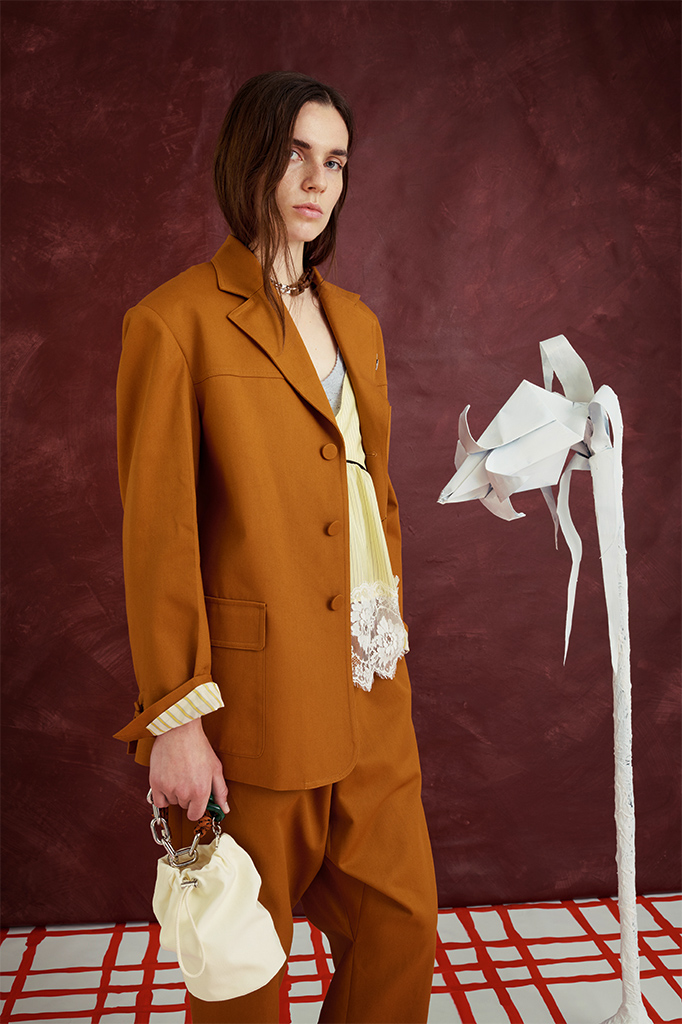
Brands like Sézane, Sessùn, Loulou de Saison, Ba-sh, and Soeur also demonstrate that this lightheartedness pairs particularly well with French-style, laid-back savoir-faire—collections that succeed in embodying a certain attitude toward life with visual, positive energy. Benoît Bernard, with his French agency Kiss & Fly, has dedicated himself to this very energy, for example through collections like Frnch, Laurence Bras, Louise Misha, and Louizon. “Right now, we’re looking for collections that convey something positive and optimistic, rather than something intellectual or controversial. What’s in demand is the direct, the immediately accessible. Chic, yes—but not overly intellectual.” In this context, femininity is making a comeback and being redefined: “The silhouettes definitely speak to feminine self-confidence.” Greta Violanti also considers fashion-driven self-empowerment to be an important trend in womenswear: “Women no longer define themselves through minimalism or neutrality, but through individuality, emotion, and self-confidence,” says Violanti. Carolina Castiglioni, founder of Plan C, also associates femininity with strength—with oversized suits, lightweight parkas, and pajama sets with colorful drawstrings. Ruffles, lace inserts, and subtle floral prints emphasize the playful nature of the collection, as does the growing proportion of bags and jewelry—segments that have become even more important overall because accessories make every outfit even more personal.
Tactical
Women’s wear is thus rediscovering its sensual, tactile side for Spring/Summer 2027. In general, there’s a strong focus on dynamic surfaces and tactile qualities. Materials such as taffeta and silk, feathers and sequins, as well as richly embroidered fabrics, demonstrate that texture is no longer a secondary consideration but a central means of expression. This new women’s wear aims to appeal to all the senses and create a multisensory experience. As a result, the physical experience takes on greater significance. Many of these collections cannot be adequately conveyed on Instagram. What’s needed is a direct, immediate experience.
Because, yes, we want to feel that sense of happiness again—that joy that fashion can not only evoke but that also lies at the very heart of the fashion business. In this context, it seems important to distinguish between the concepts of joy and fun. Carolina Castiglioni explains: “Joy is a deep, lasting feeling that stems from freedom, creativity, and personal expression. Fun is lighter, more immediate, and more playful.” For Plan C, she aims to combine both: “Our collections offer joy through design and quality, with pieces that are timeless and fit into an evolving wardrobe across seasons. Details and fabrics make simple pieces special, while playful accents reflect a desire to experiment and are simply fun.”
All of this raises a question: What do these developments mean for “Quiet Luxury,” arguably one of the most frequently cited concepts of recent seasons? Was it something of a pause in a world that had been thrown off balance? The fact is: Well-made essentials remain an indispensable part of the collections and product lines, even for Spring/Summer 2027, as they embody that blend of quality and design that stands the test of time. However, this requires different, new, and exciting impulses: “All designers dream of creating something timeless, but I think that’s just wishful thinking,” says Benoît Bernard with a smile. “Fashion always needs a little new twist to remain desirable.” Thus, the added emotional depth in womenswear should not be seen as a break with the past, but rather as an evolution: moving away from understatement toward a more sensual experience.
Meaningful
This experience must stand up to a central question: What am I investing in? After all, individual spending budgets continue to shift, and other areas of consumption and life are becoming increasingly important to women. The key lies in emotion—whatever it is, it must evoke a response. “Fashion should definitely evoke emotion and joy; there’s hardly anything better for expressing your own personality,” says Petra Fischer, owner of the Fischer fashion house. “With every piece, you tell a story—whether it’s polka dots, stripes, or checks. Clothing expresses how you feel and what message you want to send.”
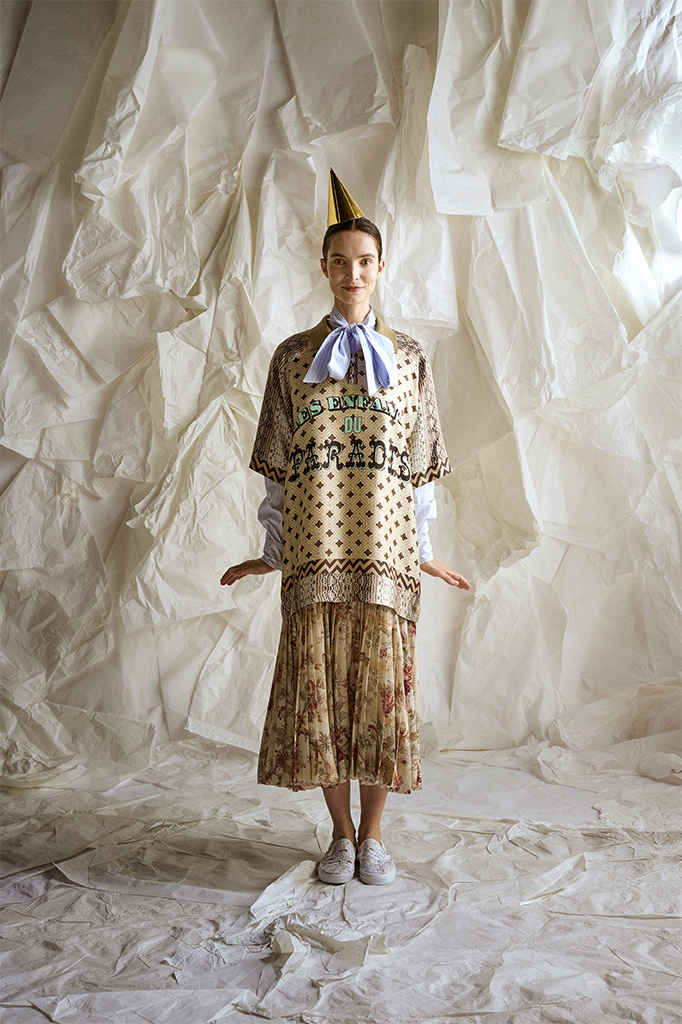
For Pierre-Louis Mascia, founder of the brand of the same name, substance is key in this context: “To tell a story with our collection, we look to the past and then draw a connection to today’s emotions. We use simple shapes—almost like a blank canvas—and overlay them with a sophisticated print that drives the narrative—such as a French work jacket from the 1920s, reinterpreted in velvet, or a dress printed with a photo of a dress from our archives. This creates something completely new, yet with surprising depth.” And he adds what sounds like a leitmotif: “In a very irrational world, we need more poetry in everyday life. Perhaps also a feminine perspective on the world—with less struggle, less testosterone, and more subtlety.”
This could hold the key for the fashion industry to regain what it has, in part, lost over the years: its intrinsic value. “The relentless pursuit of reaching more and more people through fashion strips creativity of its soul, and in our effort to conquer the world, we lose our uniqueness,” sums up Lucie Bourreau Dutta, who founded the label Mii together with Bapan Dutta. “But evoking emotion through a garment means forging an invisible bond between a brand and the person wearing it. And above all, it means restoring meaning to the whole.” Lucie Bourreau Dutta also sees her label, Mii, as a kind of workshop—a place where pieces are crafted with care and responsibility. “We celebrate the craftsmanship that has been passed down through the ages. I’m convinced that emotion cannot arise from something that’s poorly made.” Mii uses only natural materials and produces only what is ordered. Flower-shaped sequins are created from remnants of previous collections—embroidered by hand until a delicate floral tapestry emerges. “Our pieces embody poetry, playfulness, and humor,” says Lucie Bourreau Dutta. “In a challenging world, we want to send messages of gentleness, and joy is a way to feel the world and be a part of it.”
Authentic
The search for meaning and depth is evident everywhere. More and more images are appearing on Instagram showing people in museums, galleries, or holding a good book instead of a cell phone. Art and culture are regaining their place in people’s self-image. “This reflects our desire for authenticity and cultural depth,” explains Greta Violanti. “After years of fast-paced, highly staged digital content, people are looking for something more meaningful and personal.” How does this fit with our desire for more lightheartedness in fashion? Greta Violanti: “We’re looking for both: Today’s woman seeks meaning in what she wears, and at the same time, a sense of lightness.” “Fashion isn’t superficial,” Benoît Bernard sums it up. “When we feel comfortable in our clothes, we immediately feel better overall—more confident, happier, and more present. Clothing changes our relationship with the world.”
"Head over heels"—the theme of this article and of the new season—is not an escape, but a contemporary response to genuine human needs: for sensuality, authenticity, and joy. In a world marked by global tensions and the growing presence of AI and technology, consumers are seeking inner resonance more than ever. The opportunity for retailers? Fashion that moves people, and niche collections with their own distinct identity to set themselves apart from the all-too-generic glut of options. “Ultimately, for us retailers, it’s about making something of our own out of it,” says Petra Fischer. “Customers trust us to pick out the right pieces for them. To do that, we have to put much more thought into our orders, mentally combine different pieces, and think across the board.” The key to making this work is passion: “It’s tough and demanding out there, but you have to stay curious and open-minded,” emphasizes Petra Fischer. “Then you discover a collection in the showroom, immerse yourself in it, and as you walk out, you think: That was really great! I’d love to pass on that enthusiasm.” Just like at the tea shop Conservatoire des Hémisphères, which the retailer discovered in Paris. Asian music was playing there; there were scent samples of the individual varieties; the tea was packed into golden or velvet-lined tins and wrapped in tissue paper on which you could have a message written. “There was so much care and attention to detail—a dream for anyone who loves tea! That’s what it’s all about—in fashion, too: Everyone should hold onto their passion in their own field and then pass it on.”