Editor’s Letter
Almost cheesy
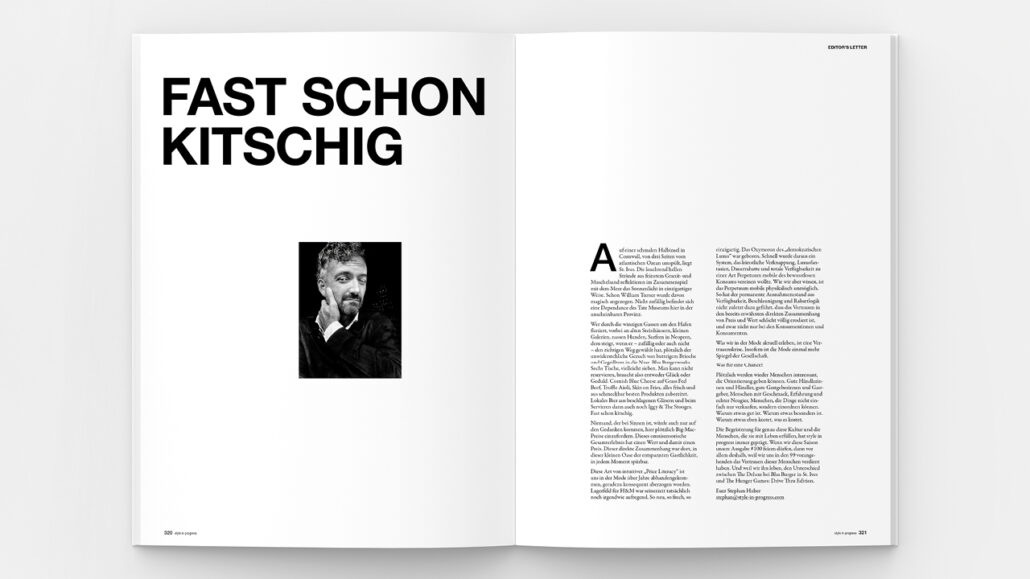
St. Ives is situated on a narrow peninsula in Cornwall, surrounded on three sides by the Atlantic Ocean. The dazzlingly bright beaches, made of the finest granite and shell sand, reflect the sunlight in a unique way as they interact with the sea. Even William Turner was magically drawn to this place. It is no coincidence that a branch of the Tate Museum is located here in this unassuming corner of the country.
If you stroll through the tiny alleys around the harbor, past old stone houses, small galleries, wet dogs, and surfers in wetsuits, and—whether by chance or not—you’ve taken the right path, the irresistible scent of buttery brioche and grilled food will suddenly waft up to your nose. Blas Burgerworks. Six tables, maybe seven. You can’t make a reservation, so you’ll need either luck or patience. Cornish Blue Cheese on grass-fed beef, truffle aioli, skin-on fries—everything fresh and made with the very best ingredients. Local beer in frosted glasses, and Iggy & The Stooges playing as it’s served. Almost kitschy.
No one in their right mind would even think of suddenly demanding Big Mac prices here. This all-encompassing sensory experience has a value—and therefore a price. That direct connection was palpable at every moment in that little oasis of relaxed hospitality.
This kind of intuitive “price literacy” has been lost to us in the fashion world over the years—it has been systematically weaned out of us. Lagerfeld for H&M was actually still somewhat exciting back then. So new, so bold, so unique. The oxymoron of “democratic luxury” was born. It quickly evolved into a system that sought to combine artificial scarcity, fantasies of luxury, perpetual discounts, and total availability into a sort of perpetual motion machine of mindless consumption. But as we know, a perpetual motion machine is physically impossible. Thus, the permanent state of emergency created by availability, acceleration, and the logic of discounts has led, not least, to the complete erosion of trust in the aforementioned direct connection between price and value—and not just among consumers.
What we are currently witnessing in the fashion industry is a crisis of confidence. In this respect, fashion once again serves as a mirror of society.
What an opportunity!
Suddenly, people who can offer guidance are becoming interesting again. Good shopkeepers, good hosts, people with taste, experience, and genuine curiosity—people who don’t just sell things, but can put them into context. Why something is good. Why something is special. Why something costs what it costs.
It is precisely this culture and the people who bring it to life that have always defined style in progress. If we are able to celebrate our 100th issue this season, it is above all because we have earned the trust of these people over the course of the previous 99 issues. And because we live the difference between “The Deluxe” at Blas Burger in St. Ives and “The Hunger Games: Drive-Thru Edition.”
Sincerely, Stephan Huber


