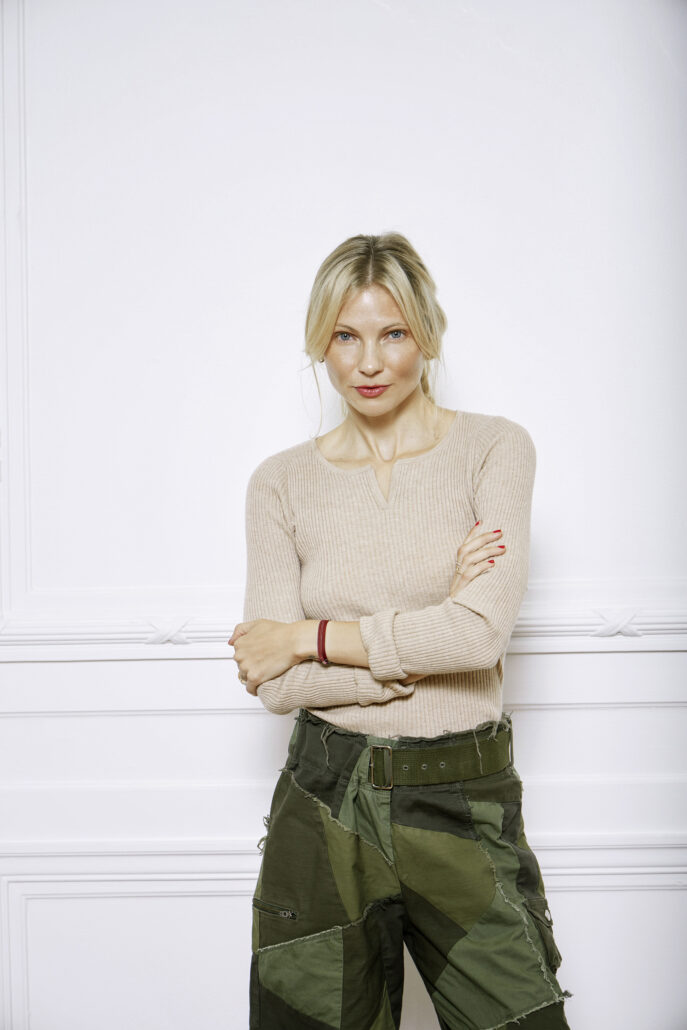
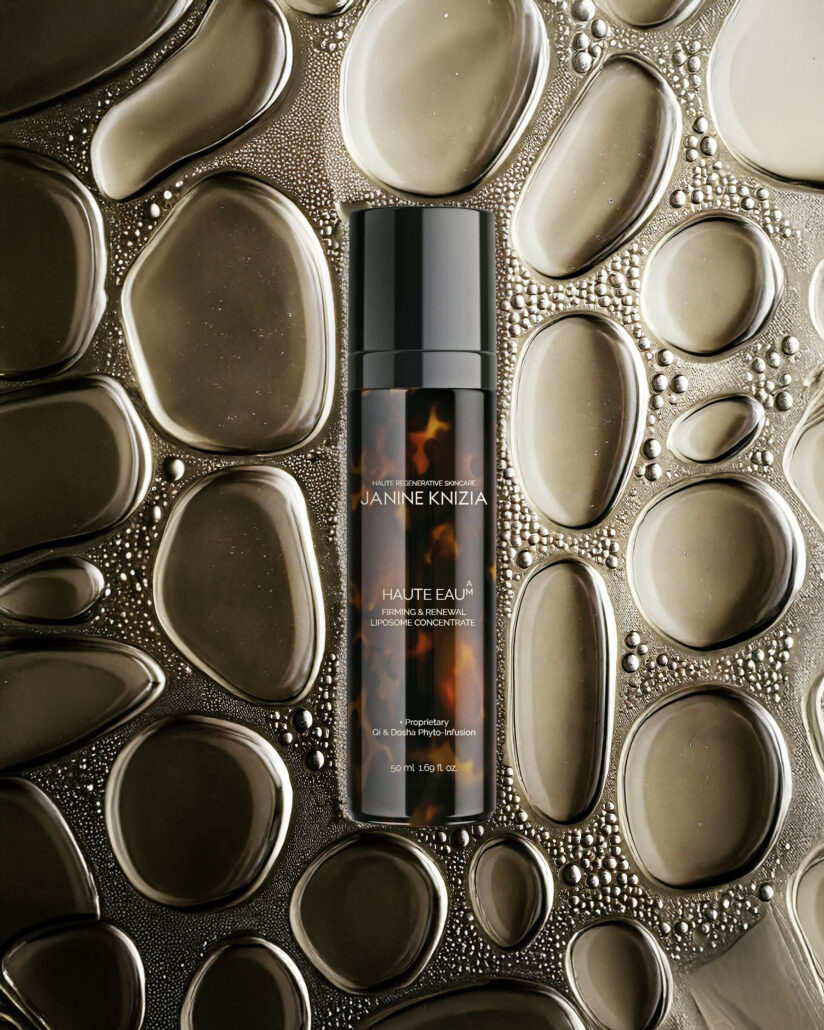
Chloé de Ruffray und Janine Knizia
Deep Dive - The Trust You Wear
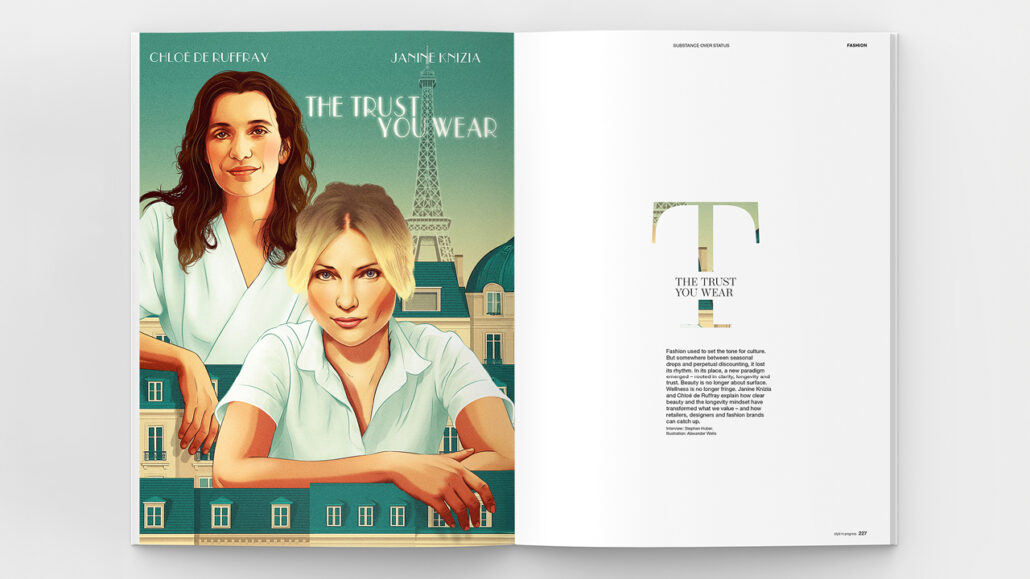
Fashion used to set the cultural pace. But somewhere between seasonal novelties, permanent discounts and restless rhythms, it has lost its power.
In its place is a new paradigm - one based on clarity, longevity and confidence. Beauty is no longer just superficial. Wellness is no longer a fringe issue. Janine Knizia and Chloé de Ruffray explain how clear beauty and the longevity mentality are changing our values - and what fashion retailers, creatives and brands can learn from this.
Interview: Stephan Huber.
Janine, your launch was ... shall we say: a little different than planned?
Chloé de Ruffray: Yes, tell us everything!
Janine Knizia: It was complete chaos, but in the most surreally beautiful way. I was in London to pick up samples for our press trip, while Chloé was hosting this fantastic Longevity dinner in Paris, which I unfortunately missed. We had around a hundred skincare products, but no plan on how to get them to the South of France in time. So Renzo and I packed everything into separate suitcases, booked a last-minute flight and pretended we didn't know each other at the airport - just to get through customs.
So you were smuggling skincare products?
Janine Knizia: Basically, yes. But it worked. We arrived on the Côte d'Azur, brought everything straight to the showroom - and it was magical. I didn't have to explain the brand to anyone. People came to me - from London, Dubai, New York. All by themselves. And at that moment I knew: it's not about perfect marketing. It's about trust. That is the strongest currency in this new world of luxury and wellbeing.
Chloé, while Janine was maneuvering through customs scenarios, you hosted one of the most talked about events of the season - the Longevity Dinner in Paris. How did you experience the evening?
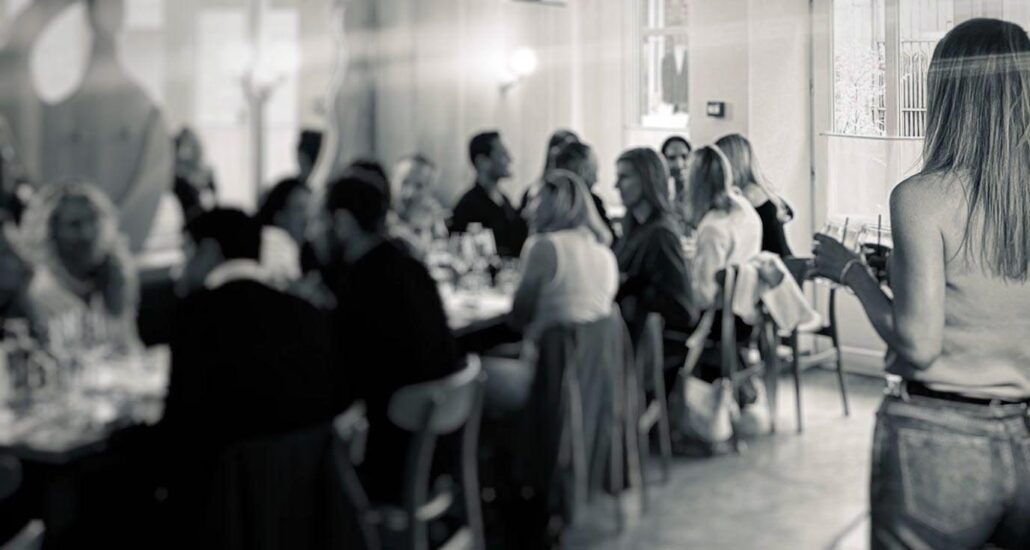
Chloé de Ruffray: It was a quiet, conscious evening, intimate and meaningful. We brought together people from different disciplines and talked together about the future of health, beauty and consciousness. It wasn't about products, but about perspectives. And almost at the same time, Janine presented something she has been working on for years. It felt like two expressions of a common mindset - each visible in its own way.
Let's rewind for a moment. You both come from the fashion industry. When was the turning point for you?
Janine Knizia: The turning point? To be honest - I think you remember it too. It was that moment when the fashion industry started to lose its intrinsic value. The rhythm was gone. I remember a store in Düsseldorf that received all its winter merchandise in July and then reduced it six weeks later. Everything felt panicky. Retailers were under constant stress, there was no more room for reflection. Nothing seemed well thought out.
Chloé de Ruffray: Yes. It was loud, but empty in terms of content. I was working in trend research at the time, traveling a lot for Who's Next and Première Classe, between Paris and Berlin. And at some point I had the feeling that we were just documenting a machine that had lost its history. It was all about: "What's next?" But no one asked the question: "Why?" And without this why, everything becomes arbitrary and hollow.
Janine Knizia: Fashion used to be about people, about emotion, about creativity. But at some point I felt more like a therapist in showrooms. I tried to motivate people who were already empty themselves. And so was I - physically, emotionally, mentally. I withdrew and started studying integrative nutrition. Just for myself at first. But looking back, that was the beginning of everything.
You have both realigned yourselves. Not into another industry, but into something broader and more human. Why did you choose wellness of all things?
Janine Knizia: I didn't have much of a plan. I was just tired - mentally and physically. I signed up for a course in integrative nutrition in the hope that it would help me feel better. But very quickly it became clear: this goes far beyond self-healing. It's a way of thinking. A new way of connecting with what really matters.
Chloé de Ruffray: It was similar for me. I loved fashion, but it no longer fulfilled me. During the pandemic, everything suddenly slowed down. I started a digital meditation and yoga club and the response was overwhelming. People were looking for peace. For rituals. But the real turning point came when I was working on a longevity study for a major luxury brand. I spoke to experts like Kayla Barnes and realized: Longevity isn't just about ageing, it's about how we live, how we think, how we show up. And I knew that was exactly what I wanted to explore further.
Janine Knizia: And that's when our paths crossed again. We had both left the fashion industry - each in our own way. Suddenly our thoughts were revolving around the same topics: Health, clarity, beauty, longevity. Not as a trend, but as a philosophy.
Let's take a closer look at this philosophy. Fashion has been shaping aspirations for decades, but now longevity seems to be redefining the concept of identity. Has it overtaken fashion in terms of cultural relevance?
Janine Knizia: In many ways, yes. Fashion thrives on change, on constant reinvention. It's fascinating, but also fleeting. Wellness and longevity are about something much more intimate. You can't change your face every season. You only have this one body, this one nervous system. You can't just throw that away when a new trend comes along. That's when I realized that we need to educate people, not so that they consume differently, but so that they can take better care of themselves.
Chloé de Ruffray: Longevity is not just physical, it is also emotional, mental, spiritual. For a long time, the beauty industry was about correcting something, concealing flaws, looking younger. But today it's about something else: vitality. How much energy do you have? How clearly do you think? How present are you? This shift - away from aesthetics and towards presence - is changing everything. And that's exactly why it hits such a nerve.
That impresses me - the idea that wellness and longevity in particular are not just the next trend. It seems more enduring than fashion, perhaps even more desirable?
Chloé de Ruffray: Because it's honest. It's not seasonal. It's about creating a life that feels good, not just looks good. That's why it touches people so deeply.
That sounds like a new kind of status, not based on logos or access, but on charisma, on health. Is this the new luxury?
Janine Knizia: Absolutely. We used to layer make-up to conceal everything. Today, glowing skin is the new status symbol because it can't be faked. You can't buy it overnight. It reflects how you live, how you sleep, eat, move and breathe. This is exactly what people are striving for today: lived, visible well-being.
And also for credibility, right?
Janine Knizia: Exactly. Clean Beauty was the beginning - leaving out harmful substances, parabens and silicones. That was important. But then began what I call the era of Clear Beauty: complete transparency. Brands had to disclose origins, formulas and even laboratory data. After Covid, it was no longer enough to just be "clean". People wanted science, clinical studies, evidence, results. If you couldn't deliver that, you were out.
So the development went from the principle of "free from" to "we show everything - and why it works"?
Janine Knizia: Exactly. I wanted to make that visible in my own brand. No empty phrases, no white labeling, no half-hearted formulations. Everything had to be fully thought through, open and functional. Because today's customers can see through everything.
Chloé de Ruffray: Absolutely. The pandemic has made many people incredibly well informed. They read labels, compare INCI lists, understand active ingredients such as niacinamide, peptides or adaptogens. I call them sciencetellectuals - people who don't react to packaging or buzzwords, but to understanding, to facts.
Janine Knizia: And if you are honest with them, you get something back that is priceless: trust. When we launched our biohacking set for over 1,000 euros, it was sold out even before the first product was shipped. No campaign, no influencers, just community and trust.
That is your greatest value today?
Janine Knizia: Without question. Building trust takes years - losing it takes seconds. That's why I protect it with everything I do.
Let's turn the tables: What can the fashion industry learn from all this?
Chloé de Ruffray: Fashion still sells desires, but often without depth. It inspires, but it explains nothing. It rarely listens. Today, people want to understand what they are buying and who is behind it. Instead, there are only drops, pressure and even more noise.
Janine Knizia: In the beauty world, it's often the quiet brands that set the tone. The most sought-after hand cream may come from a tiny laboratory in Switzerland. A dietary supplement that really makes a difference may only be available from a naturopath in Zurich. That is a quiet luxury. It's not about logos, it's about knowledge. It's about access to something real.
Chloé de Ruffray: And honesty. If a fabric pills, say so. If a product won't be available for another six months, explain why. In the beauty industry, we have seen how transparency creates loyalty. The same applies to fashion.
So it's not about perfection, but about connectedness?
Janine Knizia: Exactly. Educating, curating, sharing the process - that's the way to stay relevant today. Trustworthiness can't be posted. You have to prove it. Again and again.
What does this mean for the retail sector - especially for brick-and-mortar stores, which have been under pressure for years? Can it become part of this cultural change?
Chloé de Ruffray: He has to. But not by becoming even louder. The future of retail lies not in more, but in more meaning. People today are not looking for transactions, but rituals, emotional anchor points, a reason to come back. If you find a store that matches your values, you don't just shop there, you build a relationship.
And this has not only emotional, but also economic relevance.
Janine Knizia: The values have shifted. Health, energy, hormonal balance - these are the new goals. That's why we say: Health is the new status symbol because it's rare, because it's visible and because you can't buy it with a click. It requires commitment. I recently had an exciting experience in Australia. Everyone told me: "You have to go to Bangalow." I had never heard of it. But when we arrived - magic. A single street, 300 meters long, lined with independent stores: beauty, food, lifestyle. All curated, no chains, no algorithms, just real people with real tastes. It reminded me of how retail used to be, before Excel spreadsheets, drops and must-haves took over. Before everything was calculated in clicks per minute.
So perhaps the future of retail is not so radically new, but simply deeply human?
Chloé de Ruffray: Exactly. It's not about reinventing everything, but about going back to what works: Curation, intuition, emotional intelligence. That's the advantage of small retail concepts. They can create proximity, they can build a community and they can react with emotion - not with formulas.
Janine Knizia: That's exactly what customers want: no automation, no flawless machinery, but presence, founders who are visible, a team that cares, a story that unfolds - slowly, with depth. That makes a store a ritual. That creates meaning.
Janine, your collection was launched on your 40th birthday. The timing could hardly have been more symbolic. Is that your legacy?
Janine Knizia: Perhaps yes - but above all it is a beginning, one that I want to protect. I deliberately decided against rapid growth, against compromises. Every partner has to understand the concept a thousand percent. It's not about placement. It's about attitude and purpose.
Chloé de Ruffray: And that is rare - and powerful. In fashion, there is often pressure to deliver immediately, to expand quickly. In the wellness sector, we experience the opposite: slowness becomes a strength, selectivity becomes the language of authenticity.
This is reminiscent of a time when fashion was thought of more slowly - with fewer collections, but more intention, more history, more feeling. Is this perhaps why we are returning to this logic? Not because we have to, but because it simply feels better?
Chloé de Ruffray: And because it endures. That's the irony. Fast growth burns out. What grows slowly, is well thought out and has substance, that's what really scales.
If you could only give the fashion industry one thing from everything you've learned, what would it be?
Chloé de Ruffray: Educate your target group. Don't just show, explain. Don't just sell, create a connection. People today want more than just a product. They want to be part of something that has meaning. Something they can believe in.
Janine Knizia: Keep your integrity. Really. Trends come and go. But trust? Trust is everything. It's the most valuable luxury of our time - and the hardest to regain once you've lost it.
Thank you both for this plea for clarity, attitude - and for the courage to do things differently.
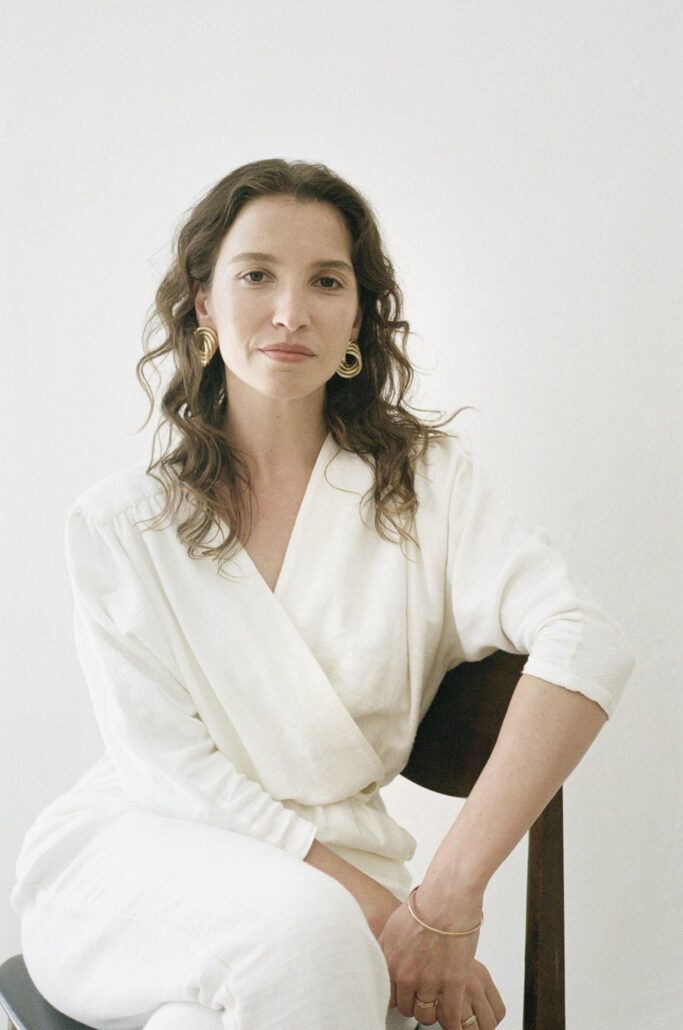
Chloé de Ruffray
Sensing the Future
Chloé de Ruffray is a trend researcher, speaker, longevity expert and culture analyst who is always on the lookout for the quiet tendencies that will shape tomorrow. After studying social and political sciences at Humboldt University in Berlin, she began her career at the international trend agency Carlin Creative in 2012. Since then, she has been advising companies in Europe, the Middle East and China on cultural change, innovation and future scenarios. After 15 years in Germany and Portugal, she now lives with her husband in France between Paris and the Loire Valley, where the pulse of the city meets the depths of the countryside. In addition to her work in trend research, Chloé also teaches Kundalini yoga and meditation and is always on the lookout for a balance between inner knowledge and social movement.
Janine Knizia
Holistic by Nature
Janine Knizia stands for a new definition of luxury: holistic, conscious, forward-looking. As the founder of Muse & Heroine, she is shaping the international beauty landscape with an approach that goes far beyond skincare - a symbiosis of science, herbal medicine and spiritual thinking. Originally rooted in the fashion world, Janine has developed over the years into a luminary in active ingredient science and longevity. She set new standards in 2017 with the founding of Europe's first Clean Beauty Showroom in Paris. Today, she is followed by a global community and a generation that sees self-care not as a trend, but as an attitude. Janine herself pursues an uncompromising mission: to decode the science of skin longevity - through skincare, nutrition, technology, herbal medicine, mindfulness and epigenetics. Her company is 100% independent and focuses on results rather than marketing.