Longview
A Brand Called You!
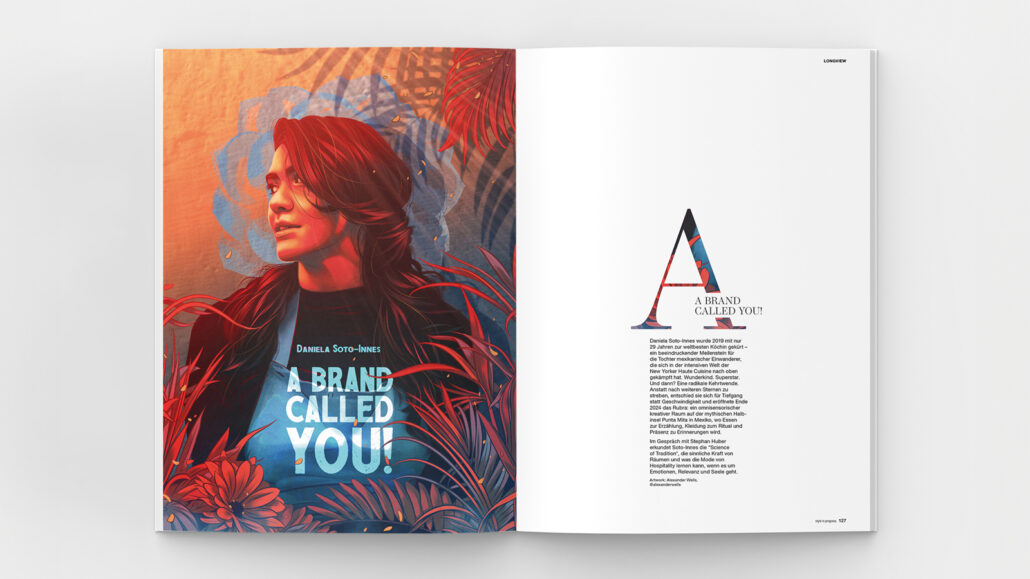
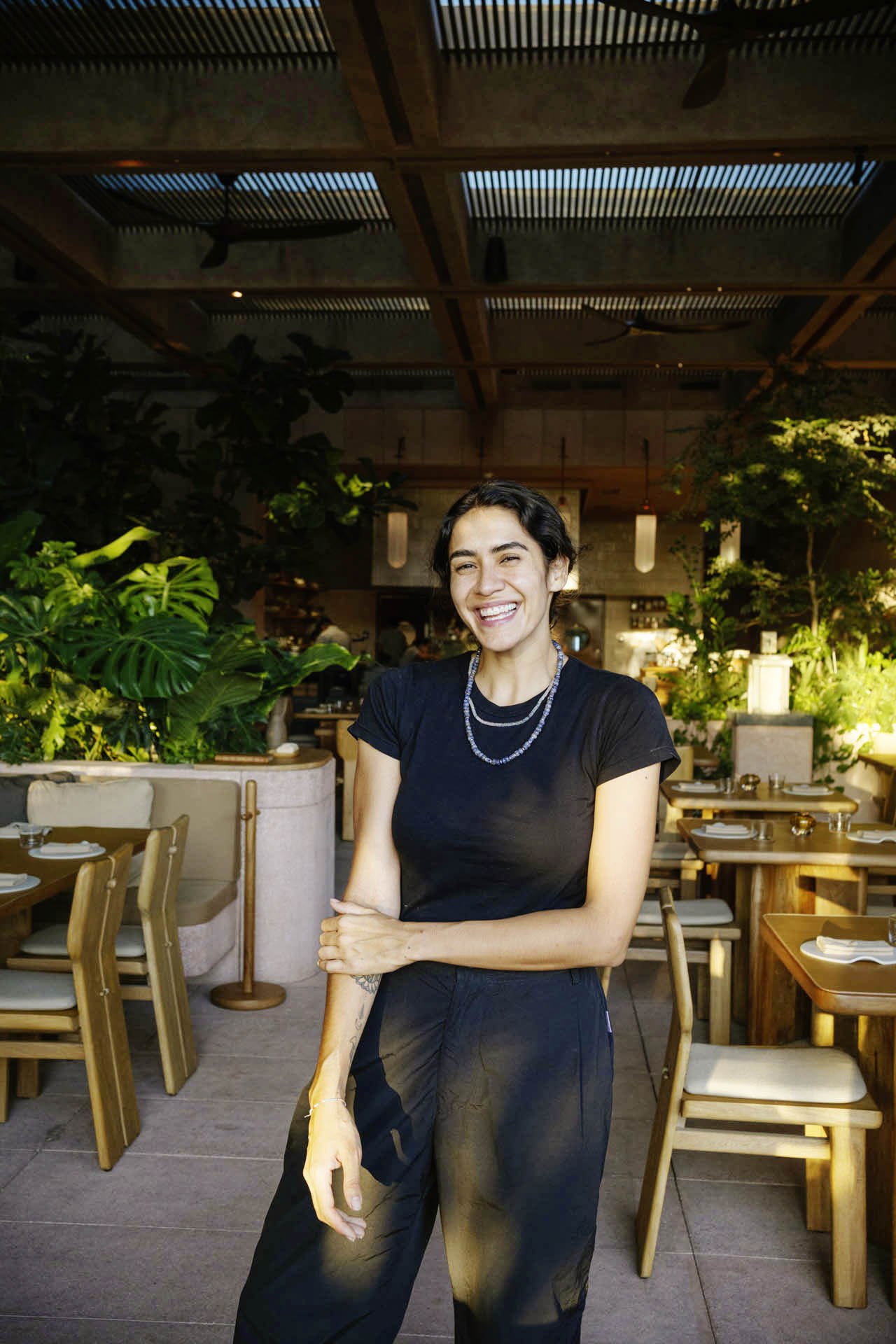
Daniela Soto-Innes was named the world's best female chef in 2019 at the age of just 29 - an impressive milestone for the daughter of Mexican immigrants, who has fought her way to the top in the intense world of New York haute cuisine. Prodigy. Superstar. And then? A radical turnaround. Instead of aiming for more stars, she opted for depth over speed and opened Rubra at the end of 2024: an omnisensory creative space on the mythical Punta Mita peninsula in Mexico, where food becomes narrative, clothing becomes ritual and presence becomes memories.
In conversation with Stephan Huber, Soto-Innes explores the science of tradition, the sensory power of spaces and what fashion can learn from gastronomy when it comes to emotion, relevance and soul.
Daniela, the world knows you as the youngest woman ever to be named best female chef in the world. You ran legendary restaurants like Cosme and Atla in New York. And then you left it all behind to return to Mexico and start something completely new. What was the deeper motivation behind this move?
Daniela Soto-Innes, head chef at Rubra: " I wanted to go my own way, but with the hands of my grandmother, my mother and my great-grandmother on my back. That's how Rubra was born. I came back to build something that reflects my heritage and my beliefs. Not just a restaurant, but a place with feeling. A place that moves like I do. Where there is music and joy and color and silence. Where people feel noticed.
That sounds like much more than just a place to eat.
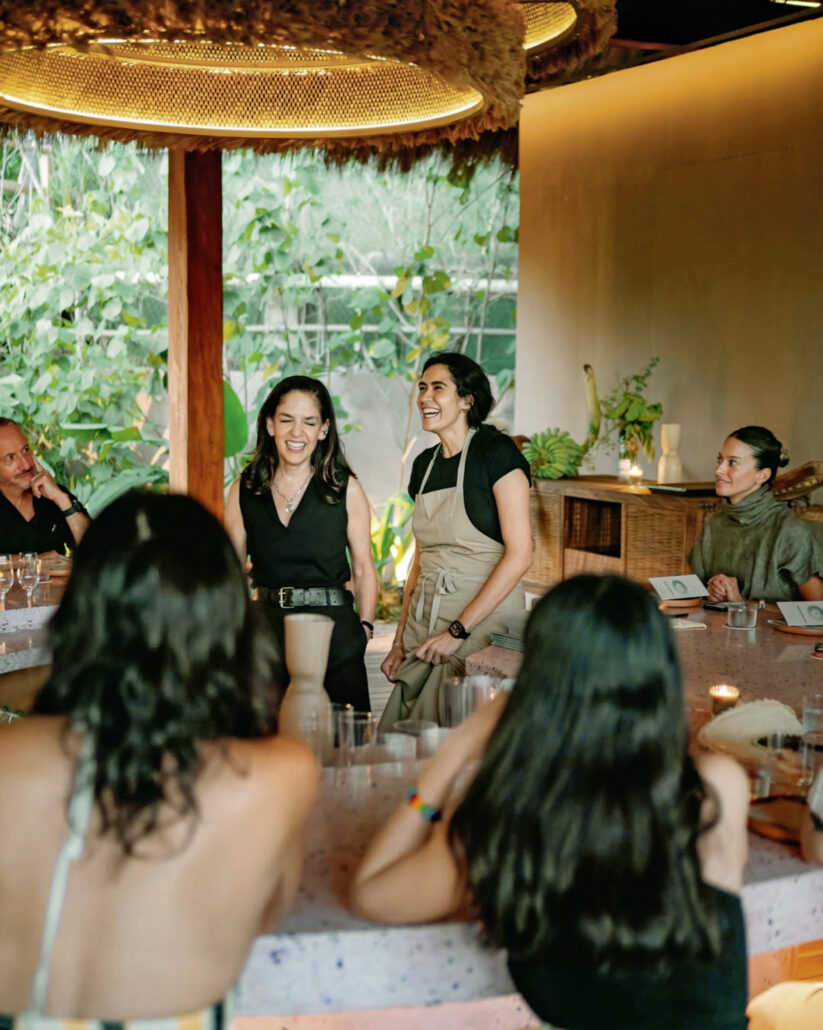
That's what it is. Nobody comes to Rubra because they're hungry. Guests come because they want to feel something - a connection, a rhythm. And I think about that all the time: How do we create this rhythm not only through the food, but also through the space, the sound, the light, the smell, the clothes? We are building a world, not just a kitchen.
Let's take a look back. You were only 17 when you became a sous-chef. Your career took off at lightning speed. But I have the feeling that there was always more to it - something ancestral, even spiritual. Where does this grounding come from?
From the women in my family. Always. My great-grandmother cooked until she was 98 years old. She always said: "You can only prepare good food if you have both feet firmly on the ground and a light heart." That stuck in my mind. My mother was a runner - very focused, very structured. And my grandmother was the joy, the emotion. I have all three in me. When I was in the kitchen in New York, it was always their voices I heard in my head, not the chefs shouting around me. (laughs)
Even in incredibly pressurized kitchens, was your inner compass aligned with something much older - and gentler?
I learned early on that my strength doesn't lie in shouting louder. It lies in feeling more deeply. I observed everything: the rhythm of a person's hands, the way they breathe while cooking, the way they react to music. I began to understand people through their movements, their expressions. That's how I learned to lead. Not through ego, but through presence, through energy.
That sounds like a completely different kind of leadership - more intuitive, almost choreographic.
Oh - I love that word. Choreographic. Yes. I imagine the kitchen like a dance. There's tension, there's a flow. There's discipline, but also spontaneity. You can't just tell people what to do, you have to adapt to them. That's something that fashion and gastronomy have in common: Everything is movement, timing and feeling. And when it's right, you don't have to explain it. You can just feel it.
Has your definition of success changed over time?
In any case. In the beginning, I was only interested in proving something, earning stars, getting ahead quickly. But at some point I felt like I was succeeding at something I no longer believed in. Today, I see success as something slower, calmer. It's about being in tune, creating something that will still make sense in five or ten years' time.
Let's talk about the Rubra. You built it from the ground up - not just as a place, but as a kind of world. How did that start?
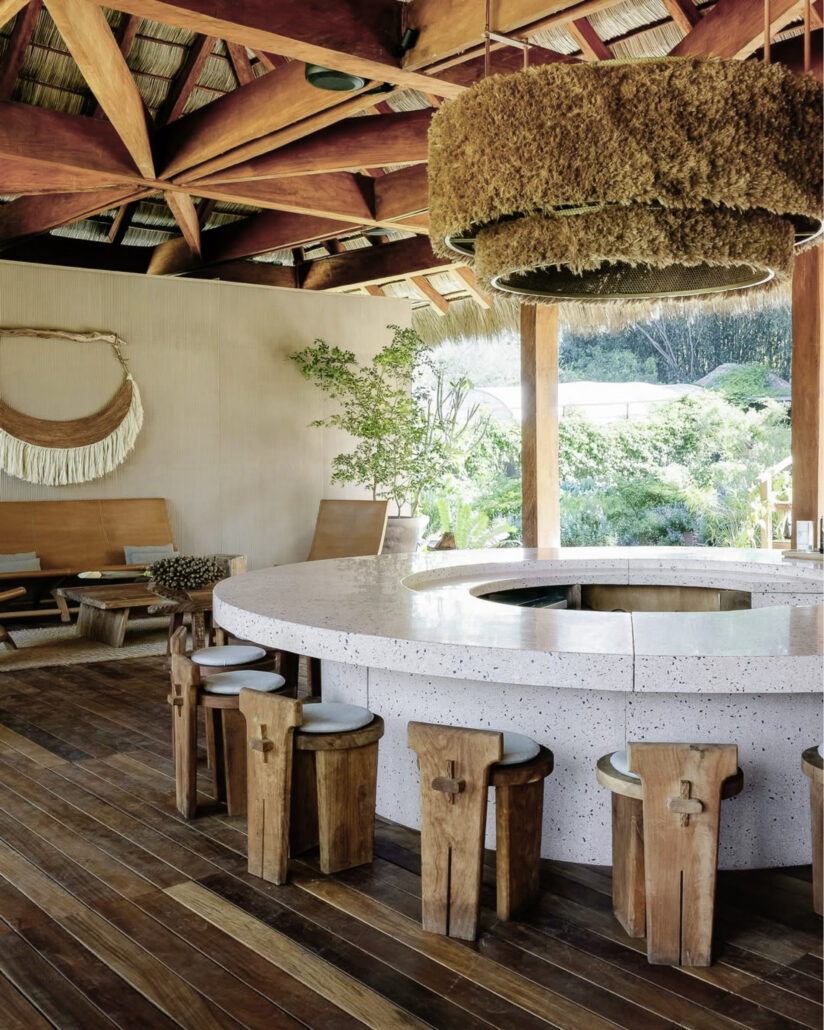
I wanted to start with silence, with space, not with noise. We found this unique place in Punta Mita and didn't just walk in and decorate it - we completely gutted it. I worked with incredible artists like Pablo Kobayashi, who creates spaces that breathe. Everything had to feel alive, the materials, the light, the energy. I wanted the Rubra to move like water, like a song.
There is something deeply aesthetic about the way you describe it. To me, it sounds like fashion in the best sense of the word: atmosphere, tactile, rich in detail, narrative.
That is clearly something we have in common. That's why I say that we are not just a restaurant - we are a feeling. This feeling arises because we act consciously. For example, we worked with AnaPa Studio for our uniforms. I didn't want my team to just wear chef's clothes. I wanted them to feel beautiful and confident. Just the way they are. We spent months selecting fabrics and understanding how they fall and how they breathe. They had to feel good on the body. That's fashion, right? And it was really fun. Maybe one day I'd like to design my own fashion line.
You talk about these uniforms as an identity - like a personal language, not a costume.
Exactly. Everyone at Rubra brings their own story with them. The clothing had to support that, it had to say: "You belong here. You are noticed." We even did fittings and customizations. It was beautiful and so much fun. It was like preparing for a performance, but a real one, every day.
I can imagine that many designers would envy this kind of intimacy with meaningfulness. This is often missing in fashion - this mixture of function, soul and presence.
That's why we talk to each other! (laughs) Because at Rubra, we don't design to impress. We design to express. And that changes everything. I even created my own soap - well, it's a mixture of fragrance and perfume. I didn't do it to sell anything. I just wanted the Rubra to have a scent, something you could take home with you. It's subtle, but people notice it. They ask: "What's that?" And I tell them, "That's the Rubra. That's us!"
You once described your philosophy as emotional but precise. This sentence stuck in my mind, especially when you talk about ingredients, rituals and memories. Is that where your idea for The Science of Tradition came from?
This sentence became the title of my lecture at Harvard. We were studying fermentation and looking at traditional techniques from a scientific perspective. I realized that my grandmother's methods, the smells in her kitchen, the rituals - it wasn't just poetic, it was precise, it had a chemistry, it had a logic, but no one had explained it to me like that before.
Honouring the past without romanticizing it by understanding its structure?
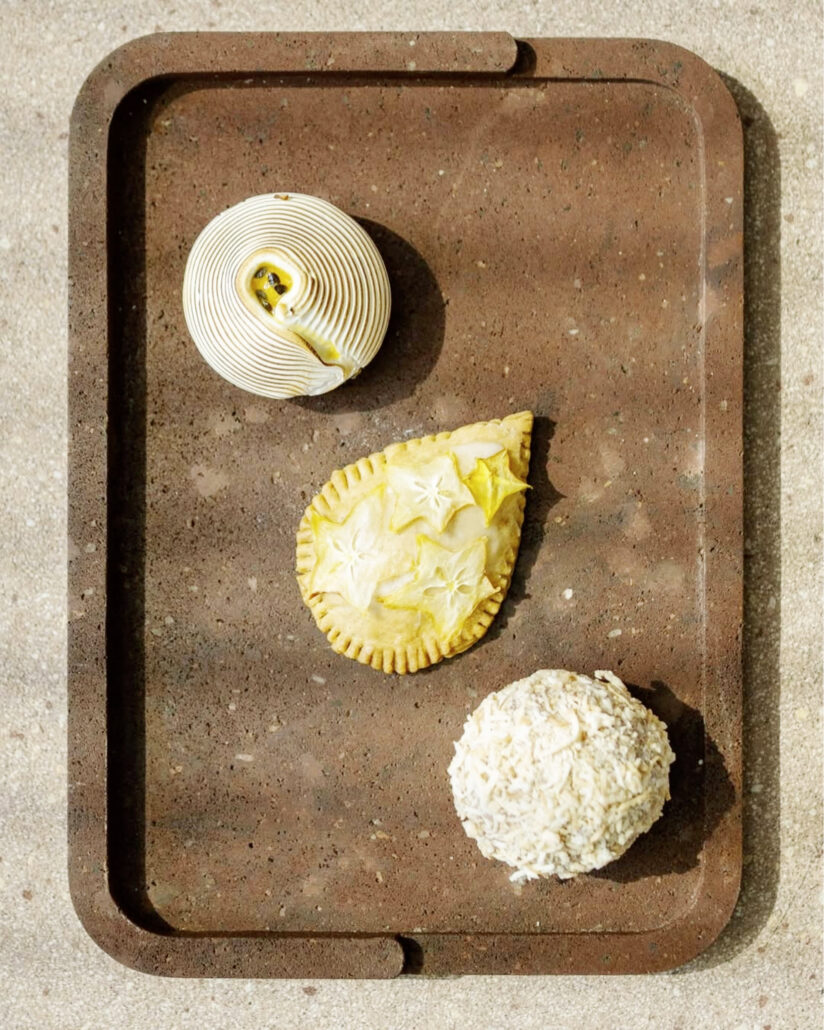
Exactly. And this structure harbors emotions. It's not one or the other. That's what I try to do with Rubra. Everything we serve has a story, but also balance: acidity, spiciness, texture, temperature. Feel and form. That's where the magic lies.
Another clear parallel to fashion. Craftsmanship, silhouette, cut: these are structural elements. But what makes a garment unforgettable is often the story behind it, the energy it radiates.
That's right! A perfect dish and a perfect piece of clothing are not so different. You don't fall in love because something is perfect - you fall in love because it feels alive.
So tradition is not the opposite of innovation, but its basis?
When you understand the why, you can appreciate the how. The problem is that many people repeat traditions without understanding their roots. Or worse, they break them without realizing what they are destroying. But if you go deep - really deep - you can carry traditions into the future. With respect, with clarity. That is innovation. Every ingredient is linked to a memory. I think of how cinnamon smells in my grandmother's kitchen or how lime invigorates the palate after a mezcal. It's the same with fabrics. The way wool warms. The way linen breathes. These are not just materials - they hold stories, energy.
This is also reflected in our fashion. We are constantly returning to craftsmanship, tradition and manual work. But this is often seen as nostalgia, not as potential.
Both fashion and food need to stop fetishizing the past and start learning from it. Not because it is beautiful, but because it holds knowledge. You just have to listen. You have to ask: Where does this technique come from? Why this substance? Why this spice? That's how you develop something that has depth. That lasts.
It's almost as if the deeper your roots are, the more room you have to grow.
That's the challenge - and that's what makes it so exciting.
You're not just a chef, you're also a boss. I particularly like one of your sayings: "If you're not having fun as a chef, you'd better change jobs, because the kitchen is a party place." That reverses the cliché. Most people think that fun and work are opposites, but you seem to combine the two closely.
Because they are closely connected! Especially in the kitchen. Cooking is rhythm, precision, intuition. And when it all flows together, it creates joy. But you can't fake it. You have to earn it. You can't dance in the kitchen if the mise en place isn't right. You can't create magic if you haven't mastered the basics. That's the discipline I'm talking about.
It's almost like jazz. You train for years to finally be able to improvise and make it look effortless.
And that's how I lead. I don't shout, I don't dominate, I listen, I observe. I create space for the rhythm of other people. Sometimes that means taking a step back. Sometimes it means turning up the music and allowing the room to change. Leadership is not about being the loudest. It's about being the most in tune.
This feels particularly radical in the hospitality industry, where the work culture is still characterized by pressure, hierarchies and exhaustion.
Yes - and that's why I left New York. I didn't want to build something that relied on burn-outs. I wanted to create a place where people felt safe, seen and met high standards - but through care, not control. That's not weakness. That is strength.
You redefine success - not as an output, but as an atmosphere, as the feeling of being part of something.
Because that's what people remember. Not just what was on the plate, but how they felt. That is what remains.
In the fashion industry, we talk a lot about creating experiences, especially in retail. In gastronomy, we seem to create faster, closer and more emotional connections. Why do you think that is?
Because it's about the senses. It is physical, emotional, immediate. We feed people. We read their body language. We listen to their rhythm. That is intimate. It teaches you to design for presence - not for performance. You have to tune in. You have to take care. At Rubra, every detail carries weight: how the playlist shapes the evening, how the scent in the hallway works, how a team member moves. That's choreography. That is design. The food may draw you in, but the atmosphere - that's what stays with you.
I think many fashion brands dream of such an emotional impact. But it requires a level of honesty and care that goes beyond building a brand.
That's true. And honestly? The fashion industry is already moving in this direction. I have felt it. Whether it was on the cover of L'Officiel or working with Opening Ceremony, I never felt like I was presenting clothes. I felt like I was helping to tell a story. A feeling. That's the kind of fashion I love - when it's personal, not performative. That's exactly how I feel about Lemaire, one of my absolute favorite brands.
Your approach to hospitality is almost like that of a slow fashion designer - with a story that appeals to all the senses, but without shortcuts.
I think the pressure to always do something new is damaging fashion - and also food. More menus, more launches, more drops. But people don't remember more. They remember what was right, what was well thought out. That remains in the body. Because you can't force meaning. Food teaches us that. A dish may need days to ferment, to rest, to find its balance. And it's the same with a look. You can't fake the energy. You can feel when something has been made with dedication. And this feeling? That is the future of luxury.
The way you talk about Rubra makes it clear that it's not just a restaurant. It's more of a creative universe. That's what I always mean when I talk about omnisensory. You seem to see Rubra as a kind of living, breathing brand. Would you agree with that?
In a way - but I don't even like the word brand. I think more in essences, in presence. The Rubra is my essence. The essence of my team. I wanted to create something that carries all the little rituals and feelings that have shaped me. It is personal. It's not about trends. It's not about what's cool right now. It's about what feels real. I think that's what people are looking for.
How do you decide what belongs to the rubra and what doesn't?
I ask myself: does it have the same intention, the same vibration? Is it honest? I don't want to just add something to grow - I want to deepen the experience. Slowly, with care. It started with food, but it's already becoming something bigger. We've worked with artisans. We have developed fragrances. We have designed uniforms. I dream of textiles. Maybe even a perfume or furniture. But everything has to come from the same source: Clarity and intention. No rush, no noise.
So it's not about expansion for expansion's sake, but about expression through different media?
That's exactly how I want it. It's not about building a concept. It's about maintaining a certain mood. That's why I don't say yes to every opportunity. If the energy doesn't fit, I'd rather wait. I'm not interested in being everywhere. I'm interested in being real - wherever we are.
This is a radical position in a time of hectic and hype.
But I think people sense that. They respect the slow build-up. They feel the care. That's what makes something timeless, when it grows like a garden and not like a campaign.
So instead of expanding, you go deeper. That's a different kind of legacy.
I'm not trying to be the best restaurant in the world. I'm trying to be the Rubra. That's enough for me.
Thank you, Daniela.
Daniela Soto-Innes is considered one of the most exciting voices in international gastronomy. At just 28 years old, she was named the best female chef in the world by "The World's 50 Best" - not because she followed the rules, but
because she wrote new ones. In Rubra, her current project on Mexico's Pacific coast, she is redefining haute cuisine:
sensual, emotional, communal. For Soto-Innes, cooking is an act of connection, every course tells stories. Rubra is a retreat for her - no spectacle, no noise, just essence. The lush garden, the ingredients, the atmosphere, everything follows the idea of understanding food holistically. Her cuisine is more than just a craft.
It is a statement about identity, about togetherness, about a future in which enjoyment and community are inextricably linked.